


Efficacy of face masks, neck gaiters and face shields for reducing the expulsion of simulated cough-generated aerosols
- PMID: 35924077
- PMCID: PMC9345365
- DOI: 10.1080/02786826.2020.1862409
Efficacy of face masks, neck gaiters and face shields for reducing the expulsion of simulated cough-generated aerosols
Abstract
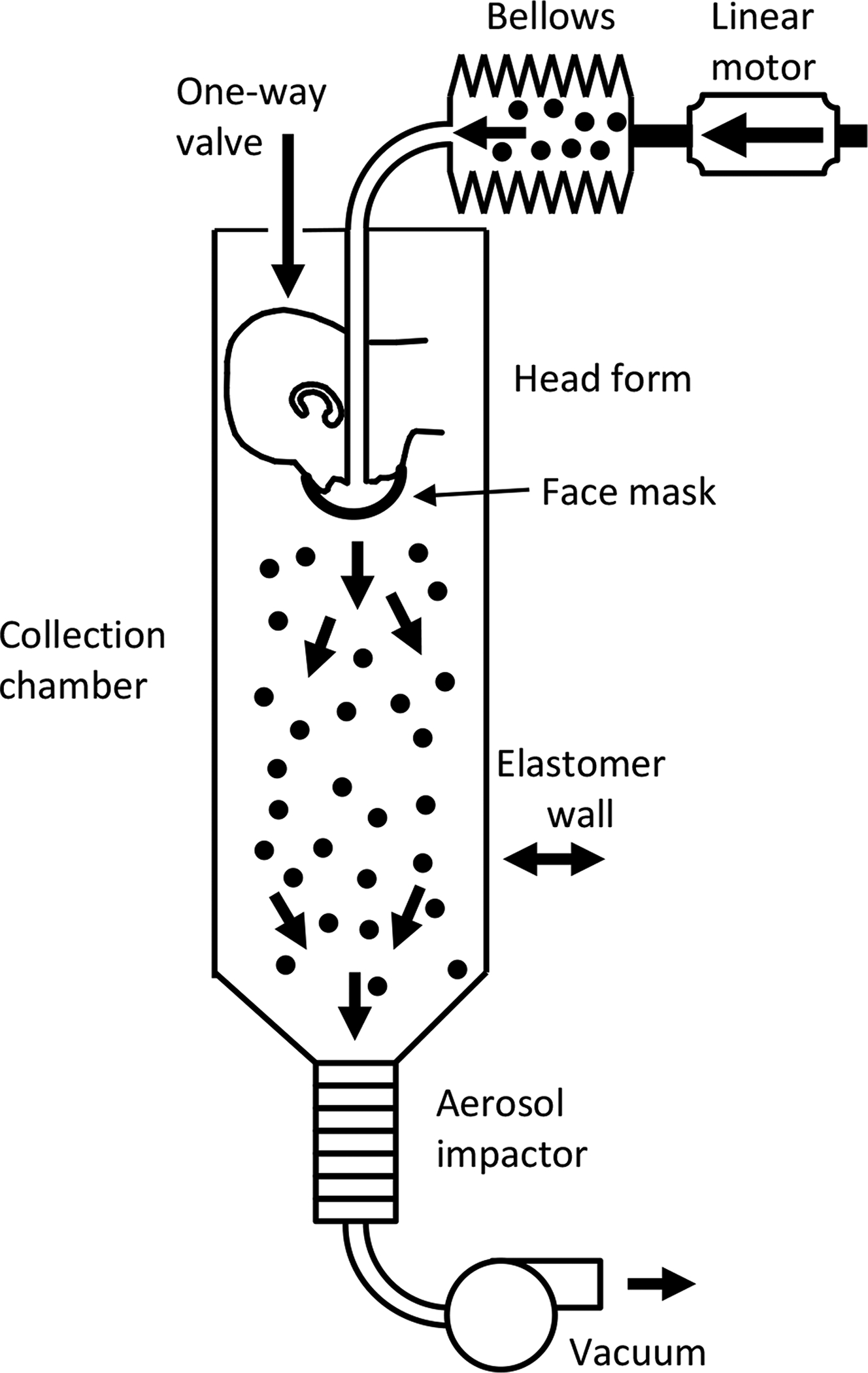
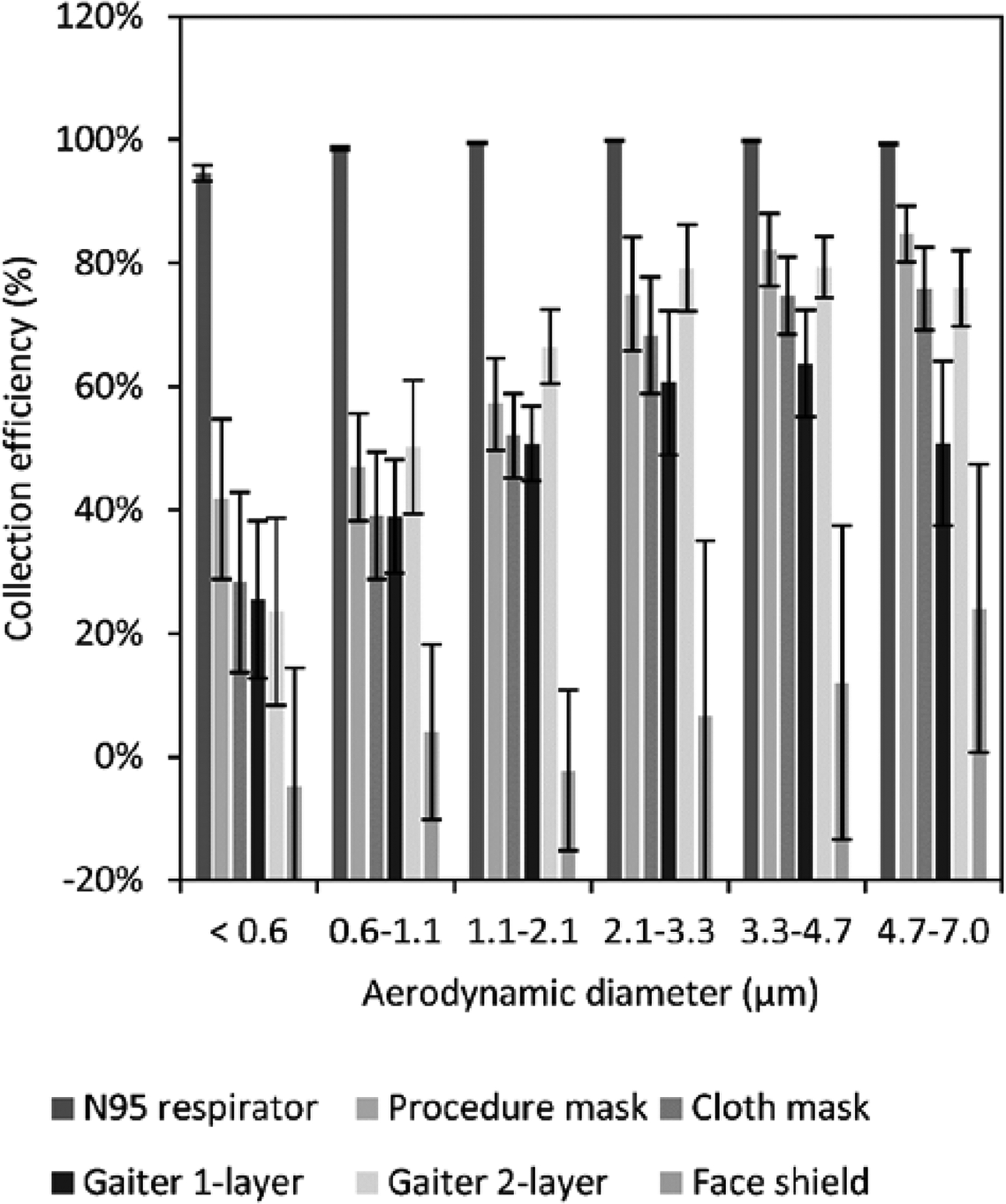
Face masks are recommended to reduce community transmission of SARS-CoV-2. One of the primary benefits of face masks and other coverings is as source control devices to reduce the expulsion of respiratory aerosols during coughing, breathing, and speaking. Face shields and neck gaiters have been proposed as an alternative to face masks, but information about face shields and neck gaiters as source control devices is limited. We used a cough aerosol simulator with a pliable skin headform to propel small aerosol particles (0 to 7 μm) into different face coverings. An N95 respirator blocked 99% (standard deviation (SD) 0.3%) of the cough aerosol, a medical grade procedure mask blocked 59% (SD 6.9%), a 3-ply cotton cloth face mask blocked 51% (SD 7.7%), and a polyester neck gaiter blocked 47% (SD 7.5%) as a single layer and 60% (SD 7.2%) when folded into a double layer. In contrast, the face shield blocked 2% (SD 15.3%) of the cough aerosol. Our results suggest that face masks and neck gaiters are preferable to face shields as source control devices for cough aerosols.
Keywords: Airborne transmission; Face masks; Face shields; Infection control; Infectious disease transmission.
Conflict of interest statement
Declaration of Interests Statement The authors declare no competing interests.
Figures

References
-
- Bourouiba L, Dehandschoewercker E, and Bush John W. M. 2014. Violent expiratory events: on coughing and sneezing. J. Fluid Mech 745:537–563. doi: 10.1017/jfm.2014.88. - DOI
Grants and funding
LinkOut - more resources
Full Text Sources
Other Literature Sources
Miscellaneous
