


11-Oxyandrogens from the viewpoint of pediatric endocrinology
- PMID: 35928376
- PMCID: PMC9297174
- DOI: 10.1297/cpe.2022-0029
11-Oxyandrogens from the viewpoint of pediatric endocrinology
Abstract
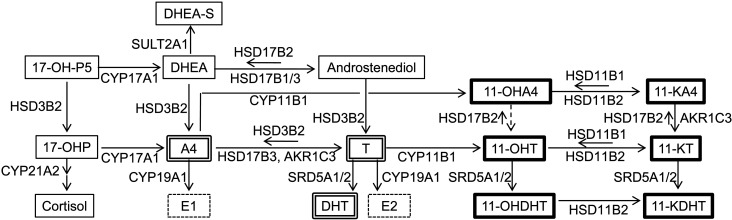
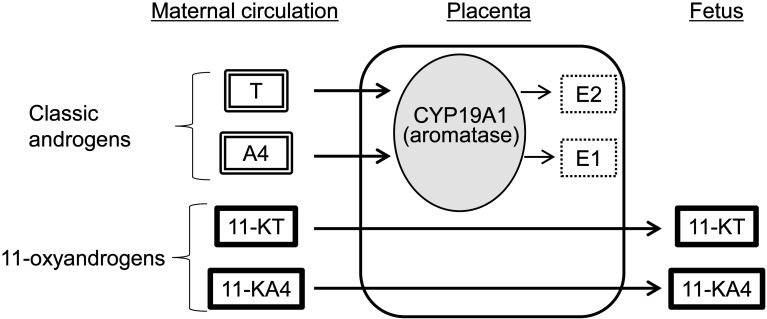
11-Oxyandrogens, such as 11-ketotestosterone (11-KT), 11-ketodihydrotestosterone (11-KDHT), 11β-hydroxytestosterone (11-OHT), 11β-hydroxyandrostenedione (11-OHA4), and 11-KA4, are newly specified human androgens. These 11-oxyandrogens are present in the cord blood and placenta, as well as in the blood of men and women of various ages, and are produced primarily in the adrenal gland. Accumulating evidence suggests that these steroids contribute to androgen excess in patients with 21-hydroxylase deficiency or polycystic ovary syndrome. More importantly, unlike classic androgens, 11-oxyandrogens produced in maternal tumors can pass through the placenta without being converted into estrogens, and cause severe virilization of female fetuses. Thus, overproduction of 11-oxyandrogens represents a new mechanism of 46,XX disorders of sex development. On the other hand, the physiological roles of 11-oxyandrogens remain to be clarified. This mini-review introduces the current understanding of 11-oxyandrogens, from the perspective of pediatric endocrinology.
Keywords: 11-oxygenated C19 steroid; 11-ketotestosterone; 11-oxygenated androgen; disorders of sex development (DSD); fetus.
2022©The Japanese Society for Pediatric Endocrinology.
Conflict of interest statement
The author declares no conflicts of interest.
Figures
References
-
- Matsumoto AM, Anawalt BD. Testicular disorders. In: Melmed S, Auchus R, Goldfine AB, Koenig RJ, Rosen CJ, editors. Williams textbook of endocrinology. 14th ed. Elsevier 2020. p.668–755.
Publication types
LinkOut - more resources
Full Text Sources