


Willingness to pay for social health insurance among public civil servants: A cross-sectional study in Dessie City Administration, North-East Ethiopia
- PMID: 35928482
- PMCID: PMC9343680
- DOI: 10.3389/fpubh.2022.920502
Willingness to pay for social health insurance among public civil servants: A cross-sectional study in Dessie City Administration, North-East Ethiopia
Abstract
Background: The readiness to pay for health insurance has an impact on universal health care. This study investigated the willingness of public civil servants in Dessie City Administration, North-East Ethiopia, to pay for social health insurance and associated factors.
Methods: From April to May 2021, a cross-sectional study was undertaken. The sectors from which the samples were proportionately allocated were chosen using a multistage sampling procedure. Using their payroll list as a sampling frame, simple random sampling was done to recruit them. A semi-structured self-administered questionnaire was used to collect data. Epi Data version 3.1 was used to enter, code, and clean the data, which was then exported to SPSS version 23 for analysis. To determine relationships, bi-variable and multivariable analyses were utilized. Candidates for multivariable analysis were variables with a p-value ≤ 0.3 in bi-variable analysis. AOR with a 95% CI was used to determine the strength and direction of association. Statistical significance was defined at p-value < 0.05.
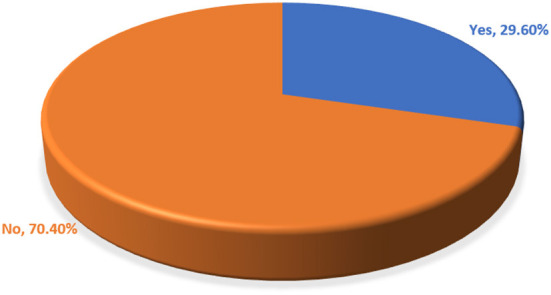
Results: A total of 796 employees took part in the study, with a 94.42% response rate. Overall, 29.60% of them were willing to pay for the scheme (95% CI: 26.4, 33%). The decision to pay was influenced by favorable perception (AOR = 2.43, 95% CI: 1.72, 3.44), household income < Birr 5,000 (AOR = 0.26, 95% CI: 0.14, 0.48), acute illness (AOR = 0.48, 95% CI: 0.32, 0.72), bachelor level education (AOR = 0.44, 95% CI: 0.28, 0.70), master and above level education (AOR = 0.26, 95% CI: 0.14, 0.49), and age 25-29 years (AOR = 1.97, 95 % CI: 1.08, 3.57).
Conclusion: The willingness of the civil servants to pay for social health insurance was low, and it was influenced by their attitudes toward the scheme, the occurrence of severe illness, income level, educational status, and age.
Keywords: Ethiopia; factors; public civil servants; social health insurance; willingness to pay.
Copyright © 2022 Amilaku, Fentaye, Mekonen and Bayked.
Figures
References
-
- World Health Organization. Universal Health Coverage (UHC). Geneva: World Health Organization (2021). Available online at: https://www.who.int/news-room/fact-sheets/detail/universal-health-covera...
-
- Federal Federal Democratic Republic of Ethiopia Council of Ministers Social Health Insurance Proclamation 690/2010 . Addis Ababa: Federal Negarit Gazeta; (2010). p. 5494–9.
-
- McGhan WF. Pharmacoeconomics. in: Troy D, editor. Remington: The Science and Practice of Pharmacy. Lippincott Williams & Wilkins; (2005). p. 2070–81.
MeSH terms
LinkOut - more resources
Full Text Sources
Medical
Miscellaneous
