


Transnasal High-Flow Oxygen Therapy versus Noninvasive Positive Pressure Ventilation in the Treatment of COPD with Type II Respiratory Failure: A Meta-Analysis
- PMID: 35928976
- PMCID: PMC9345699
- DOI: 10.1155/2022/3835545
Transnasal High-Flow Oxygen Therapy versus Noninvasive Positive Pressure Ventilation in the Treatment of COPD with Type II Respiratory Failure: A Meta-Analysis
Retraction in
-
Retracted: Transnasal High-Flow Oxygen Therapy versus Noninvasive Positive Pressure Ventilation in the Treatment of COPD with Type II Respiratory Failure: A Meta-Analysis.Comput Math Methods Med. 2023 Sep 27;2023:9784937. doi: 10.1155/2023/9784937. eCollection 2023. Comput Math Methods Med. 2023. PMID: 37811268 Free PMC article.
Abstract
Objective: To compare the safety and efficacy of transnasal high-flow oxygen therapy (HFNT) and noninvasive positive pressure ventilation (NIV) in the treatment of chronic obstructive pulmonary disease (COPD) with type II respiratory failure.
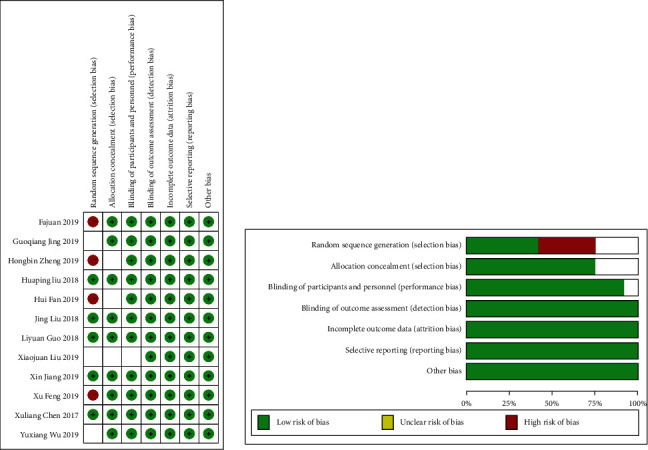
Methods: PubMed, the Cochrane Library, Embase, CBM, CNKI, and other databases were searched for randomized controlled trials (RCTS) on the efficacy of HFNT and NIV in the treatment of COPD. Meta-analysis was conducted using RevMan 5.3 software after two researchers screened literatures, extracted data, and evaluated the methodological quality of the included studies according to inclusion and exclusion criteria.
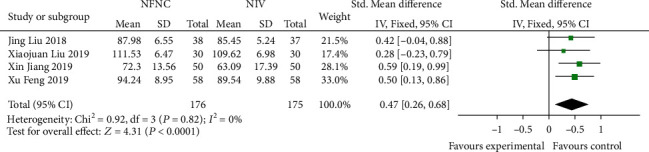
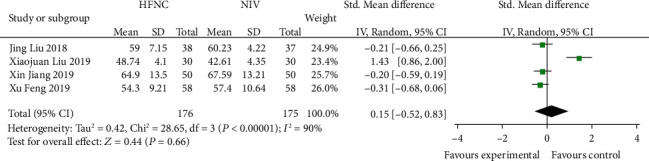
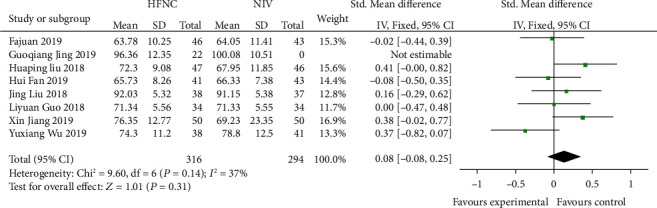
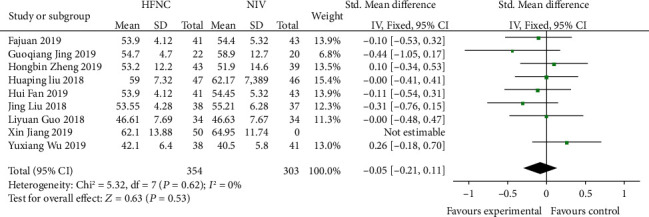
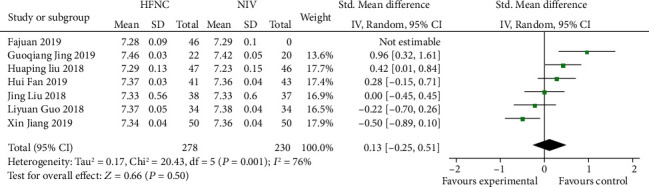
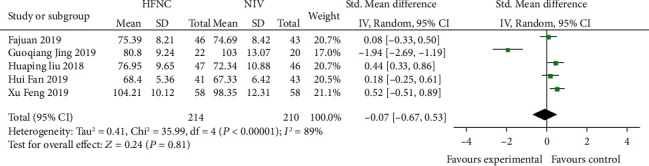
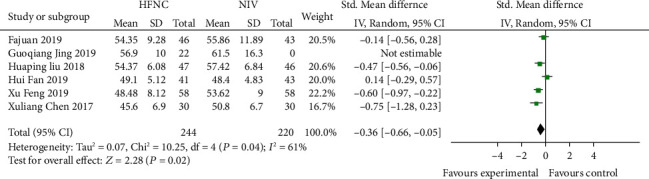
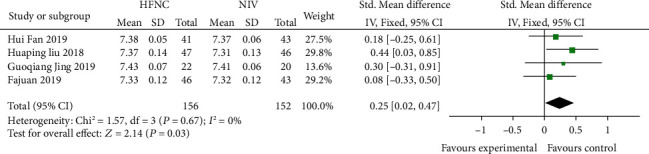
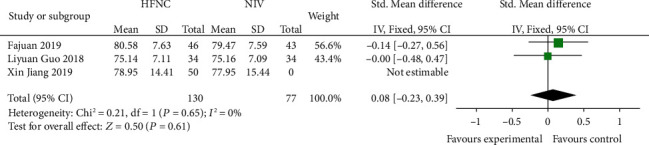
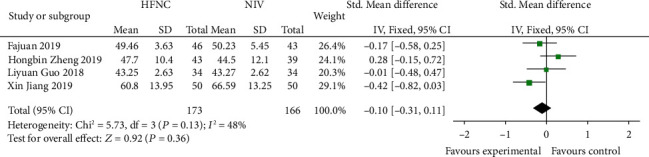
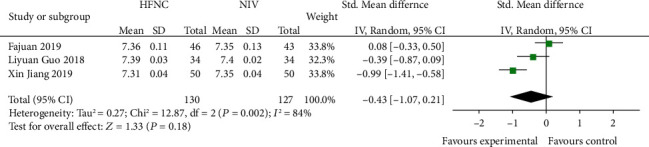
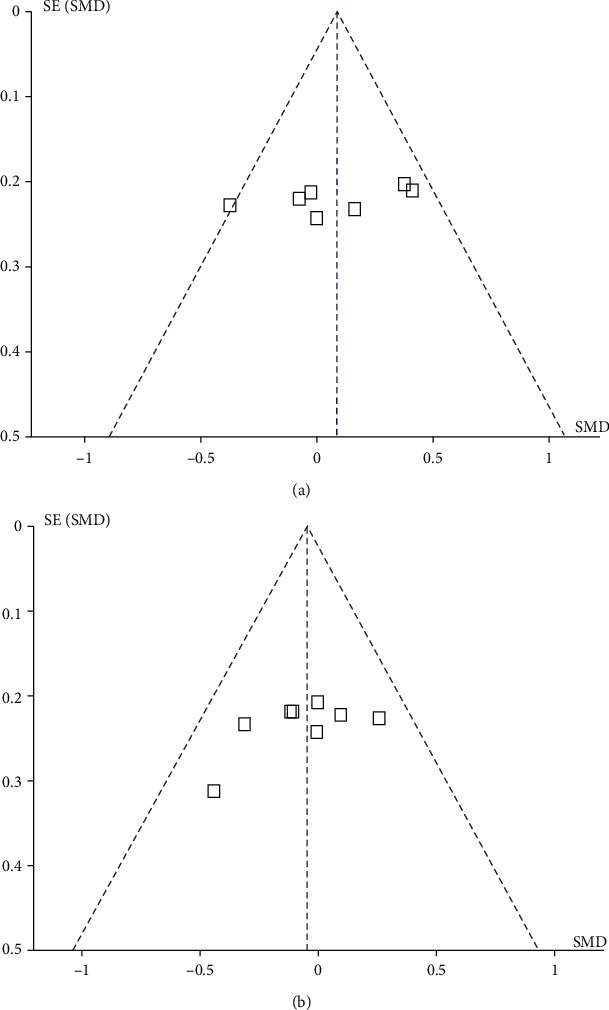
Results: A total of 948 patients were included in 12 RCTS. Comprehensive analysis results showed that the HFNC group had higher levels of 12 h-PAO2, 48 h-PACO2 and, 48 h-pH than the NIV group, and the differences were statistically significant (P < 0.05). There were no significant differences in 24 h-PAO2 and 72 h-PAO2, 12 h-PACO2, 24 h-PACO2 and 72 h-PACO2, 24 h-pH, 48 h-pH, and 72 h-pH between the two groups after treatment (P > 0.05).
Conclusions: Compared with NIV, HFNC does not increase the treatment failure rate in COPD patients with type II respiratory failure, and HFNC has better comfort and tolerance, which is a new potential respiratory support treatment for COPD patients with type II respiratory failure.
Copyright © 2022 Wei Liu et al.
Conflict of interest statement
The authors declare that they have no conflicts of interest.
Figures
References
-
- Cook S., Eggen A. E., Hopstock L. A., et al. Chronic obstructive pulmonary disease (COPD) in population studies in Russia and Norway: comparison of prevalence, awareness and management. International Journal of Chronic Obstructive Pulmonary Disease . 2021;16:1353–1368. doi: 10.2147/COPD.S292472. - DOI - PMC - PubMed
-
- Sun J., Li Y., Ling B., et al. High flow nasal cannula oxygen therapy versus non-invasive ventilation for chronic obstructive pulmonary disease with acute-moderate hypercapnic respiratory failure: an observational cohort study. International Journal of Chronic Obstructive Pulmonary Disease . 2019;14:1229–1237. doi: 10.2147/COPD.S206567. - DOI - PMC - PubMed
Publication types
MeSH terms
Substances
LinkOut - more resources
Full Text Sources
Medical
