


How adenomyosis changes throughout pregnancy: A retrospective cohort study
- PMID: 35929196
- PMCID: PMC10087478
- DOI: 10.1002/ijgo.14383
How adenomyosis changes throughout pregnancy: A retrospective cohort study
Abstract
Objective: To study how adenomyosis changes during pregnancy and to possibly correlate these changes to maternal and fetal outcomes.
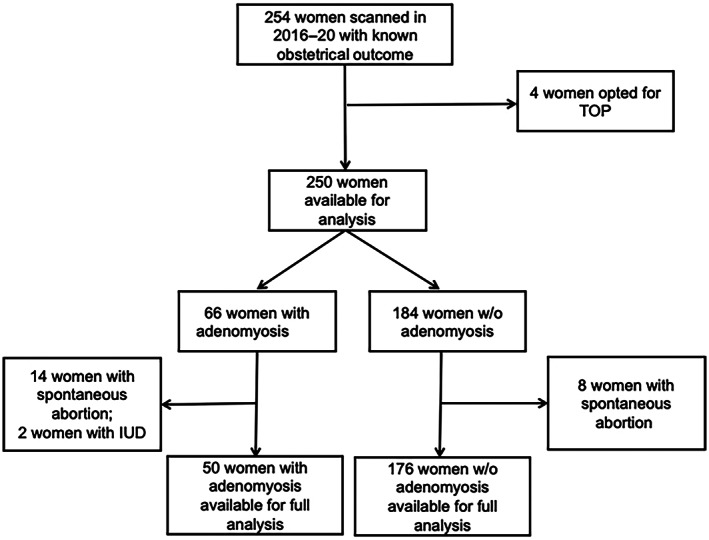
Methods: Retrospective exploratory cohort study including 254 women with a pre-conceptional/first-trimester scan to document adenomyosis and known obstetric outcome. If visible, adenomyosis signs were documented in each trimester and postpartum. Mann-Whitney U tests or χ2 tests were used for continuous and categorical variables, respectively.
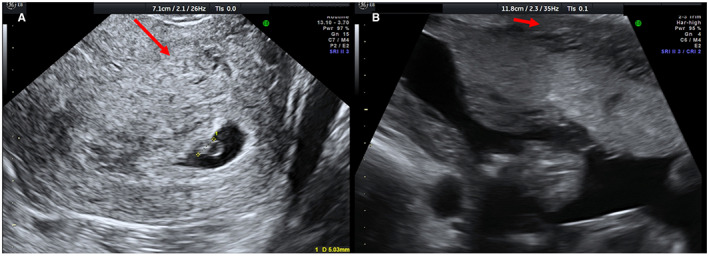
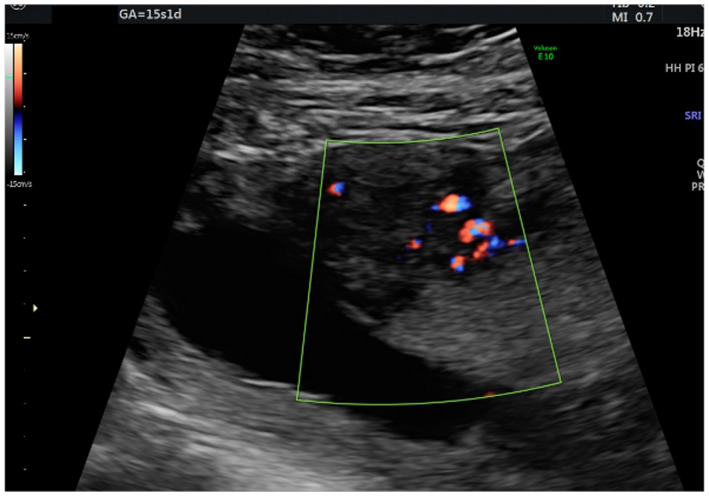
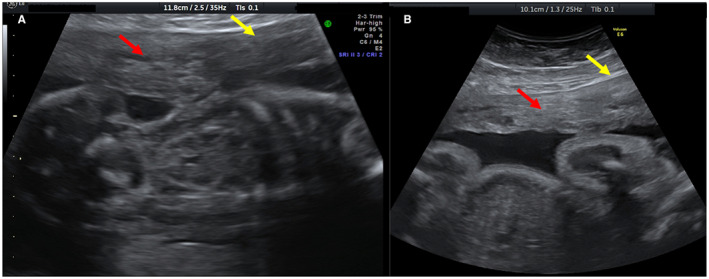
Results: A globular uterus was reported in 79% (n = 52) of women with adenomyosis in the first trimester, in 38% (n = 20) and 2% (n = 1) of women in the second and third trimesters, respectively, and postpartum in 77% (n = 34) of women. Asymmetrical thickening (n = 20, 30%) and cysts (n = 15, 23%) were only visible in 1st trimester. Adenomyosis was associated with miscarriage (odds ratio [OR] 5.9, 95% confidence interval [CI] 2.4-14.9, P < 0.001) also in normal conception only (OR 5.1, 95% CI 1.8-14.2, P = 0.002) or adjusting for maternal age (adjusted OR 5.9, 95% CI 2.3-15.2, P < 0.001). Gestational age at delivery was lower in adenomyosis (P = 0.004); the cesarean section rate was higher than in controls (OR 2.5, 95% CI 1.3-4.8, P = 0.007) also adjusting for age (adjusted OR 2.07, 95% CI 1.06-4.08, P = 0.035).
Conclusions: Signs of adenomyosis were visible but progressively disappeared in pregnancy; adenomyosis was associated with an increased risk of early miscarriage. Prospective studies are needed to confirm our results.
Keywords: adenomyosis; pregnancy; sonography; uterus.
© 2022 The Authors. International Journal of Gynecology & Obstetrics published by John Wiley & Sons Ltd on behalf of International Federation of Gynecology and Obstetrics.
Conflict of interest statement
All authors have no conflicts of interest to disclose.
Figures


References
-
- Benagiano G, Brosens I. History of adenomyosis. Best Pract Res Clin Obstet Gynaecol. 2006;20(4):449‐463. - PubMed
-
- Younes G, Tulandi T. Effects of adenomyosis on in vitro fertilization treatment outcomes: a meta‐analysis. Fertil Steril. 2017;108(3):483‐490.e3. - PubMed
-
- Naftalin J, Hoo W, Pateman K, Mavrelos D, Holland T, Jurkovic D. How common is adenomyosis? A prospective study of prevalence using transvaginal ultrasound in a gynaecology clinic. Hum Reprod. 2012;27(12):3432‐3439. - PubMed
-
- Vercellini P, Parazzini F, Oldani S, Panazza S, Bramante T, Crosignani PG. Adenomyosis at hysterectomy: a study on frequency distribution and patient characteristics. Hum Reprod. 1995;10(5):1160‐1162. - PubMed
-
- Parazzini F, Vercellini P, Panazza S, Chatenoud L, Oldani S, Crosignani PG. Risk factors for adenomyosis. Hum Reprod. 1997;12(6):1275‐1279. - PubMed
MeSH terms
LinkOut - more resources
Full Text Sources
Medical
