


SARS-CoV-2 viral load is associated with risk of transmission to household and community contacts
- PMID: 35931971
- PMCID: PMC9354300
- DOI: 10.1186/s12879-022-07663-1
SARS-CoV-2 viral load is associated with risk of transmission to household and community contacts
Abstract
Background: Factors that lead to successful SARS-CoV-2 transmission are still not well described. We investigated the association between a case's viral load and the risk of transmission to contacts in the context of other exposure-related factors.
Methods: Data were generated through routine testing and contact tracing at a large university. Case viral loads were obtained from cycle threshold values associated with a positive polymerase chain reaction test result from October 1, 2020 to April 15, 2021. Cases were included if they had at least one contact who tested 3-14 days after the exposure. Case-contact pairs were formed by linking index cases with contacts. Chi-square tests were used to evaluate differences in proportions of contacts testing positive. Generalized estimating equation models with a log link were used to evaluate whether viral load and other exposure-related factors were associated with a contact testing positive.
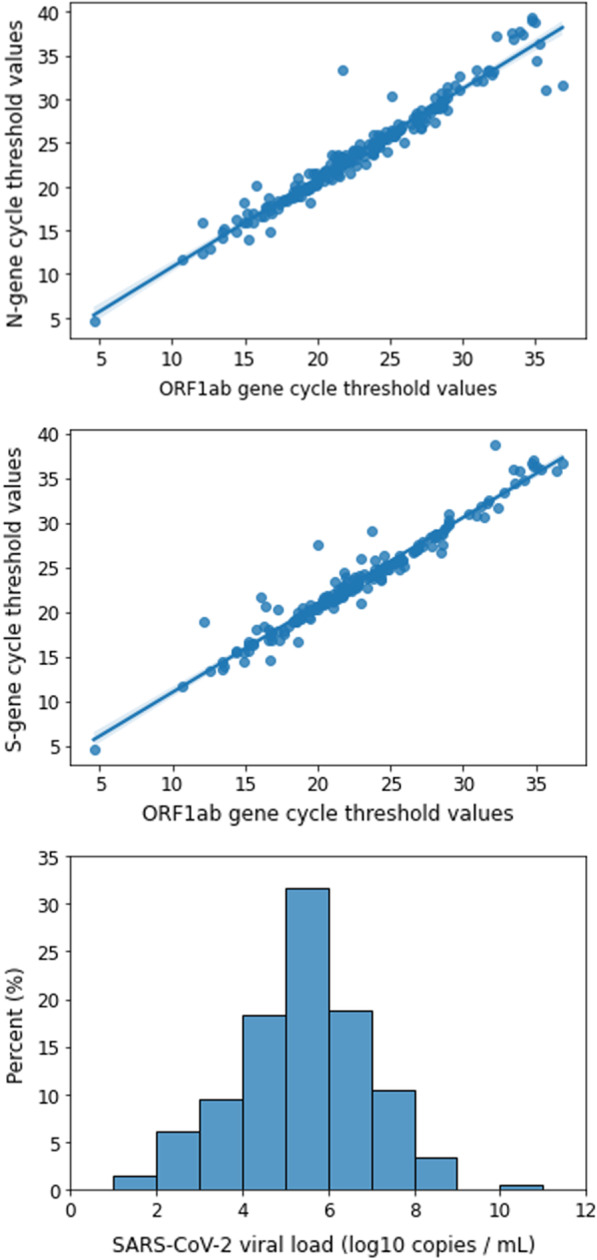
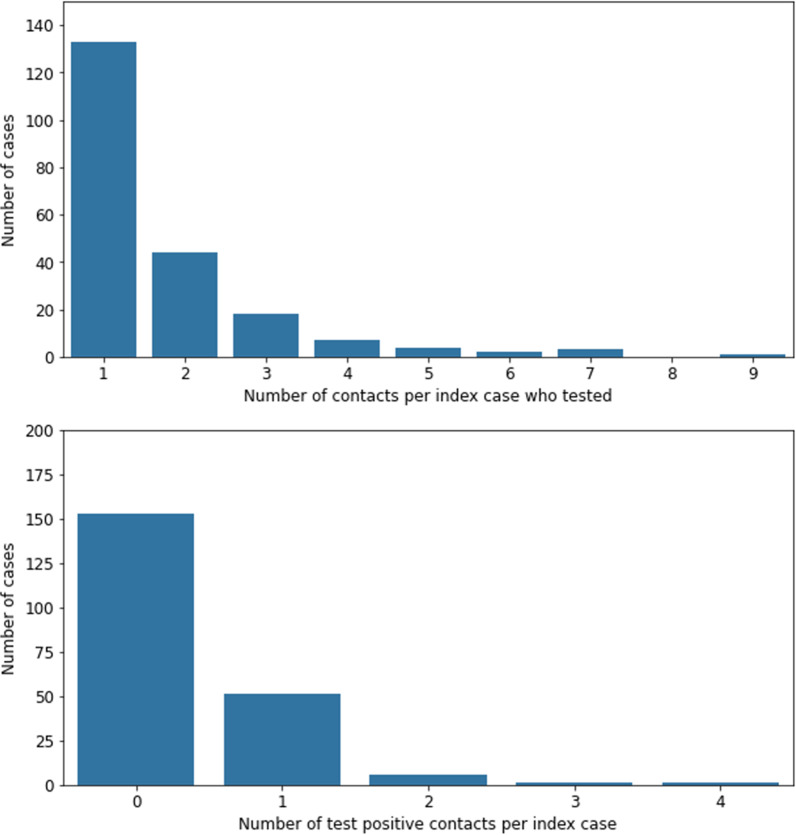
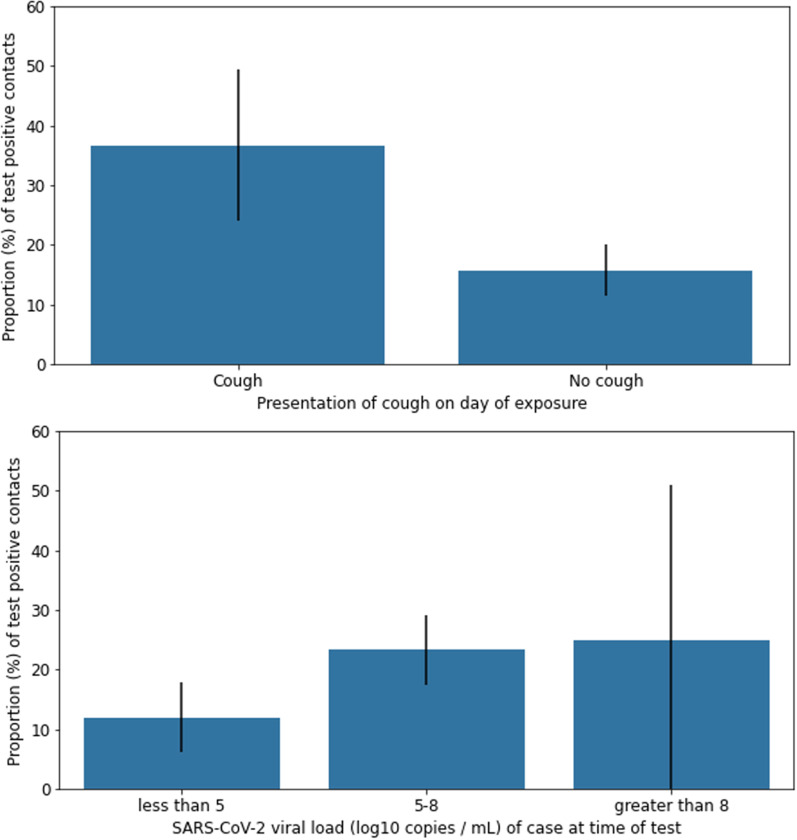
Results: Median viral load among the 212 cases included in the study was 5.6 (1.8-10.4) log10 RNA copies per mL of saliva. Among 365 contacts, 70 (19%) tested positive following their exposure; 36 (51%) were exposed to a case that was asymptomatic or pre-symptomatic on the day of exposure. The proportion of contacts that tested positive increased monotonically with index case viral load (12%, 23% and 25% corresponding to < 5, 5-8 and > 8 log10 copies per mL, respectively; X2 = 7.18, df = 2, p = 0.03). Adjusting for cough, time between test and exposure, and physical contact, the risk of transmission to a close contact was significantly associated with viral load (RR = 1.27, 95% CI 1.22-1.32).
Conclusions: Further research is needed to understand whether these relationships persist for newer variants. For those variants whose transmission advantage is mediated through a high viral load, public health measures could be scaled accordingly. Index cases with higher viral loads could be prioritized for contact tracing and recommendations to quarantine contacts could be made according to the likelihood of transmission based on risk factors such as viral load.
Keywords: COVID-19; Contact; Exposure; Tracing; Transmission; Viral load.
© 2022. The Author(s).
Conflict of interest statement
The authors declare that they have no competing interests.
Figures
References
-
- WHO Coronavirus (COVID-19) Dashboard. https://covid19.who.int/. Accessed 11 Nov 2021.
MeSH terms
Grants and funding
LinkOut - more resources
Full Text Sources
Medical
Miscellaneous
