


Adaptations in clinical examinations of medical students in response to the COVID-19 pandemic: a systematic review
- PMID: 35932046
- PMCID: PMC9356416
- DOI: 10.1186/s12909-022-03662-7
Adaptations in clinical examinations of medical students in response to the COVID-19 pandemic: a systematic review
Abstract
Introduction: Clinical examinations (assessments) are integral to ensuring that medical students can treat patients safely and effectively. The COVID-19 pandemic disrupted traditional formats of clinical examinations. This prompted Medical Schools to adapt their approaches to conducting these examinations to make them suitable for delivery in the pandemic. This systematic review aims to identify the approaches that Medical Schools, internationally, adopted in adapting their clinical examinations of medical students in response to the COVID-19 pandemic.
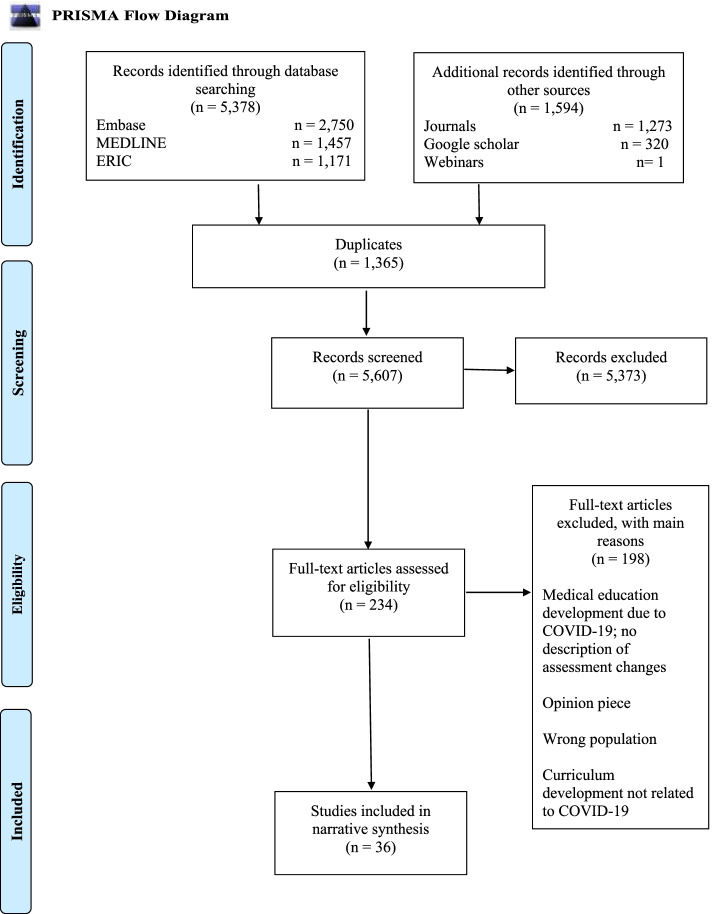
Methods: Three databases and four key medical education journals were systematically searched up to 22 October 2021; a grey literature search was also undertaken. Two reviewers independently screened at title, abstract stage and full text stage against predefined eligibility criteria. Discrepancies were resolved by discussion and involvement of senior authors. Risk of bias assessment was performed using an adapted version of a pre-existing risk of bias assessment tool for medical education developments. Results were summarised in a narrative synthesis.
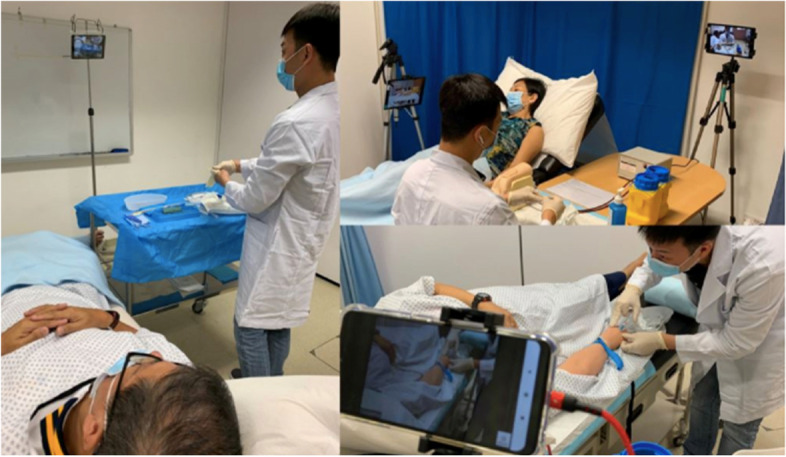
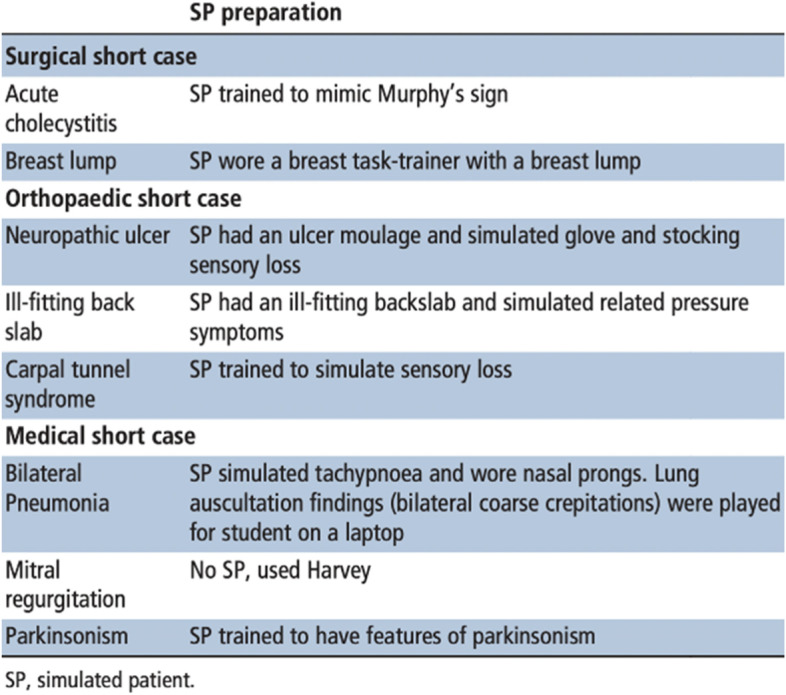
Results: A total of 36 studies were included, which documented the approaches of 48 Medical Schools in 17 countries. Approaches were categorised into in-person clinical examinations (22 studies) or online clinical examinations (14 studies). Authors of studies reporting in-person clinical examinations described deploying enhanced infection control measures along with modified patient participation. Authors of studies reporting online clinical examinations described using online software to create online examination circuits. All authors reported that adapted examinations were feasible, scores were comparable to previous years' student cohorts, and participant feedback was positive. Risk of bias assessment highlighted heterogeneity in reporting of the clinical examinations.
Conclusions: This review identified two broad approaches to adapting clinical examinations in the pandemic: in-person and online. Authors reported it was feasible to conduct clinical examinations in the pandemic where medical educators are given sufficient time and resources to carefully plan and introduce suitable adaptations. However, the risk of bias assessment identified few studies with high reporting quality, which highlights the need for a common framework for reporting of medical education developments to enhance reproducibility across wider contexts. Our review provides medical educators with the opportunity to reflect on past practises and facilitate the design and planning of future examinations.
Keywords: COVID-19; Clinical examination; OSCE; Undergraduate medical education.
© 2022. The Author(s).
Conflict of interest statement
The authors declare that they have no competing interests.
Figures


References
-
- General Medical Council. Assessment in undergraduate medical education. 2011. https://www.gmc-uk.org/-/media/documents/Assessment_in_undergraduate_med.... Accessed 21 Dec 2020.
-
- General Medical Council. Outcome for Graduates 2018. 2018. https://www.gmc-uk.org/-/media/documents/outcomes-for-graduates-2020_pdf.... Accessed 21 Dec 2021.
-
- Harden RM, Lilley P, Patricio M. The definitive guide to the OSCE: The objective structured clinical examination as a performance assessment. 1st ed. Edinburgh: Elsevier Health Sciences; 2015.
Publication types
MeSH terms
LinkOut - more resources
Full Text Sources
Medical
Miscellaneous
