


The impact of COVID-19 workflow changes on radiation oncology incident reporting
- PMID: 35932177
- PMCID: PMC9539311
- DOI: 10.1002/acm2.13742
The impact of COVID-19 workflow changes on radiation oncology incident reporting
Abstract
Background: The Ottawa Hospital's Radiation Oncology program maintains the Incident Learning System (ILS)-a quality assurance program that consists of report submissions of errors and near misses arising from all major domains of radiation. In March 2020, the department adopted workflow changes to optimize patient and provider safety during the COVID-19 pandemic.
Purpose: In this study, we analyzed the number and type of ILS submissions pre- and postpandemic precautions to assess the impact of COVID-19-related workflow changes.
Methods: ILS data was collected over six one-year time periods between March 2016 and March 2021. For all time periods, the number of ILS submissions were counted. Each ILS submission was analyzed for the specific treatment domain from which it arose and its root cause, explaining the impetus for the error or near miss.
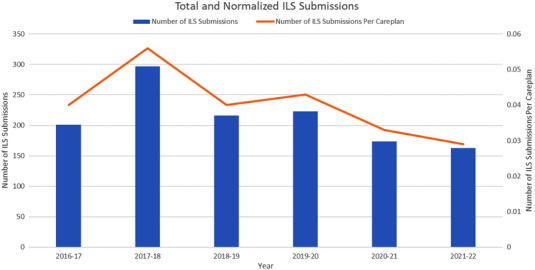
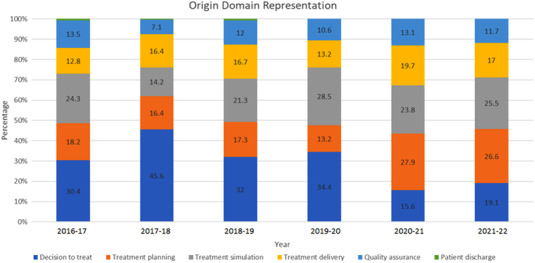
Results: Since the onset of COVID-19-related workflow changes, the total number of ILS submissions have reduced by approximately 25%. Similarly, there were 30% fewer ILS submissions per number of treatment courses compared to prepandemic data. There was also an increase in the proportion of "treatment planning" ILS submissions and a 50% reduction in the proportion of "decision to treat" ILS submissions compared to previous years. Root cause analysis revealed there were more incidents attributable to "poor, incomplete, or unclear documentation" during the pandemic year.
Conclusions: COVID-19 workflow changes were associated with fewer ILS submissions, but a relative increase in submissions stemming from poor documentation and communication. It is imperative to analyze ILS submission data, particularly in a changing work environment, as it highlights the potential and realized mistakes that impact patient and staff safety.
Keywords: COVID-19; incident learning system; quality assurance.
© 2022 The Authors. Journal of Applied Clinical Medical Physics published by Wiley Periodicals, LLC on behalf of The American Association of Physicists in Medicine.
Conflict of interest statement
No conflict of interest.
Figures
References
-
- Clark BG, Brown RJ, Ploquin JL, Kind AL, Grimard L. The management of radiation treatment error through incident learning. Radiother Oncol. 2010;95(3):344‐349. - PubMed
-
- Ford EC, Evans SB. Incident learning in radiation oncology: a review. Med Phys. 2018;45(5):e100‐e119. - PubMed
-
- Pawlicki T, Coffey M, Milosevic M. Incident learning systems for radiation oncology: development and value at the local, national and international level. Clin Oncol (R Coll Radiol). 2017;29(9):562‐567. - PubMed
-
- Hendee WR, Herman MG. Improving patient safety in radiation oncology. Med Phys. 2011;38(1):78‐82. - PubMed
-
- Deufel CL, Mclemore LB, De Los Santos LEF, Classic KL, Park SS, Furutani KM. Patient safety is improved with an incident learning system—clinical evidence in brachytherapy. Radiother Oncol. 2017;125(1):94‐100. - PubMed
MeSH terms
LinkOut - more resources
Full Text Sources
Medical
