


Time Delta Head Impact Frequency: An Analysis on Head Impact Exposure in the Lead Up to a Concussion: Findings from the NCAA-DOD Care Consortium
- PMID: 35933459
- PMCID: PMC9652163
- DOI: 10.1007/s10439-022-03032-w
Time Delta Head Impact Frequency: An Analysis on Head Impact Exposure in the Lead Up to a Concussion: Findings from the NCAA-DOD Care Consortium
Abstract
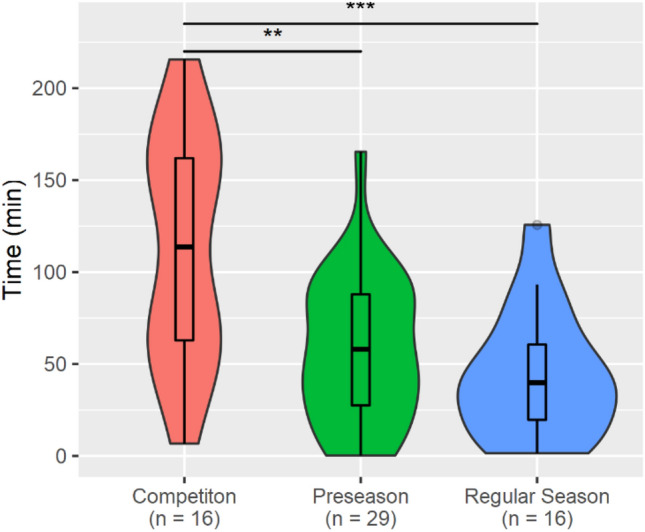
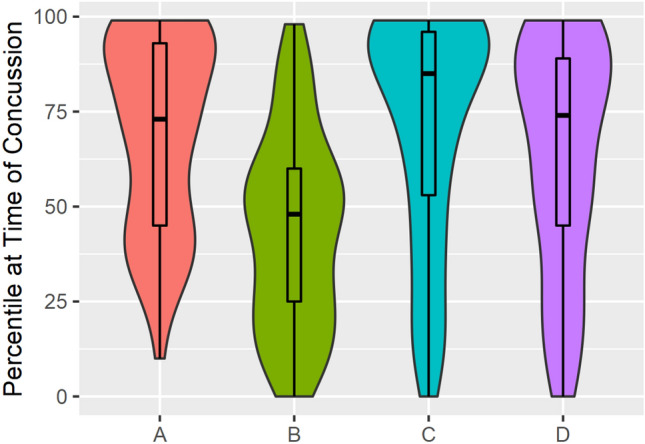
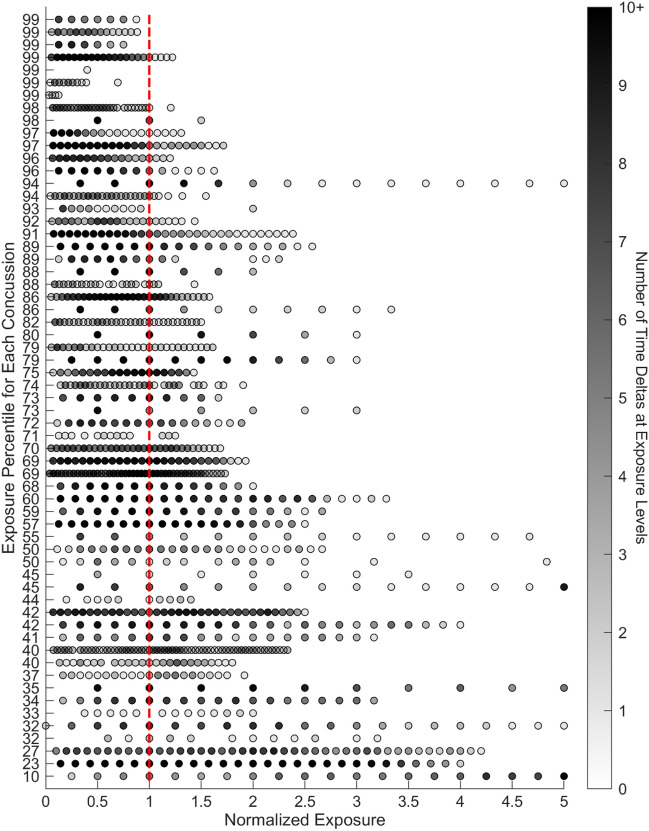
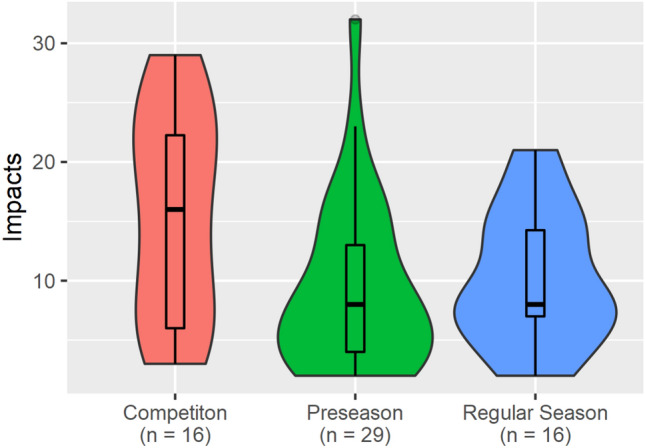
Sport-related concussions can result from a single high magnitude impact that generates concussive symptoms, repeated subconcussive head impacts aggregating to generate concussive symptoms, or a combined effect from the two mechanisms. The array of symptoms produced by these mechanisms may be clinically interpreted as a sport-related concussion. It was hypothesized that head impact exposure resulting in concussion is influenced by severity, total number, and frequency of subconcussive head impacts. The influence of total number and magnitude of impacts was previously explored, but frequency was investigated to a lesser degree. In this analysis, head impact frequency was investigated over a new metric called 'time delta', the time difference from the first recorded head impact of the day until the concussive impact. Four exposure metrics were analyzed over the time delta to determine whether frequency of head impact exposure was greater for athletes on their concussion date relative to other dates of contact participation. Those metrics included head impact frequency, head impact accrual rate, risk weighted exposure (RWE), and RWE accrual rate. Athletes experienced an elevated median number of impacts, RWE, and RWE accrual rate over the time delta on their concussion date compared to non-injury sessions. This finding suggests elevated frequency of head impact exposure on the concussion date compared to other dates that may precipitate the onset of concussion.
Keywords: Concussive threshold; Head impact exposure; Sport-related concussion; Subconcussive; Traumatic brain injury.
© 2022. This is a U.S. Government work and not under copyright protection in the US; foreign copyright protection may apply.
Figures
References
-
- Alosco ML, Tripodis Y, Jarnagin J, Baugh CM, Martin B, Chaisson CE, Estochen N, Song L, Cantu RC, Jeromin A, Stern RA. Repetitive head impact exposure and later-life plasma total tau in former National Football League players. Alzheimer’s Dement. Diagn. Assess. Dis. Monit. 2017;7:33–40. - PMC - PubMed
-
- Bailes JE, Petraglia AL, Omalu BI, Nauman E, Talavage T. Role of subconcussion in repetitive mild traumatic brain injury. J. Neurosurg. 2013;119:1235–1245. - PubMed
