


UV-C irradiation-based inactivation of SARS-CoV-2 in contaminated porous and non-porous surfaces
- PMID: 35933836
- PMCID: PMC9308144
- DOI: 10.1016/j.jphotobiol.2022.112531
UV-C irradiation-based inactivation of SARS-CoV-2 in contaminated porous and non-porous surfaces
Abstract
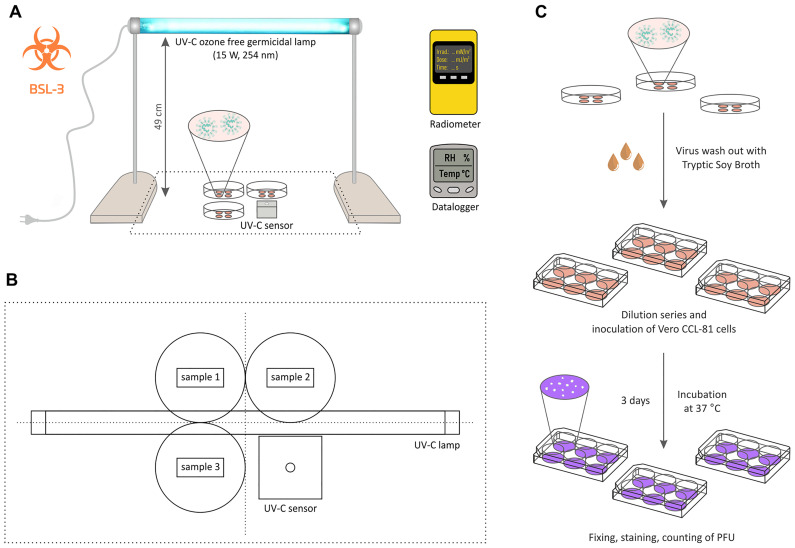
The SARS-CoV-2 pandemic emphasized effective cleaning and disinfection of common spaces as an essential tool to mitigate viral transmission. To address this problem, decontamination technologies based on UV-C light are being used. Our aim was to generate coherent and translational datasets of effective UV-C-based SARS-CoV-2 inactivation protocols for the application on surfaces with different compositions. Virus infectivity after UV-C exposure of several porous (bed linen, various types of upholstery, synthetic leather, clothing) and non-porous (types of plastic, stainless steel, glass, ceramics, wood, vinyl) materials was assessed through plaque assay using a SARS-CoV-2 clinical isolate. Studies were conducted under controlled environmental conditions with a 254-nm UV-C lamp and irradiance values quantified using a 254 nm-calibrated sensor. From each material type (porous/non-porous), a product was selected as a reference to assess the decrease of infectious virus particles as a function of UV-C dose, before testing the remaining surfaces with selected critical doses. Our data show that UV-C irradiation is effectively inactivating SARS-CoV-2 on both material types. However, an efficient reduction in the number of infectious viral particles was achieved much faster and at lower doses on non-porous surfaces. The treatment effectiveness on porous surfaces was demonstrated to be highly variable and composition-dependent. Our findings will support the optimization of UV-C-based technologies, enabling the adoption of effective customizable protocols that will help to ensure higher antiviral efficiencies.
Keywords: COVID-19; Non-porous surfaces; Porous surfaces; SARS-CoV-2; UV-C irradiation; Viral inactivation.
Copyright © 2022 Elsevier B.V. All rights reserved.
Conflict of interest statement
Declaration of Competing Interest The authors declare no conflict of interest.
Figures


References
MeSH terms
LinkOut - more resources
Full Text Sources
Medical
Miscellaneous
