


Pre-pandemic socio-emotional vulnerability, internalizing and externalizing symptoms predict changes in hair cortisol concentrations in reaction to the COVID-19 pandemic in children
- PMID: 35933864
- PMCID: PMC9344696
- DOI: 10.1016/j.psyneuen.2022.105888
Pre-pandemic socio-emotional vulnerability, internalizing and externalizing symptoms predict changes in hair cortisol concentrations in reaction to the COVID-19 pandemic in children
Abstract
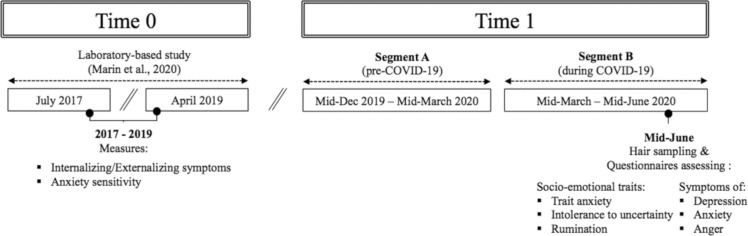
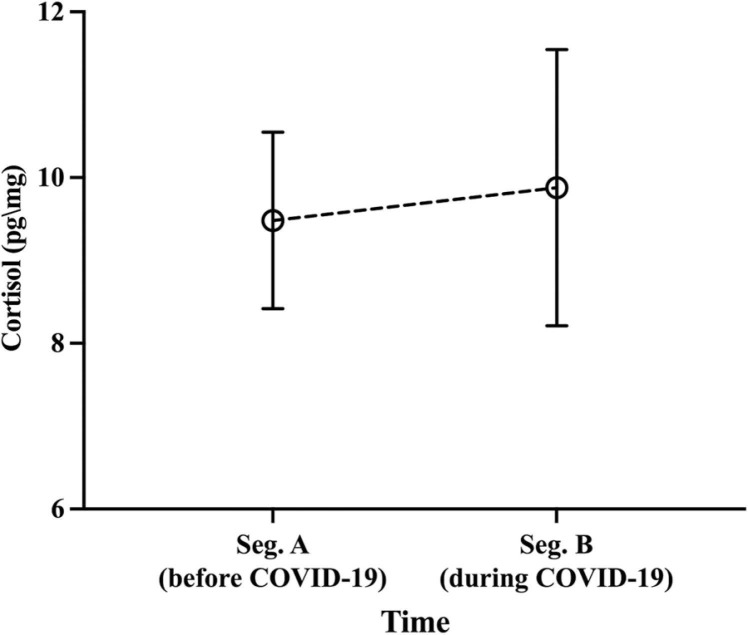
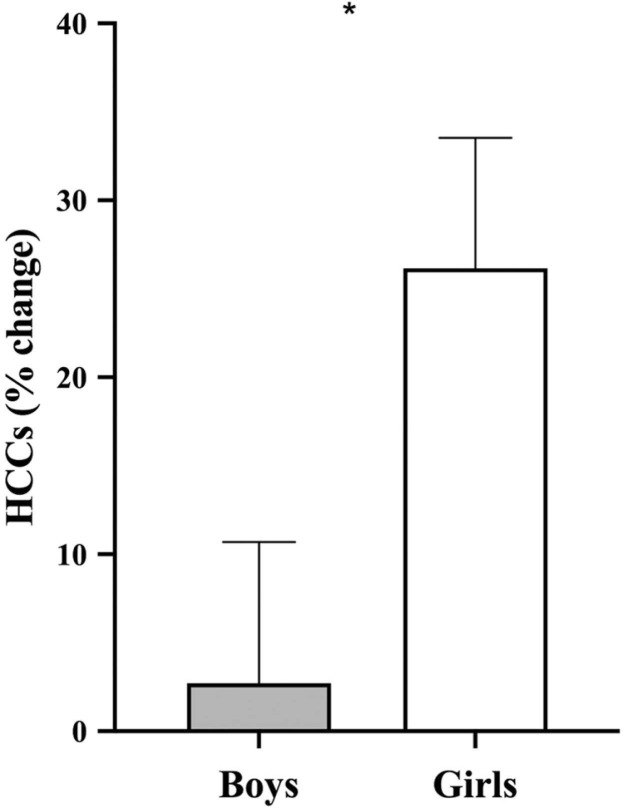
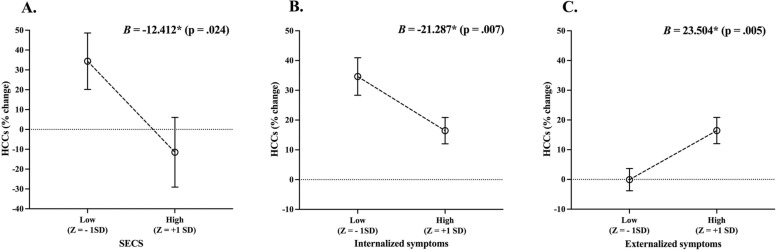
The COVID-19 pandemic led to increased distress in many children, particularly in girls. Socio-emotional vulnerability, as well as psychiatric symptomatology prior to or during the initial stages of the pandemic, have been identified as important predictors of this distress. Still, it is unclear whether the pandemic also had physiological repercussions in children. If so, it remains to be determined whether these same predictors could provide insight into inter-individual variability. This longitudinal study aimed to investigate the effects of socio-emotional vulnerability, as well as pre-pandemic internalizing and externalizing symptoms, on hair cortisol concentrations (HCC) in response to the COVID-19 pandemic in healthy youth. In June 2020 (T1), 69 healthy children (M = 11.57 y/o) who visited the laboratory between 2017 and 2019 (T0) provided a 6 cm hair sample. This technique allowed us to quantify cortisol secretion during the three months preceding the COVID-19 pandemic (Segment A) and during the first three months of the first wave of the pandemic in Quebec, Canada (Segment B). At T0, participants completed the Dominic Interactive to assess pre-pandemic internalizing and externalizing symptoms. A socio-emotional composite score (SECS) was derived using a weighted z-score with the following constructs: anxiety sensitivity (Childhood Anxiety Sensitivity Index) measured at T0, trait anxiety (Trait subscale of the State-Trait Anxiety Inventory for Children (STAI-C)), intolerance of uncertainty (Intolerance of Uncertainty Scale for Children), and trait rumination (Children's Response Style Scale) measured at T1. A linear regression was conducted using the percent change in HCC across Segment A and B as the dependent variable, where SECS, pre-pandemic internalizing and externalizing symptoms, and sex were used as predictors. We found a main effect of sex, with girls presenting increased HCC reactivity compared to boys. We also found that SECS and internalizing symptoms negatively predicted HCC, whereas the opposite relationship was found between externalizing symptoms and HCC reactivity. For healthy children, our results suggest that previous psychiatric symptoms and socio-emotional vulnerability may be risk factors for the presentation of diverging cortisol response patterns in response to an adverse life event (such as the COVID-19 pandemic).
Keywords: COVID-19; Externalizing symptoms; Hair cortisol; Internalizing symptoms; Sex differences; Socio-emotional vulnerability; Youth.
Copyright © 2022 Elsevier Ltd. All rights reserved.
Conflict of interest statement
Declaration of Competing Interest The authors declare that they have no known competing financial interests or personal relationships that could have appeared to influence the work reported in this paper.
Figures
References
-
- Aguinis H., Gottfredson R.K., Joo H. Best-practice recommendations for defining, identifying, and handling outliers. Organ. Res. Methods. 2013;16(2):270–301. doi: 10.1177/1094428112470848. - DOI
-
- Aiken L.S., West S.G., Reno R.R. SAGE; 1991. Multiple Regression: Testing and Interpreting Interactions.
Publication types
MeSH terms
Substances
LinkOut - more resources
Full Text Sources
Medical
