


Optimal Antithrombotic Therapy in Patients Undergoing Percutaneous Coronary Intervention: A Focused Review on High Bleeding Risk
- PMID: 35934784
- PMCID: PMC9529379
- DOI: 10.5551/jat.RV17066
Optimal Antithrombotic Therapy in Patients Undergoing Percutaneous Coronary Intervention: A Focused Review on High Bleeding Risk
Abstract
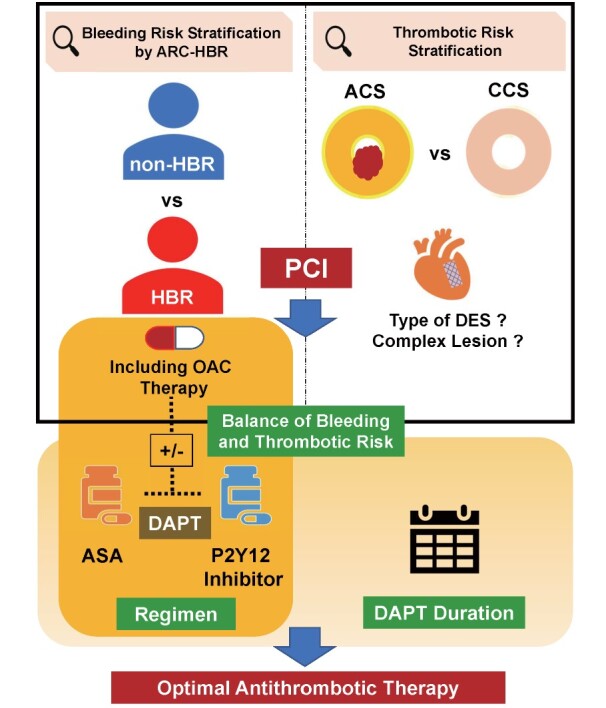
Dual antiplatelet therapy (DAPT) is a therapeutic cornerstone to prevent stent thrombosis following percutaneous coronary intervention (PCI) for coronary artery disease (CAD). However, the longer the DAPT duration, the higher the incidence of bleeding and mortality. Since the advent of second-generation drug-eluting stents (DES), the continuous evolution of DES has reduced the thrombotic risk and allowed for a shorter DAPT duration. On the other hand, concerns on the elevated risk of bleeding during antithrombotic therapy have been further raised due to the growing number of elderly CAD patients with multiple comorbidities. The consequent debate topic over post-PCI antithrombotic therapy has shifted from simply reducing thrombotic risk to safely minimizing bleeding risk. Due to the significant impact of bleeding on clinical outcomes, including prognosis, current guidelines on antithrombotic therapy for CAD prioritize stratification of patients at a high bleeding risk (HBR) as the top consideration in determining post-PCI antithrombotic therapy. Achieving optimal antithrombotic therapy for each patient undergoing PCI requires a better understanding of the clinical variables constituting the balance of bleeding and thrombotic risk. This review highlights relevant evidence required to optimize antithrombotic therapy for HBR patients undergoing PCI.
Keywords: Antithrombotic Therapy; High Bleeding Risk (HBR); Percutaneous coronary intervention (PCI).
Figures
References
-
- Yusuf S, Zhao F, Mehta SR, Chrolavicius S, Tognoni G, Fox KK and Clopidogrel in Unstable Angina to Prevent Recurrent Events Trial Investigators: Effects of clopidogrel in addition to aspirin in patients with acute coronary syndromes without ST-segment elevation. N Engl J Med, 2001; 345: 494-502 - PubMed
-
- Patrono C, Garcia Rodriguez LA, Landolfi R and Baigent C: Low-dose aspirin for the prevention of atherothrombosis. N Engl J Med, 2005; 353: 2373-2383 - PubMed
-
- Mangano DT and Multicenter Study of Perioperative Ischemia Research Group: Aspirin and mortality from coronary bypass surgery. N Engl J Med, 2002; 347: 1309-1317 - PubMed
