


Epidemiology and Fracture Patterns of Traumatic Phalangeal Fractures
- PMID: 35936823
- PMCID: PMC9351885
- DOI: 10.1097/GOX.0000000000004455
Epidemiology and Fracture Patterns of Traumatic Phalangeal Fractures
Abstract
Background: Despite the relatively high incidence of phalangeal fractures, there is an imperfect understanding of the epidemiology and anatomical distribution of these fractures. This study describes the patient characteristics, anatomic distribution, and detailed fracture patterns of phalangeal fractures among a large adult cohort in the United States.
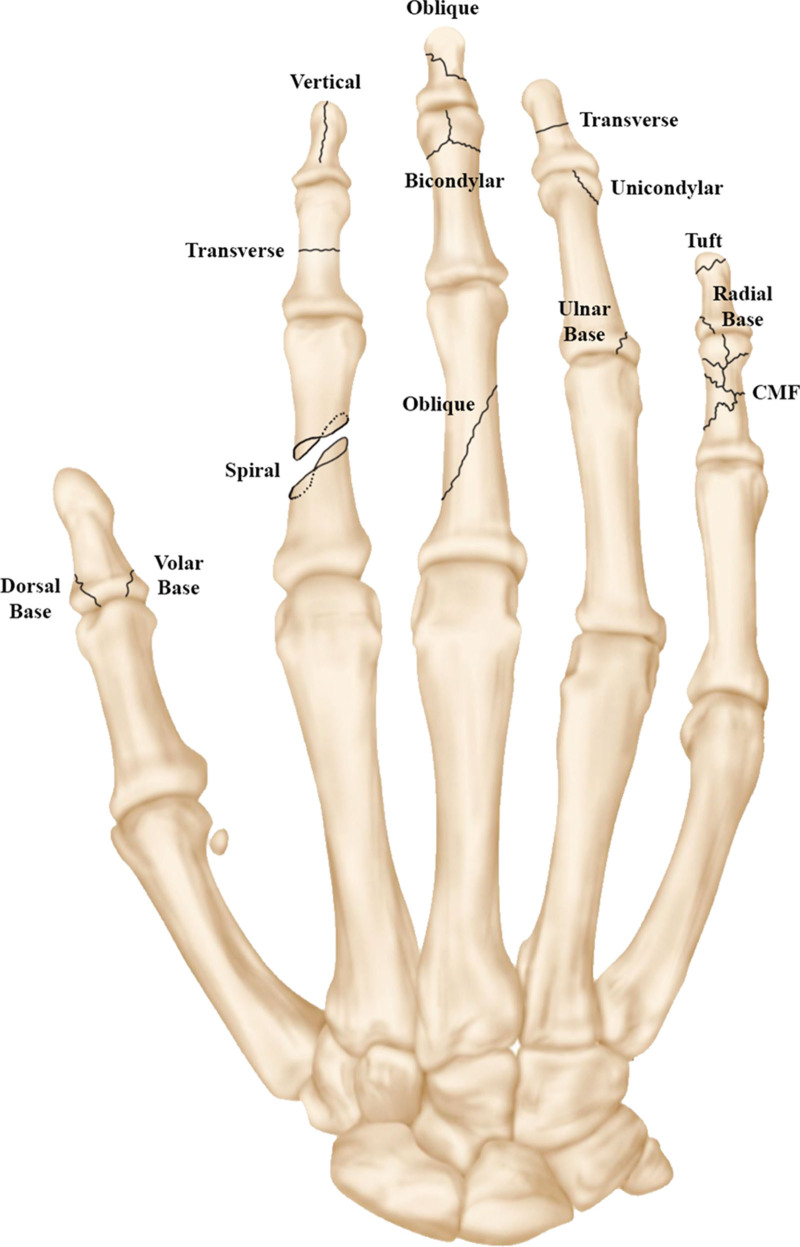
Methods: A retrospective study was performed among patients with phalangeal fractures in the United States between January 2010 and January 2015. Included patients were 18 years old or older and had a diagnosis of a phalangeal fracture. A total of 2140 phalangeal fractures in 1747 patients were included, and a manual chart review was performed to collect epidemiological and radiographic information. Fractures were classified based on location and fracture pattern.
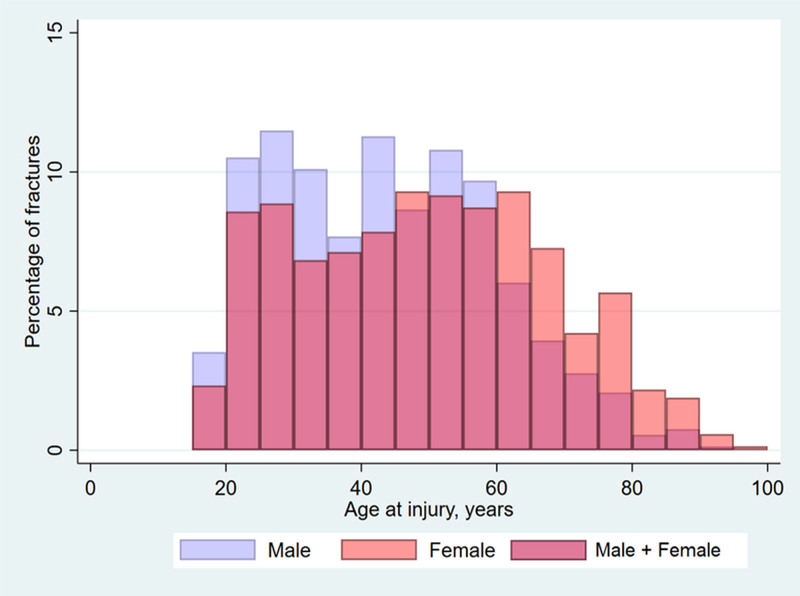
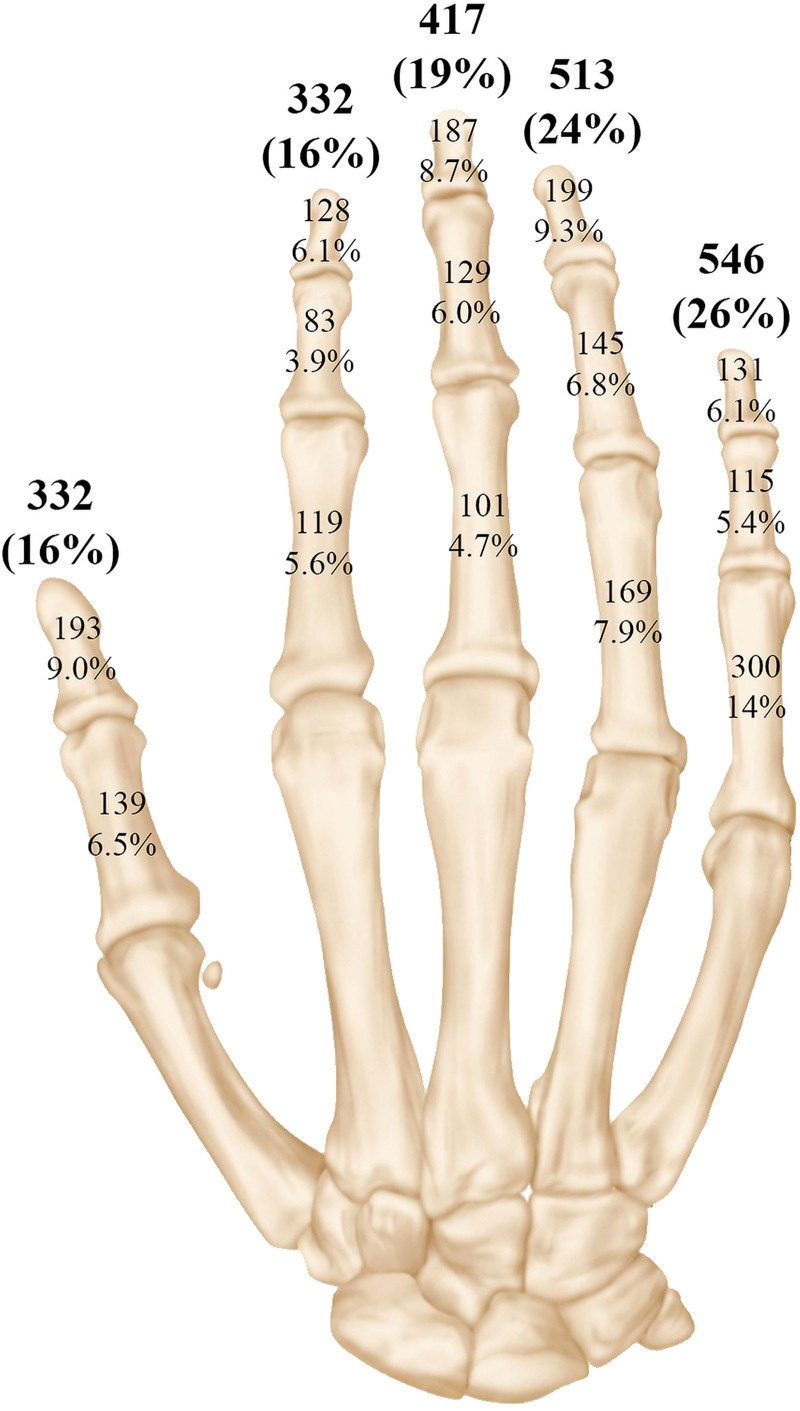
Results: The median age at the time of injury was 45 years (interquartile range, 30-57), and 65% of patients were men. The small finger had the highest incidence of fractures (26%) followed by the ring finger (24%). Distal and proximal phalanges demonstrated the highest incidence of fractures at 39% each. The dominant hand was affected in 44% of cases. Eighteen percent of fractures were due to a work-related trauma mechanism, and the most common mechanism of injury was blunt trauma (46%).
Conclusion: This study provides a detailed overview of the anatomic distribution and fracture patterns of phalangeal fractures in an adult US population and, thus, may aid hand surgeons treating these injuries.
Copyright © 2022 The Authors. Published by Wolters Kluwer Health, Inc. on behalf of The American Society of Plastic Surgeons.
Figures
References
-
- de Putter CE, Selles RW, Polinder S, et al. Economic impact of hand and wrist injuries: health-care costs and productivity costs in a population-based study. J Bone Joint Surg Am. 2012;94:e56. - PubMed
-
- De Jonge JJ, Kingma J, Van Der Lei B, et al. Phalangeal fractures of the hand. An analysis of gender and age-related incidence and aetiology. J Hand Surg Am. 1994;19:168–170.. - PubMed
-
- Williams SA, Chastek B, Sundquist K, et al. Economic burden of osteoporotic fractures in US managed care enrollees. Am J Manag Care. 2020;26:e142–e149. - PubMed
-
- Hove LM. Fractures of the hand. Distribution and relative incidence. Scand J Plast Reconstr Surg Hand Surg. 1993;27:317–319. - PubMed
LinkOut - more resources
Full Text Sources