


Effects of a 12-week structured circuit exercise program on physical fitness levels of children with autism spectrum condition and typically developing children
- PMID: 35937176
- PMCID: PMC9351571
- DOI: 10.1080/20473869.2020.1819943
Effects of a 12-week structured circuit exercise program on physical fitness levels of children with autism spectrum condition and typically developing children
Abstract
Purpose: This study aimed to determine the effects of a circuit exercise program on the physical fitness parameters of children with atypical autism spectrum condition (ASC) and typically developing (TD) children.
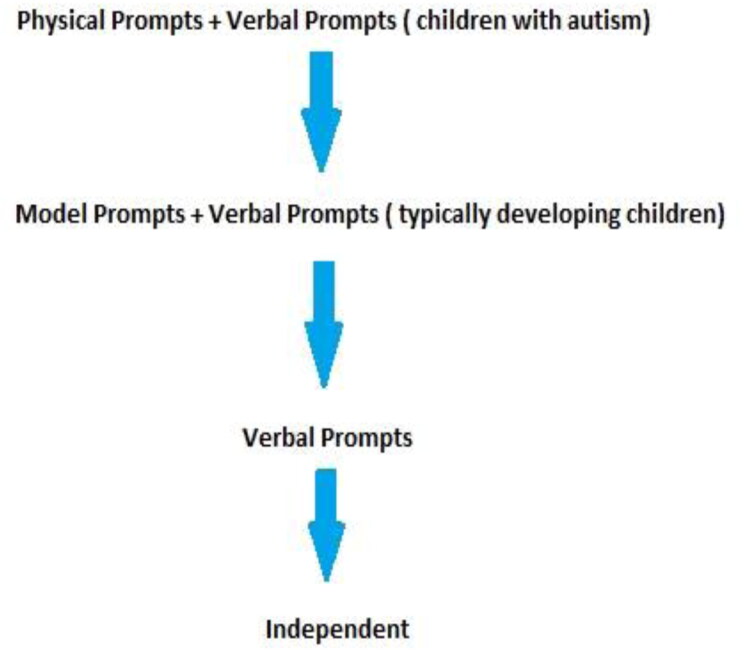
Method: Fourteen (14) boys with atypical autism (mean age: 10.07 ± 0.25 years; weight: 24.97 ± 0.64 kg; height: 126.79 ± 1.33 cm) and 14 typically developing boys (mean age: 10.07 ± 0.30 years; weight: 26.97 ± 0.55 kg; height: 126.50 ± 0.62 cm) participated in the study. The children were divided into four groups using a random coin toss: Autism Exercise Group (AEG), Autism Control Group (ACG), Typically Developing Exercise Group (TDEG), and Typically Developing Control Group (TDCG). Testing parameters from the Bruininks-Oseretsky test of gross motor proficiency (BOT-2) included running speed and agility, balance, bilateral coordination, and the standing long jump. Handgrip strength (both sides), reaction times (visual and auditory), and flexibility tests were also performed. The exercise program consisted of three 60-minute sessions per week for 12 weeks, using the most-to-least prompting method.
Findings: Significant improvements were observed for AEG in running speed and agility, balance, standing long jump, reaction times, handgrip strength, and flexibility (p < 0.05). For TDEG, only the standing long jump scores failed to significantly improve (p < .05). Comparing AEG and TDEG pre- and post-test results, the former showed 30% greater development with respect to balance, standing long jump, auditory reaction time, and handgrip strength (p < 0.05).
Conclusion: Based on the significant improvements in physical fitness parameters of AEG, we recommend that children with ASC start sports training immediately when diagnosed with autism and participate in structured physical activities with their peers.
Keywords: BOT-2; autism; exercise; physical fitness.
© The British Society of Developmental Disabilities 2020.
Conflict of interest statement
The authors declare that they have no conflicts of interest.
Figures
References
-
- ADDM Community Report on Autism, 2018. Centers for Disease Control and Prevention. Available at: <http://www.cdc.gov/ncbddd/autism/addm-community-report/documents/addm-co...>.[ accessed 10 Sseptember, 2020].
-
- American Psychiatric Association (DSM-V) , 2013. Diagnostic and statistical manual of mental disorders. 5th ed. Washington, DC: American Psychiatric Association.
-
- American Psychiatric Association [APA], 2000. The diagnostic and statistical manual of mental disorders. 4th ed. text revision (DSM‐IV‐TR). Washington, DC: American Psychiatric Pub.
-
- Baio, J., Wiggins, L., Christensen, D. L., Maenner, M. J., Daniels, J., Warren, Z., Kurzius-Spencer, M., Zahorodny, W., Robinson Rosenberg, C., White, T., Durkin, M. S., Imm, P., Nikolaou, L., Yeargin-Allsopp, M., Lee, L. C., Harrington, R., Lopez, M., Fitzgerald, R. T., Hewitt, A., Pettygrove, S., Constantino, J. N., Vehorn, A., Shenouda, J., Hall-Lande, J., Van Naarden Braun, K. and Dowling, N. F. 2018. Prevalence of autism spectrum disorder among children aged 8 years- autism and developmental disabilities monitoring network, 11 sites, United States, 2014. Morbidity and Mortality Weekly Report. Surveillance Summaries, 67, 1–23. - PMC - PubMed
LinkOut - more resources
Full Text Sources
Medical
Miscellaneous
