


2020 International brain-computer interface competition: A review
- PMID: 35937679
- PMCID: PMC9354666
- DOI: 10.3389/fnhum.2022.898300
2020 International brain-computer interface competition: A review
Abstract
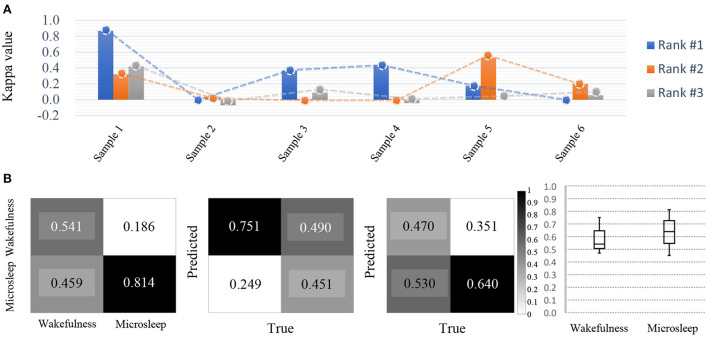
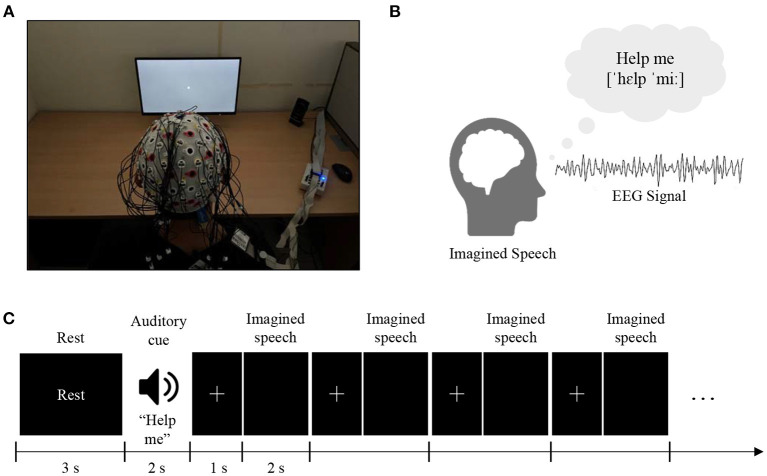
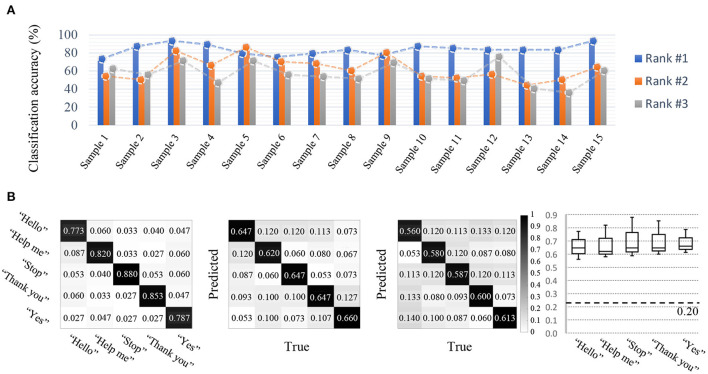
The brain-computer interface (BCI) has been investigated as a form of communication tool between the brain and external devices. BCIs have been extended beyond communication and control over the years. The 2020 international BCI competition aimed to provide high-quality neuroscientific data for open access that could be used to evaluate the current degree of technical advances in BCI. Although there are a variety of remaining challenges for future BCI advances, we discuss some of more recent application directions: (i) few-shot EEG learning, (ii) micro-sleep detection (iii) imagined speech decoding, (iv) cross-session classification, and (v) EEG(+ear-EEG) detection in an ambulatory environment. Not only did scientists from the BCI field compete, but scholars with a broad variety of backgrounds and nationalities participated in the competition to address these challenges. Each dataset was prepared and separated into three data that were released to the competitors in the form of training and validation sets followed by a test set. Remarkable BCI advances were identified through the 2020 competition and indicated some trends of interest to BCI researchers.
Keywords: brain-computer interface (BCI); competition; electroencephalogram; neural decoding; open datasets.
Copyright © 2022 Jeong, Cho, Lee, Lee, Shin, Kweon, Millán, Müller and Lee.
Figures

References
-
- An S., Kim S., Chikontwe P., Park S. H. (2020). “Few-shot relation learning with attention for EEG-based motor imagery classification,” in 2020 IEEE/RSJ International Conference on Intelligent Robots and Systems (IROS) (Las Vegas, NV: IEEE; ), 10933–10938.
Publication types
LinkOut - more resources
Full Text Sources
