


PD-1 blockade following ART interruption enhances control of pathogenic SIV in rhesus macaques
- PMID: 35939675
- PMCID: PMC9388156
- DOI: 10.1073/pnas.2202148119
PD-1 blockade following ART interruption enhances control of pathogenic SIV in rhesus macaques
Abstract
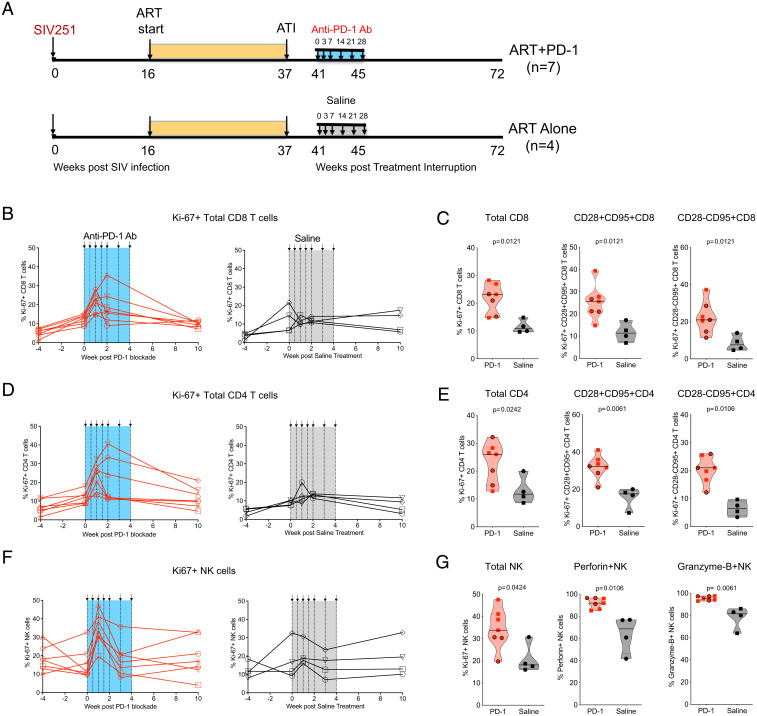
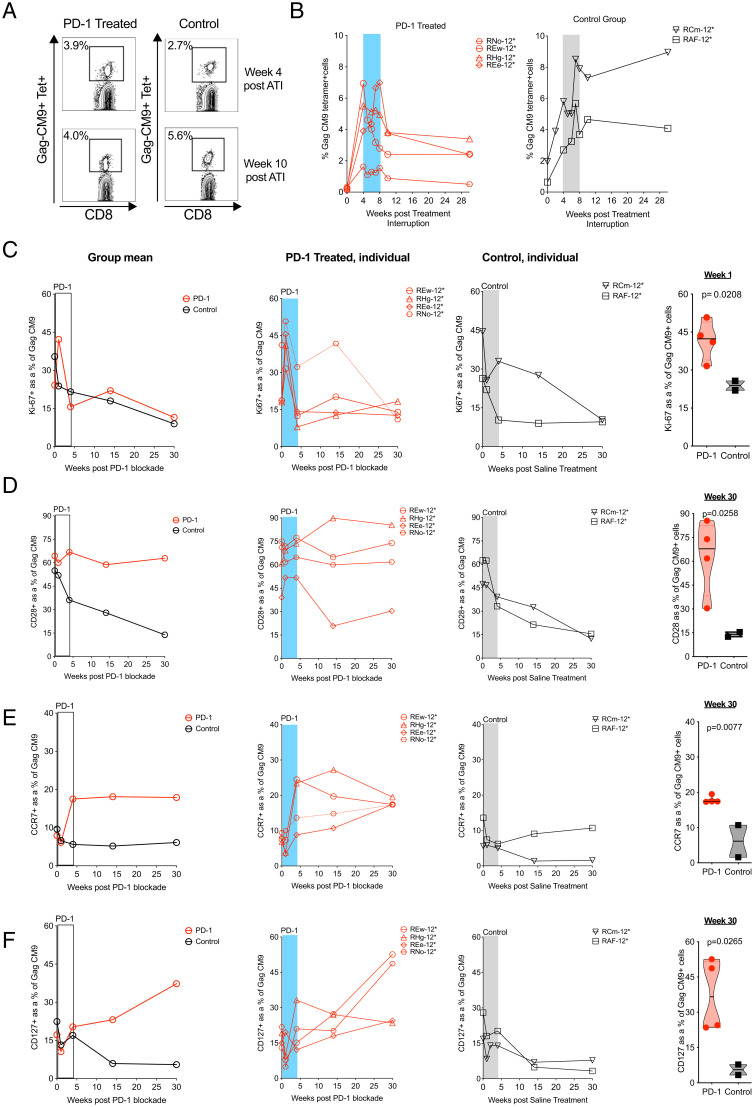
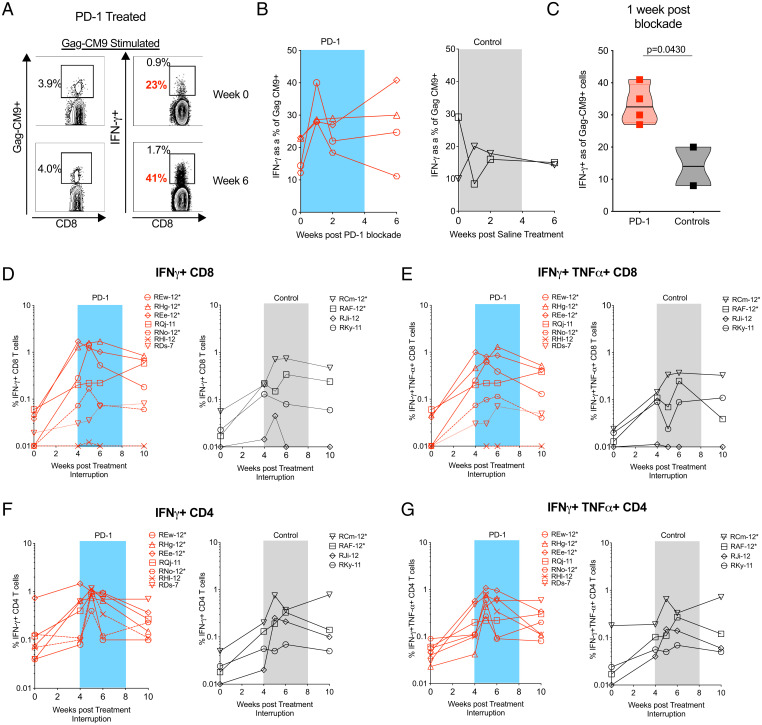
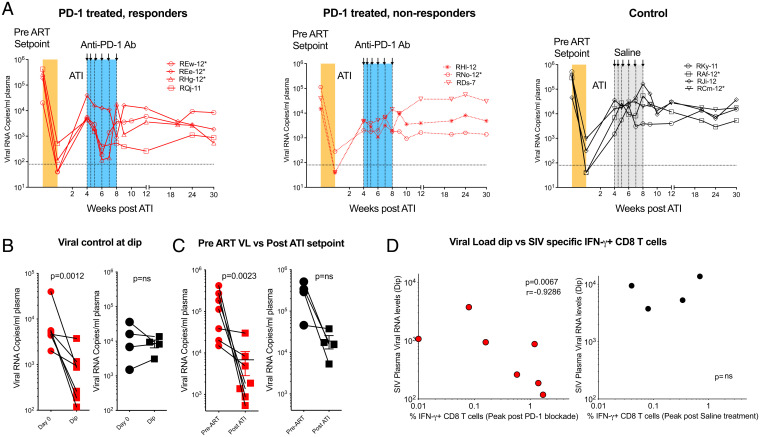
Programmed death-1 (PD-1) blockade during chronic Simian immunodeficiency virus (SIV) infection results in restoration of CD8 T-cell function and enhances viral control. Here, we tested the therapeutic benefits of PD-1 blockade administered soon after anti-retrovial therapy (ART) interruption (ATI) by treating SIV-infected and ART-suppressed macaques with either an anti-PD-1 antibody (n = 7) or saline (n = 4) at 4 wk after ATI. Following ATI, the plasma viremia increased rapidly in all animals, and the frequency of SIV-specific CD8 T cells also increased in some animals. PD-1 blockade post ATI resulted in higher proliferation of total memory CD8 and CD4 T cells and natural killer cells. PD-1 blockade also resulted in higher proliferation of SIV-specific CD8 T cells and promoted their differentiation toward better functional quality. Importantly, four out of the seven anti-PD-1 antibody-treated animals showed a rapid decline in plasma viremia by 100- to 2300-fold and this was observed only in animals that showed measurable SIV-specific CD8 T cells post PD-1 blockade. These results demonstrate that PD-1 blockade following ATI can significantly improve the function of anti-viral CD8 T cells and enhance viral control and strongly suggests its potential synergy with other immunotherapies that induce functional CD8 T-cell response under ART. These results have important implications for HIV cure research.
Keywords: HIV; HIV cure; PD-1; SIV.
Conflict of interest statement
Competing interest statement: V.V., K.T., G.J.F., R.A., and R.R.A. are co-inventors of PD-1 technology that has been licensed to Genentech by Emory University. GJF has patents/pending royalties on the PD-1/PD-L1 pathway from Roche, Merck MSD, Bristol-Myers-Squibb, Merck KGA, Boehringer-Ingelheim, AstraZeneca, Dako, Leica, Mayo Clinic, and Novartis. GJF has served on advisory boards for Roche, Bristol-Myers-Squibb, Xios, Origimed, Triursus, iTeos, NextPoint, IgM, Jubilant and GV20. GJF has equity in Nextpoint, Triursus, Xios, iTeos, IgM, and GV20.
Figures
References
-
- Day C. L., et al. , PD-1 expression on HIV-specific T cells is associated with T-cell exhaustion and disease progression. Nature 443, 350–354 (2006). - PubMed
-
- Trautmann L., et al. , Upregulation of PD-1 expression on HIV-specific CD8+ T cells leads to reversible immune dysfunction. Nat. Med. 12, 1198–1202 (2006). - PubMed
-
- Barber D. L., et al. , Restoring function in exhausted CD8 T cells during chronic viral infection. Nature 439, 682–687 (2006). - PubMed
Publication types
MeSH terms
Substances
Grants and funding
LinkOut - more resources
Full Text Sources
Research Materials
