


Multianalyte Prognostic Signature Including Circulating Tumor DNA and Circulating Tumor Cells in Patients With Advanced Pancreatic Adenocarcinoma
- PMID: 35939771
- PMCID: PMC9384952
- DOI: 10.1200/PO.22.00060
Multianalyte Prognostic Signature Including Circulating Tumor DNA and Circulating Tumor Cells in Patients With Advanced Pancreatic Adenocarcinoma
Abstract
Purpose: Pancreatic ductal adenocarcinoma (PDAC) is associated with a poor prognosis. Multianalyte signatures, including liquid biopsy and traditional clinical variables, have shown promise for improving prognostication in other solid tumors but have not yet been rigorously assessed for PDAC.
Materials and methods: We performed a prospective cohort study of patients with newly diagnosed locally advanced pancreatic cancer (LAPC) or metastatic PDAC (mPDAC) who were planned to undergo systemic therapy. We collected peripheral blood before systemic therapy and assessed circulating tumor cells (CTCs), cell-free DNA concentration (cfDNA), and circulating tumor KRAS (ctKRAS)-variant allele fraction (VAF). Association of variables with overall survival (OS) was assessed in univariate and multivariate survival analysis, and comparisons were made between models containing liquid biopsy variables combined with traditional clinical prognostic variables versus models containing traditional clinical prognostic variables alone.
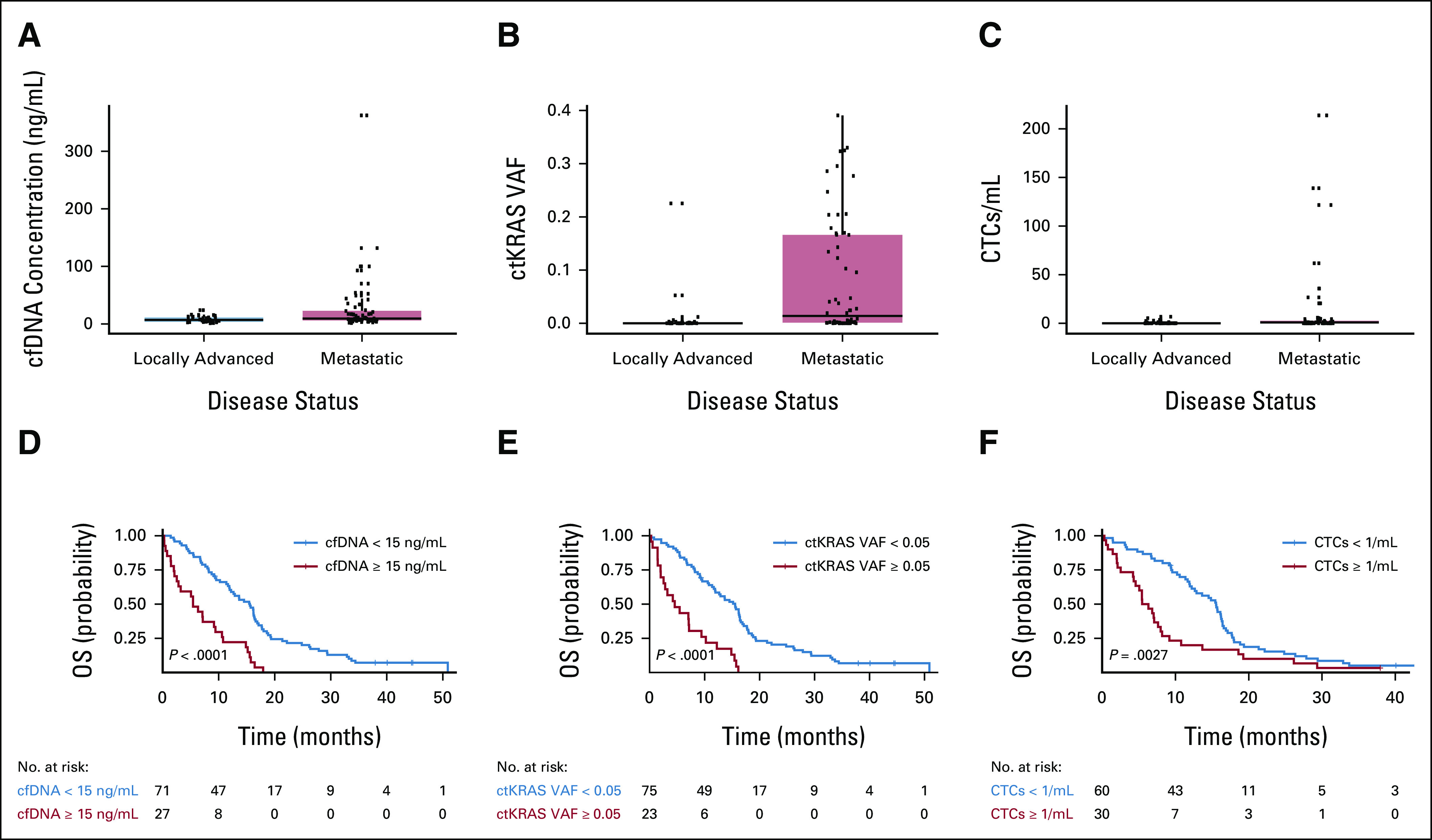
Results: One hundred four patients, 40 with LAPC and 64 with mPDAC, were enrolled. CTCs, cfDNA concentration, and ctKRAS VAF were all significantly higher in patients with mPDAC than patients with LAPC. ctKRAS VAF (cube root; 0.05 unit increments; hazard ratio, 1.11; 95% CI, 1.03 to 1.21; P = .01), and CTCs ≥ 1/mL (hazard ratio, 2.22; 95% CI, 1.34 to 3.69; P = .002) were significantly associated with worse OS in multivariate analysis while cfDNA concentration was not. A model selected by backward selection containing traditional clinical variables plus liquid biopsy variables had better discrimination of OS compared with a model containing traditional clinical variables alone (optimism-corrected Harrell's C-statistic 0.725 v 0.681).
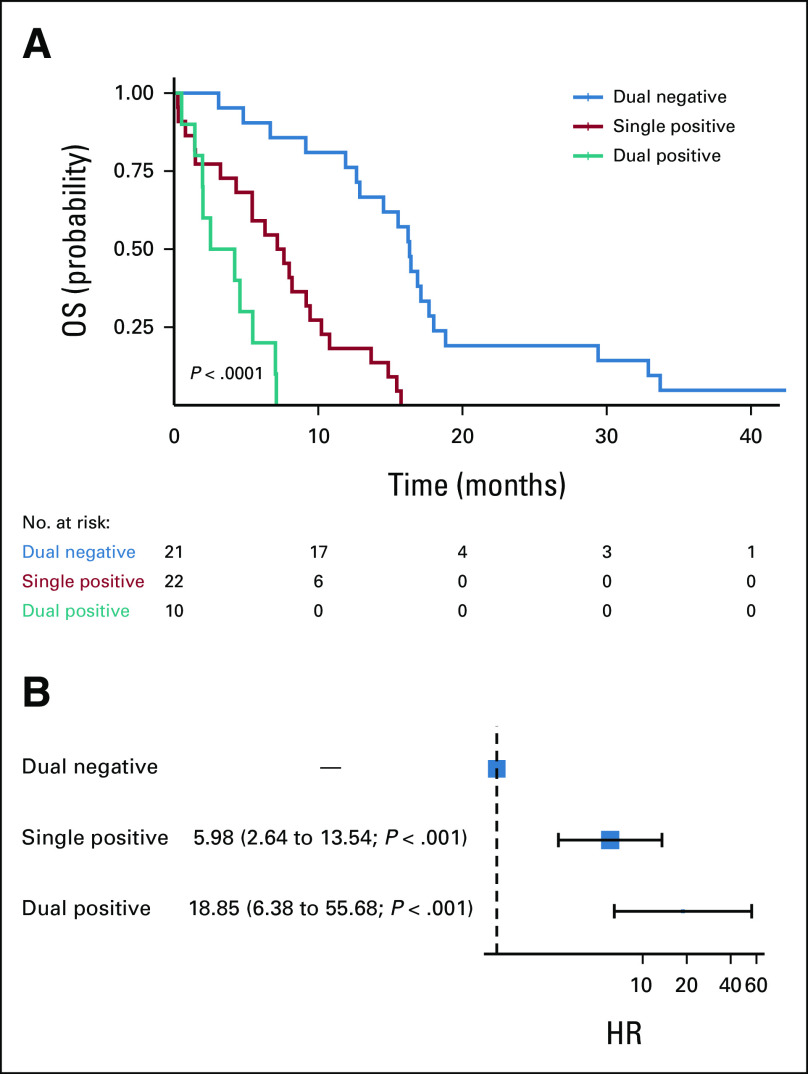
Conclusion: A multianalyte prognostic signature containing CTCs, ctKRAS, and cfDNA concentration outperformed a model containing traditional clinical variables alone suggesting that CTCs, ctKRAS, and cfDNA provide prognostic information complementary to traditional clinical variables in advanced PDAC.
Conflict of interest statement
The following represents disclosure information provided by authors of this manuscript. All relationships are considered compensated unless otherwise noted. Relationships are self-held unless noted. I = Immediate Family Member, Inst = My Institution. Relationships may not relate to the subject matter of this manuscript. For more information about ASCO's conflict of interest policy, please refer to
Open Payments is a public database containing information reported by companies about payments made to US-licensed physicians (
Figures
References
-
- Siegel RL, Miller KD, Jemal A. Cancer statistics, 2018. CA Cancer J Clin. 2018;68:7–30. - PubMed
-
- Worni M, Guller U, White RR, et al. Modest improvement in overall survival for patients with metastatic pancreatic cancer: A trend analysis using the surveillance, epidemiology, and end results registry from 1988 to 2008. Pancreas. 2013;42:1157–1163. - PubMed
-
- Singh N, Gupta S, Pandey RM, et al. High levels of cell-free circulating nucleic acids in pancreatic cancer are associated with vascular encasement, metastasis and poor survival. Cancer Invest. 2015;33:78–85. - PubMed
Publication types
MeSH terms
Substances
Grants and funding
LinkOut - more resources
Full Text Sources
Medical
Miscellaneous
