


Sulforaphane, a secondary metabolite in crucifers, inhibits the oxidative stress adaptation and virulence of Xanthomonas by directly targeting OxyR
- PMID: 35942507
- PMCID: PMC9452769
- DOI: 10.1111/mpp.13245
Sulforaphane, a secondary metabolite in crucifers, inhibits the oxidative stress adaptation and virulence of Xanthomonas by directly targeting OxyR
Abstract
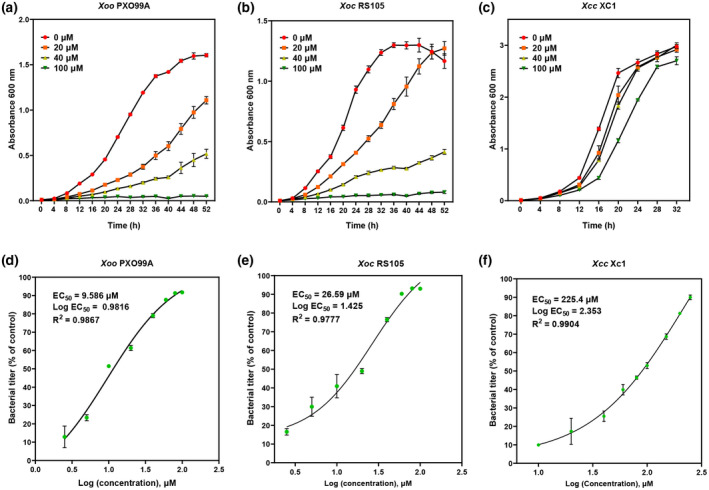
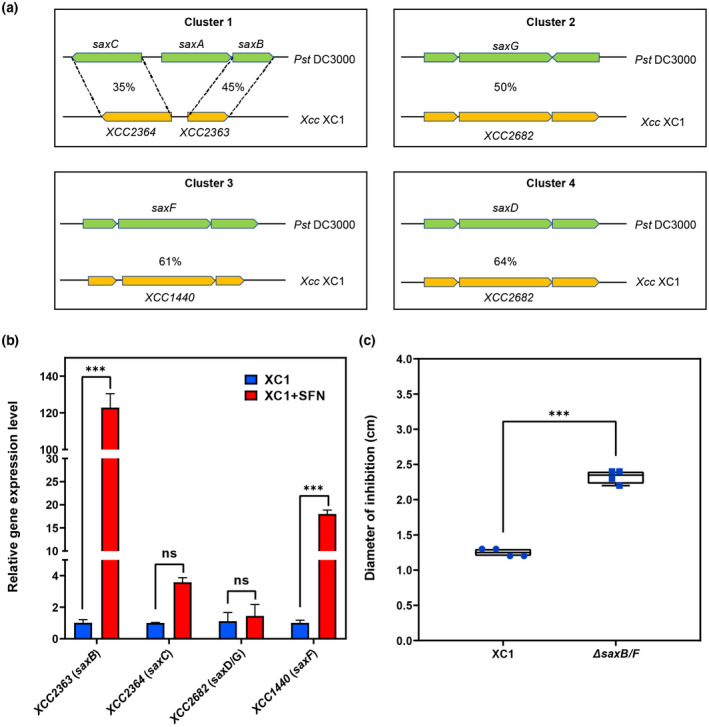
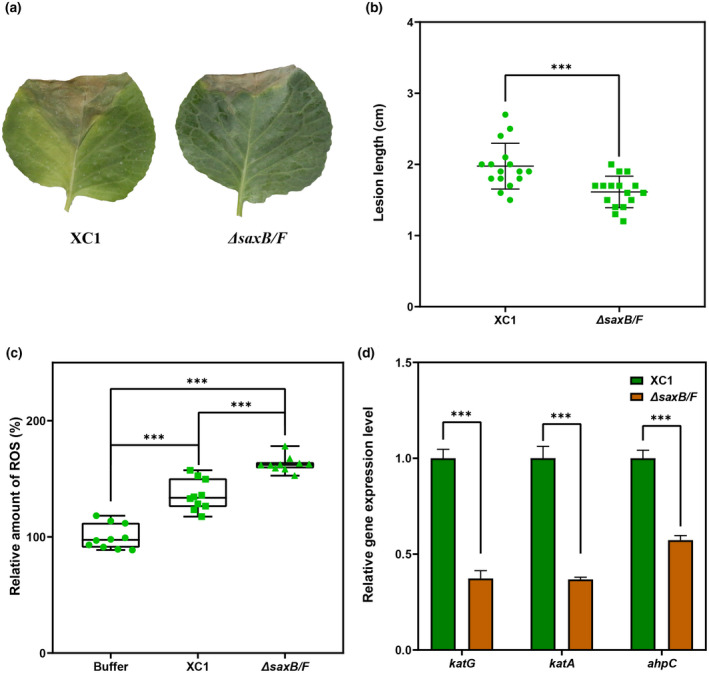
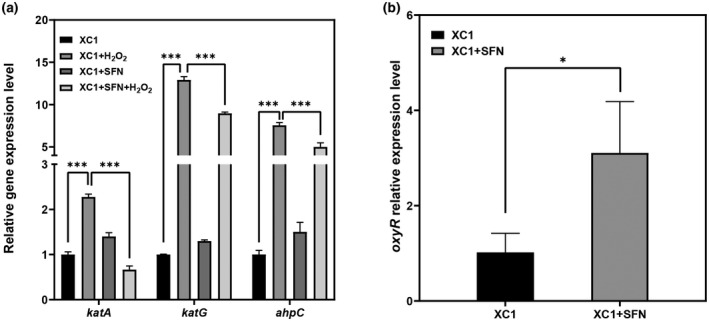
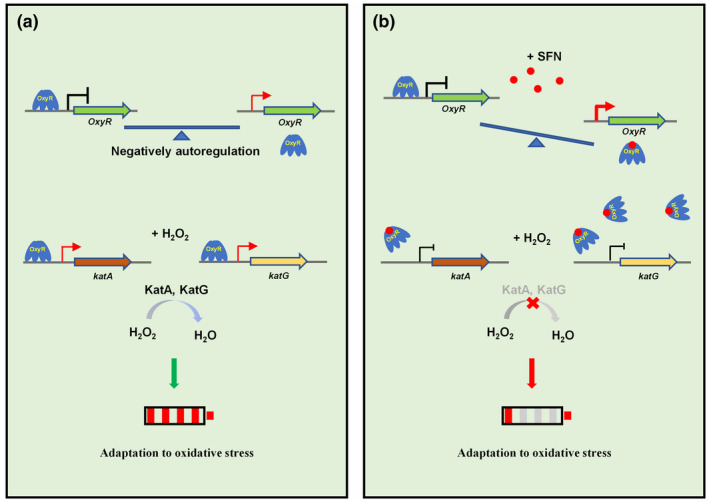
Plant secondary metabolites perform numerous functions in the interactions between plants and pathogens. However, little is known about the precise mechanisms underlying their contribution to the direct inhibition of pathogen growth and virulence in planta. Here, we show that the secondary metabolite sulforaphane (SFN) in crucifers inhibits the growth, virulence, and ability of Xanthomonas species to adapt to oxidative stress, which is essential for the successful infection of host plants by phytopathogens. The transcription of oxidative stress detoxification-related genes (catalase [katA and katG] and alkylhydroperoxide-NADPH oxidoreductase subunit C [ahpC]) was substantially inhibited by SFN in Xanthomonas campestris pv. campestris (Xcc), and this phenomenon was most obvious in sax gene mutants sensitive to SFN. By performing microscale thermophoresis (MST) and electrophoretic mobility shift assay (EMSA), we observed that SFN directly bound to the virulence-related redox-sensing transcription factor OxyR and weakened the ability of OxyR to bind to the promoters of oxidative stress detoxification-related genes. Collectively, these results illustrate that SFN directly targets OxyR to inhibit the bacterial adaptation to oxidative stress, thereby decreasing bacterial virulence. Interestingly, this phenomenon occurs in multiple Xanthomonas species. This study provides novel insights into the molecular mechanisms by which SFN limits Xanthomonas adaptation to oxidative stress and virulence, and the findings will facilitate future studies on the use of SFN as a biopesticide to control Xanthomonas.
Keywords: OxyR; Xanthomonas species; oxidative stress; secondary metabolites; sulforaphane; virulence.
© 2022 The Authors. Molecular Plant Pathology published by British Society for Plant Pathology and John Wiley & Sons Ltd.
Figures
References
-
- Ahuja, I. , Kissen, R. & Bones, A.M. (2012) Phytoalexins in defense against pathogens. Trends in Plant Science, 17, 73–90. - PubMed
-
- Büttner, D. & Bonas, U. (2010) Regulation and secretion of Xanthomonas virulence factors. FEMS Microbiology Reviews, 34, 107–133. - PubMed
-
- Cabiscol, E. , Tamarit, J. & Ros, J. (2000) Oxidative stress in bacteria and protein damage by reactive oxygen species. International Journal of Microbiology, 3, 3–8. - PubMed
Publication types
MeSH terms
Substances
LinkOut - more resources
Full Text Sources
Research Materials
Miscellaneous
