


Hepatitis C virus infection reduces the lifespan of chimpanzees used in biomedical research
- PMID: 35946233
- PMCID: PMC9364148
- DOI: 10.1098/rsbl.2022.0048
Hepatitis C virus infection reduces the lifespan of chimpanzees used in biomedical research
Abstract
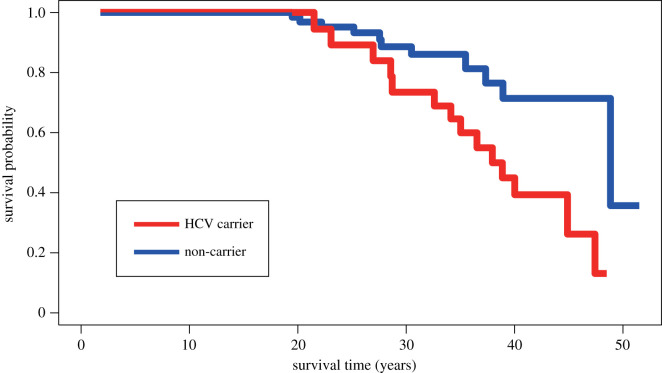
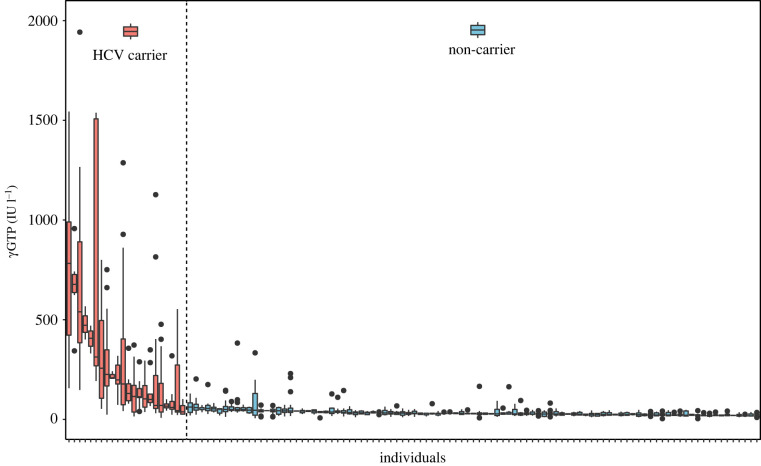
Chimpanzees were used in hepatitis research for over three decades with the aim to identify and develop treatments for the virus, a leading cause of chronic liver disease in humans. We used a dataset of 120 chimpanzees housed at a single institution in Japan, 22 of whom became chronically infected with hepatitis C virus (HCV), to examine whether HCV infection results in a reduced lifespan as reported in humans. Survival analysis showed that HCV carriers experienced a higher mortality risk compared with non-carriers. Although no chimpanzee died from hepatic disease, carriers showed higher gamma-glutamyl transpeptidase (γGTP) levels compared with non-carriers suggesting that HCV infection negatively affected their liver condition. These results provide evidence that special attention is necessary to monitor the long-term condition of ex-biomedical primates.
Keywords: biomedical research; chimpanzee; hepatitis; lifespan; longevity; mortality.
Figures
References
Publication types
MeSH terms
Associated data
LinkOut - more resources
Full Text Sources
Medical
Research Materials
