


Oxidative stress and the importance of H. pylori eradication in patients with functional dyspepsia
- PMID: 35946262
- PMCID: PMC9843513
- DOI: 10.4103/sjg.sjg_114_22
Oxidative stress and the importance of H. pylori eradication in patients with functional dyspepsia
Abstract
Background: To investigage the thiol and disulphide levels in Helicobacter pylori-positive patients with non-ulcer dyspepsia and investigate the change in these levels with eradication therapy.
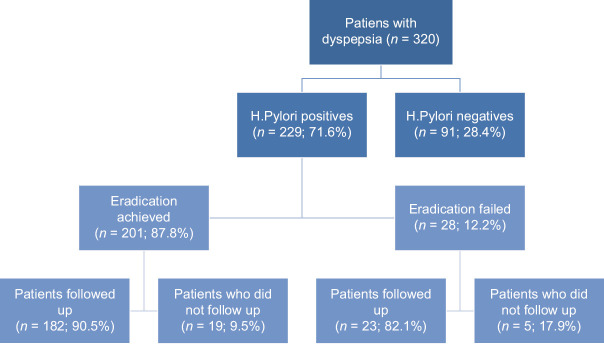
Methods: This is a prospective observational study. A total of 320 patients diagnosed with dyspepsia according to Rome IV criteria were included in the study. First, blood samples were drawn from patients to determine their serum thiol and disulphide levels. Endoscopic biopsy was performed on all patients and the biopsy specimens obtained were examined pathologically. Patients positive for H. pylori were administered eradication therapy. Blood samples were drawn from these patients for the second time, and their serum thiol and disulphide levels were measured. The thiol-disulfide levels of the patients who were successful in H. pylori eradication treatment, with those who were not, were compared before and after the treatment.
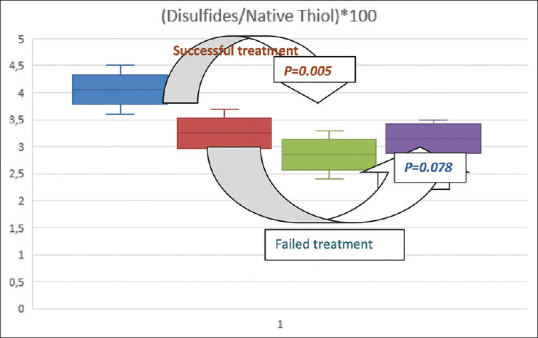
Results: The mean plasma disulphide level decreased significantly from 14.0 ± 6.6 to 10.9 ± 5.9 μmol/L in H. pylori-positive patients that responded to the H. pylori eradication treatment (P = 0.033). On the other hand, there was an insignificant increase in the mean serum thiol level (341.4 ± 30.5 vs. 342.6 ± 29.8 μmol/L; P = 0.273) and an insignificant decrease in the mean serum disulphide level (15.2 ± 2.5 vs. 14.8 ± 2.3 μmol/L; P = 0.163) in H. pylori-positive patients that did not respond to the H. pylori eradication treatment.
Conclusion: The inflammation caused by H. pylori shifted the thiol-disulphide equilibrium in the cell redox system towards the direction of disulphide. The study findings suggest that the restoration of the said hemostatic balance with eradication therapy relieved the organism from oxidative stress.
Keywords: Eradication; helicobacter pylori; oxidative stress; thiol-disulphide hemostasis.
Conflict of interest statement
None
Figures
References
-
- Wang C, Yuan Y, Hunt RH. “The association between Helicobacter pylori infection and early gastric cancer: A meta-analysis”. Am J Gastroenterol. 2007;102(8):1789–98. - PubMed
-
- Lehours P, Ferrero RL. Review: Helicobacter: Inflammation, immunology, and vaccines. Helicobacter. 2019;24(Suppl 1):e12644. - PubMed
-
- Robinson K, Kaneko K, Andersen LP. Helicobacter: Inflammation, immunology and vaccines. Helicobacter. 2017;22(Suppl 1):e12406. doi: 10.1111/hel.12406. - PubMed
-
- Halliwell B, Gutteridge JM. Lipid peroxidation, oxygen radicals, cell damage, and antioxidant therapy. Lancet. 1984;1:1396–97. - PubMed
Publication types
MeSH terms
Substances
LinkOut - more resources
Full Text Sources
Medical
