Measures of Utility Among Studies of Genomic Medicine for Critically Ill Infants: A Systematic Review
- PMID: 35947384
- PMCID: PMC9366540
- DOI: 10.1001/jamanetworkopen.2022.25980
Measures of Utility Among Studies of Genomic Medicine for Critically Ill Infants: A Systematic Review
Abstract
Importance: Genomic medicine holds promise to revolutionize care for critically ill infants by tailoring treatments for patients and providing additional prognostic information to families. However, measuring the utility of genomic medicine is not straightforward and has important clinical and ethical implications.
Objective: To review the ways that researchers measure or neglect to measure the utility of genomic medicine for critically ill infants.
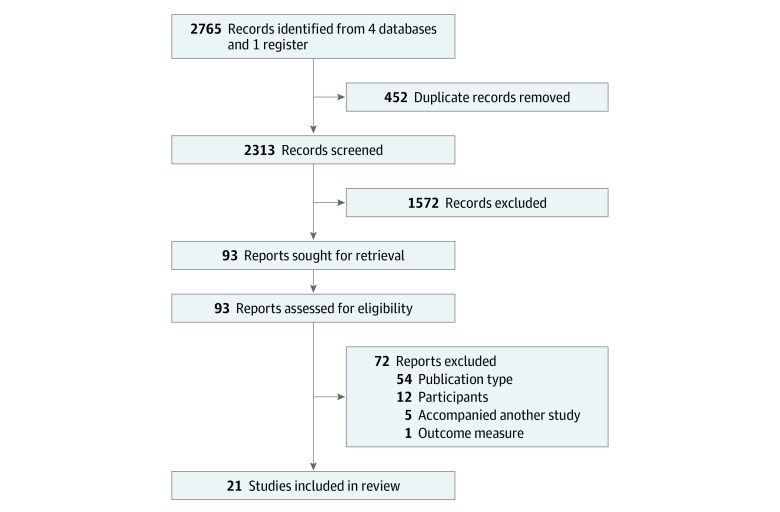
Evidence review: This systematic review included prospective full-text studies of genomic medicine of both whole exome and genome sequencing in critically ill infants younger than 1 year. PubMed, Embase, Scopus, and Cochrane Library databases, the Cochrane Database of Systematic Reviews, and the ClinicalTrials.gov register were searched with an English language restriction for articles published from the inception of each database through May 2022. Search terms included variations of the following: gene, sequencing, intensive care, critical care, and infant. From the included articles, information on how utility was defined and measured was extracted and synthesized. Information was also extracted from patient cases that authors highlighted by providing additional information. Spearman rank-order correlation was used to evaluate the association between study size and utility.
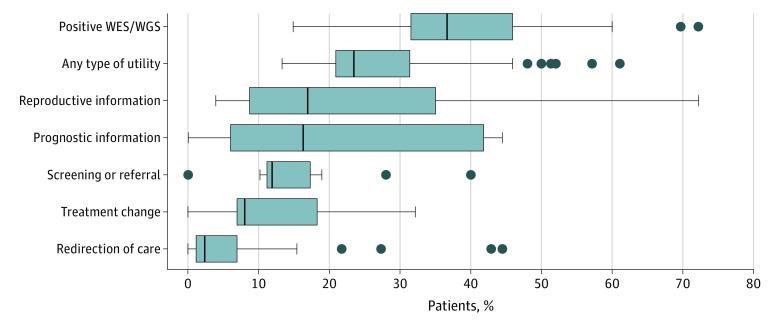
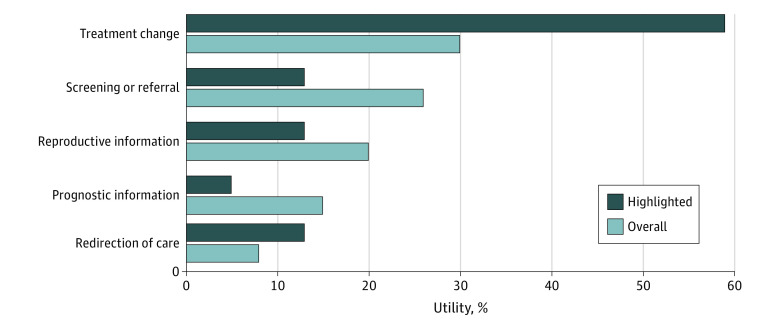
Findings: Synthesized data from the 21 included studies reflected results from 1654 patients. A mean of 46% (range, 15%-72%) of patients had a positive genetic test result, and a mean of 37% (range, 13%-61%) met the criteria for experiencing utility. Despite heterogeneity in how studies measured and reported utility, a standardized framework was created with 5 categories of utility: treatment change, redirection of care, prognostic information, reproductive information, and screening or subspecialty referral. Most studies omitted important categories of utility, notably personal utility (patient-reported benefits) (20 studies [95%]), utility of negative or uncertain results (15 [71%]), and disutility (harms) (20 [95%]). Studies disproportionally highlighted patient cases that resulted in treatment change. Larger studies reported substantially lower utility (r = -0.65; P = .002).
Conclusions and relevance: This systematic review found that genomic medicine offered various categories of utility for a substantial proportion of critically ill infants. Studies measured utility in heterogeneous ways and focused more on documenting change than assessing meaningful benefit. Authors' decisions about which cases to highlight suggest that some categories of utility may be more important than others. A more complete definition of utility that is used consistently may improve understanding of potential benefits and harms of genetic medicine.
Conflict of interest statement
Figures
Comment in
-
Genomic Medicine's Critical Outcome Measure-Utility.JAMA Netw Open. 2022 Aug 1;5(8):e2225988. doi: 10.1001/jamanetworkopen.2022.25988. JAMA Netw Open. 2022. PMID: 35947388 No abstract available.
References
Publication types
MeSH terms
Grants and funding
LinkOut - more resources
Full Text Sources
Miscellaneous