Understanding the neurobiological basis of anhedonia in major depressive disorder - evidence for reduced neural activation during reward and loss processing
- PMID: 35948341
- PMCID: PMC9377543
- DOI: 10.1503/jpn.210180
Understanding the neurobiological basis of anhedonia in major depressive disorder - evidence for reduced neural activation during reward and loss processing
Abstract
Background: Anhedonia is a key symptom of major depressive disorder (MDD). Anhedonia is associated with aberrant reward processing, but whether it might interfere similarly with the neural processing of aversive stimuli, such as monetary loss, remains unknown. We aimed to investigate potential associations between anhedonia and neural response during reward and loss processing in patients with MDD.
Methods: We investigated blood-oxygen-level-dependent response in the orbitofrontal cortex, cingulate cortex, insula and basal ganglia during monetary reward and loss processing in 182 patients with MDD, using a card-guessing paradigm. We measured anhedonia with the Social and Physical Anhedonia Scale (SASPAS), and we tested for the main and interaction effects of SASPAS scores and the experimental condition (reward or loss) in a full factorial model.
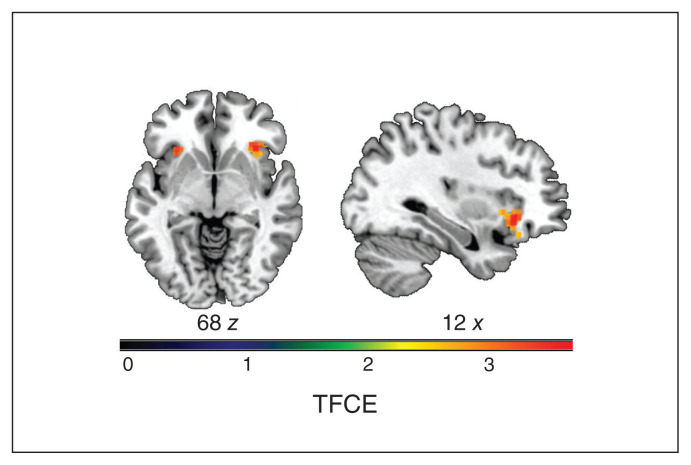
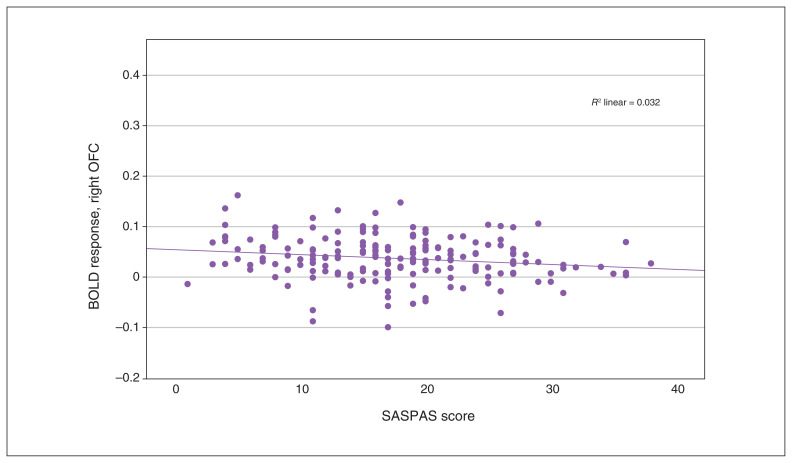
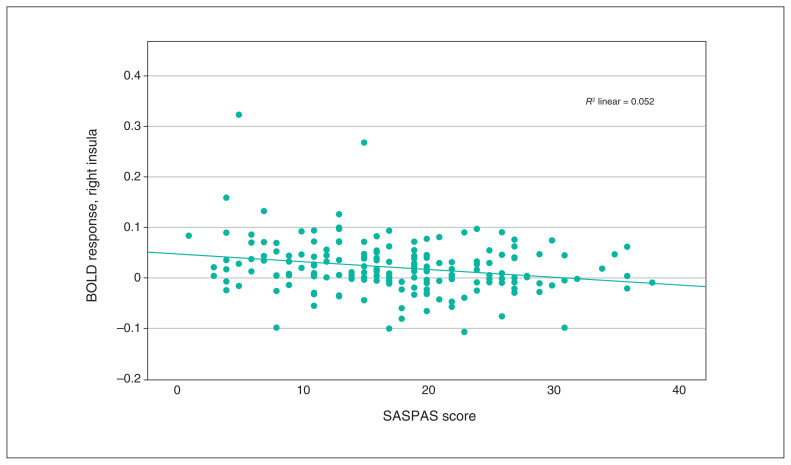
Results: We detected a negative main effect of anhedonia, as well as a significant interaction effect of anhedonia and the experimental condition, on orbitofrontal and insular neural response. Post hoc analyses revealed that the interaction was driven by a significant association between higher anhedonia scores and hypoactivation during loss processing. We observed no significant association between anhedonia and neural response during reward processing.
Limitations: This study had a cross-sectional design.
Conclusion: Our findings confirmed that altered neural processing in the orbitofrontal cortex and insula is a neurobiological feature of anhedonic symptomatology in people with MDD. The pronounced association between anhedonia and blunted neural response during loss processing supports a broader concept for the neurobiological basis of anhedonia. Hence, MDD with anhedonic features might be characterized by reduced neural response to external stimuli, potentially because of amotivation.
© 2022 CMA Impact Inc. or its licensors.
Conflict of interest statement
Competing interests: J. Goltermann received a Society of Biological Psychiatry 2022 travel Award. No other competing interests declared.
Figures
References
-
- International statistical classification of diseases and related health problems. 10th rev. Geneva: World Health Organization; 2019. Available: https://icd.who.int/browse10/2019/en#/F30-F39 (accessed 2021 Oct. 19).
-
- Wang S, Leri F, Rizvi SJ. Anhedonia as a central factor in depression: neural mechanisms revealed from preclinical to clinical evidence. Prog Neuropsychopharmacol Biol Psychiatry 2021;110:110289. - PubMed
-
- Spijker J, Bijl RV, De Graaf R, et al. . Determinants of poor 1-year outcome of DSM-III-R major depression in the general population: results of the Netherlands Mental Health Survey and Incidence Study (NEMESIS). Acta Psychiatr Scand 2001;103:122–30. - PubMed
Publication types
MeSH terms
LinkOut - more resources
Full Text Sources