


The psychological subtype of intimate partner violence and its effect on mental health: a systematic review with meta-analyses
- PMID: 35948921
- PMCID: PMC9364557
- DOI: 10.1186/s13643-022-02025-z
The psychological subtype of intimate partner violence and its effect on mental health: a systematic review with meta-analyses
Abstract
Purpose: The present study examines the association between psychological violence and posttraumatic stress disorder (PTSD), depression, and anxiety, while comparing the specific subtypes of psychological violence and simultaneously focusing on methodological shortcomings.
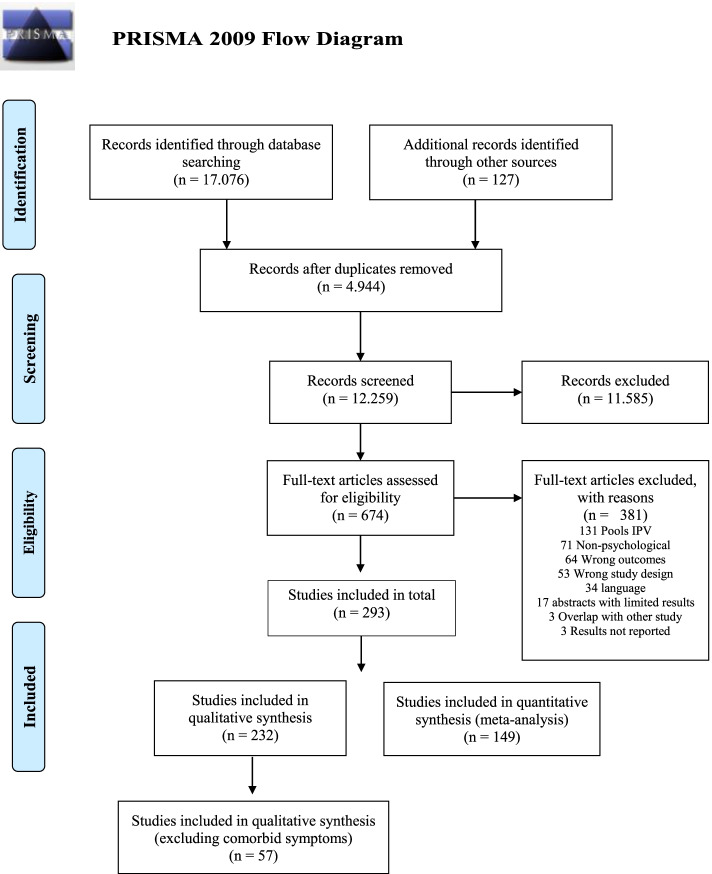
Method: A systematic review and random-effects meta-analyses were applied on the three main outcomes: PTSD, depression, and anxiety. Four electronic databases were searched (PsycINFO, PubMed, EMBASE, and Web of Science), and a total of 194 studies were included (k = 149 for meta-analyses). GRADEpro was used to evaluate the certainty of the evidence from the meta-analyses.
Results: Psychological violence had strong associations with the three main outcomes, with the strongest association for PTSD in both female and male victims. Coercive control was particularly associated with PTSD for female victims, while emotional/verbal and dominance/isolation had the strongest association with depression. Although the identified studies were characterized by gender bias, psychological violence appear to affect male mental health too.
Discussion: Findings from the meta-analyses support the notion that psychological violence is a traumatic experience, which is strongly association with PTSD and other common mental health problems linked to trauma. GRADEpro rated the certainty of evince to be low, and thus, our confidence in the estimated effect is limited. Gender bias, the applied terminology, and other methodological shortcomings are discussed. Despite the substantial amount of research on this topic, more research is needed before we can draw any final conclusions on the effect of psychological violence on mental health.
© 2022. The Author(s).
Conflict of interest statement
The authors declare that they have no competing interests.
References
-
- EUAFR . Violence against women, an EU-wide survey: main results. Vienna: European Union Agency for Fundamental Rights. European Union Agency for Fundamental Rights; 2014.
-
- Black MC, Basile KC, Breiding MJ, Smith SG, Walters ML, Merrick MTea. The national intimate partner and sexual violence survey (NISVS): 2010 summary report. Atlanta: National Center for Injury Prevention and Control, Centers for Disease Control and Prevention; 2011.
-
- Golding JM. Intimate partner violence as a risk factor for mental disorders: a meta-analysis. J Fam Viol. 1999;14(2):99–132. doi: 10.1023/A:1022079418229. - DOI
Publication types
MeSH terms
LinkOut - more resources
Full Text Sources
Medical
