


Ocular Syphilis: Our Experience in Selayang Hospital, Malaysia
- PMID: 35949800
- PMCID: PMC9357257
- DOI: 10.7759/cureus.26655
Ocular Syphilis: Our Experience in Selayang Hospital, Malaysia
Abstract
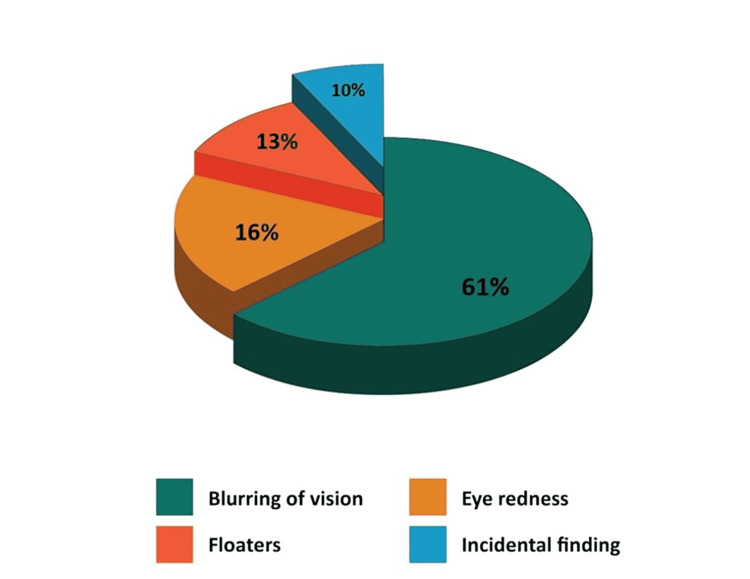
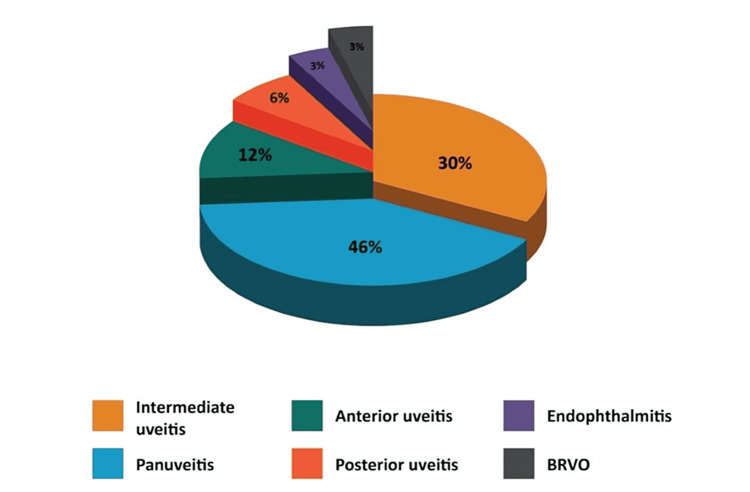
This study aims to describe the demographic features, clinical profile, Human Immunodeficiency Virus (HIV) status, and visual outcome after completing treatment in patients diagnosed with uveitic syphilis. Methods: A retrospective review was conducted of all cases diagnosed with ocular syphilis from January 2014 to December 2019 at the ophthalmology clinic of Selayang Hospital, Selangor, Malaysia. A total of 31 cases were reviewed, and the collected data included demographic features, history of high-risk behavior, ocular symptoms and signs, visual acuity at presentation and after completing treatment, treatment received, complications, and HIV status. Serology tests to confirm the diagnosis were also included, such as the rapid plasma reagin (RPR), venereal disease research laboratory test (VDRL) titer, and treponema pallidum hemagglutination (TPHA) tests, and some cases also included the VDRL cerebrospinal fluid (CSF) test. Results: A total of 31 patients with ocular syphilis were identified within the study period. Male patients comprised the majority with 27 cases. Nineteen patients were below the age of 50. The majority were ethnic Malay (21 patients). Seventeen patients were identified to have HIV co-infection. Twenty patients reported high-risk behaviors, and among them, six cases were HIV-infected homosexuals. The commonest symptom was blurring of vision (61%), followed by eye redness (16%), floaters (13%), and incidental findings (10%). There were 18 bilateral cases and 13 unilateral cases. The larger share presented as panuveitis (14 cases), followed by intermediate uveitis (nine cases), anterior uveitis (four cases), posterior uveitis (two cases), endophthalmitis (one case), and branch retinal vein occlusion (one case). RPR and TPHA tests were done for all patients. Only 12 patients consented to lumbar puncture for a CSF VDRL test, and one tested positive. All patients received intravenous (IV) administration of 3.0 to 4.0 million units of benzylpenicillin every four hours for 14 days. All cases reported a good outcome with an improvement in visual acuity of at least two Snellen lines after treatment. Conclusion: Early detection and treatment of ocular syphilis will usually preserve visual acuity and ocular function. This study highlights the need for a high degree of suspicion of HIV co-infection, as the majority of our patients were discovered to be HIV-seropositive. Thus, HIV screening is mandatory in all patients presenting with syphilitic uveitis.
Keywords: hiv; msm; ocular syphilis; ocular syphilis in asia; syphilitic uveitis; treponema pallidum.
Copyright © 2022, Mohd Fadzil et al.
Conflict of interest statement
The authors have declared that no competing interests exist.
Figures
References
-
- Ocular Syphilis - Eight Jurisdictions, United States, 2014-2015. Oliver SE, Aubin M, Atwell L, et al. MMWR Morb Mortal Wkly Rep. 2016;65:1185–1188. - PubMed
-
- Clinical features and incidence rates of ocular complications in patients with ocular syphilis. Moradi A, Salek S, Daniel E, et al. Am J Ophthalmol. 2015;159:334–343. - PubMed
-
- Syphilitic uveitis in a Singaporean population. Yap SC, Tan YL, Chio MT, Teoh SC. Ocul Immunol Inflamm. 2014;22:9–14. - PubMed
-
- Sexual practices and HIV prevalence amongst men who have sex with men at a community-based voluntary counseling and testing centre in Malaysia. Koh KC, Kanagalingam K, Tai FT, et al. Inter Scho Res Not. 2013;2013:6.
LinkOut - more resources
Full Text Sources