


Liver transplantation for late-onset ornithine transcarbamylase deficiency: A case report
- PMID: 35949846
- PMCID: PMC9254178
- DOI: 10.12998/wjcc.v10.i18.6156
Liver transplantation for late-onset ornithine transcarbamylase deficiency: A case report
Abstract
Background: Ornithine transcarbamylase deficiency (OTCD) is an X-linked inherited disorder and characterized by marked elevation of blood ammonia. The goal of treatment is to minimize the neurological damage caused by hyperammonemia. OTCD can be cured by liver transplantation (LT). Post-transplant patients can discontinue anti- hyperammonemia agents and consume a regular diet without the risk of developing hyperammonemia. The neurological damage caused by hyperammonemia is almost irreversible.
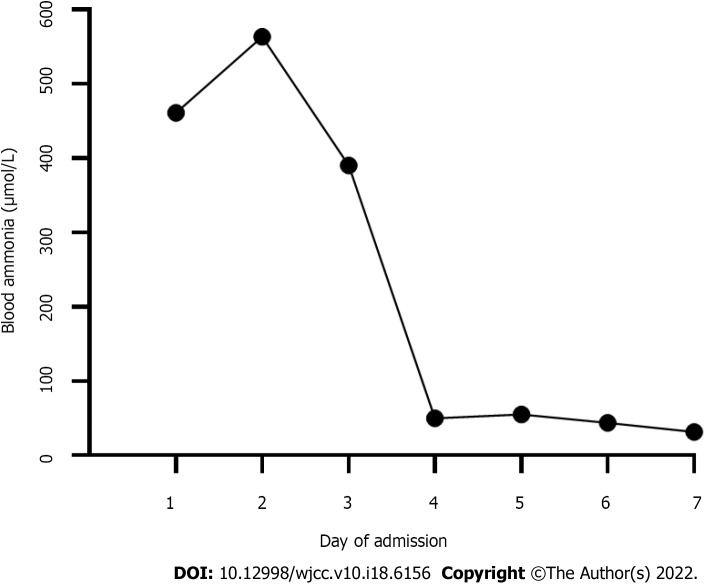
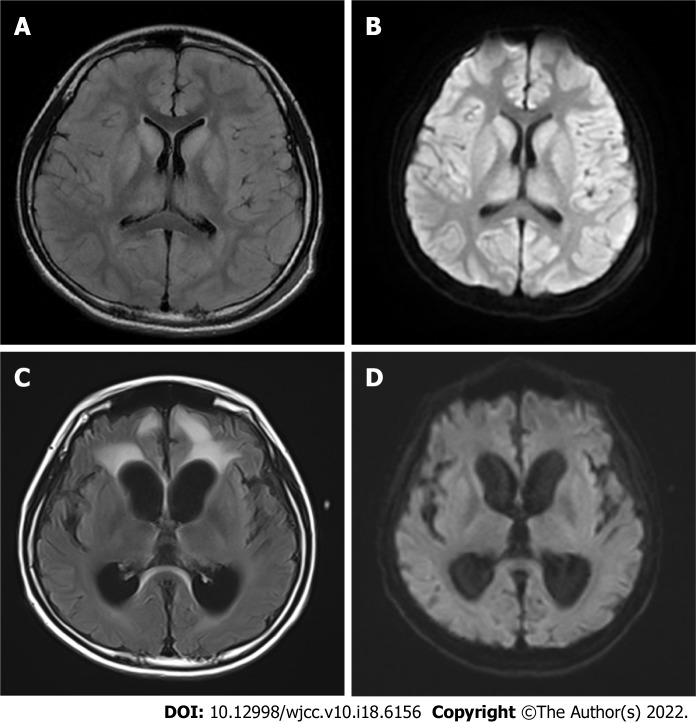
Case summary: An 11.7-year-old boy presented with headache, vomiting, and altered consciousness. The patient was diagnosed with late-onset OTCD. After nitrogen scavenging treatment and a protein-free diet, ammonia levels were reduced to normal on the third day of admission. Nevertheless, the patient remained in a moderate coma. After discussion, LT was performed. Following LT, the patient's blood ammonia and biochemical indicators stabilized in the normal range, he regained consciousness, and his nervous system function significantly recovered. Two months after LT, blood amino acids and urine organic acids were normal, and brain magnetic resonance imaging showed a decrease in subcortical lesions.
Conclusion: LT can significantly improve partial neurological impairment caused by late-onset OTCD hyperammonemic encephalopathy, and LT can be actively considered when early drug therapy is ineffective.
Keywords: Case report; Hyperammonemic encephalopathy; Liver transplantation; Ornithine transcarbamylase deficiency; Urea cycle disorder.
©The Author(s) 2022. Published by Baishideng Publishing Group Inc. All rights reserved.
Conflict of interest statement
Conflict-of-interest statement: The authors declare that they have no conflict of interest.
Figures
References
-
- Wilcken B. Problems in the management of urea cycle disorders. Mol Genet Metab. 2004;81 Suppl 1:S86–S91. - PubMed
-
- Dionisi-Vici C, Rizzo C, Burlina AB, Caruso U, Sabetta G, Uziel G, Abeni D. Inborn errors of metabolism in the Italian pediatric population: a national retrospective survey. J Pediatr. 2002;140:321–327. - PubMed
-
- Kido J, Nakamura K, Mitsubuchi H, Ohura T, Takayanagi M, Matsuo M, Yoshino M, Shigematsu Y, Yorifuji T, Kasahara M, Horikawa R, Endo F. Long-term outcome and intervention of urea cycle disorders in Japan. J Inherit Metab Dis. 2012;35:777–785. - PubMed
-
- Häberle J, Burlina A, Chakrapani A, Dixon M, Karall D, Lindner M, Mandel H, Martinelli D, Pintos-Morell G, Santer R, Skouma A, Servais A, Tal G, Rubio V, Huemer M, Dionisi-Vici C. Suggested guidelines for the diagnosis and management of urea cycle disorders: First revision. J Inherit Metab Dis. 2019;42:1192–1230. - PubMed
Publication types
LinkOut - more resources
Full Text Sources
