


Medicinal Cannabis for the Treatment of Chronic Refractory Pain: An Investigation of the Adverse Event Profile and Health-Related Quality of Life Impact of an Oral Formulation
- PMID: 35950052
- PMCID: PMC9235063
- DOI: 10.1159/000521492
Medicinal Cannabis for the Treatment of Chronic Refractory Pain: An Investigation of the Adverse Event Profile and Health-Related Quality of Life Impact of an Oral Formulation
Abstract
Introduction: Medicinal cannabis is prescribed in Australia for patients with chronic refractory pain conditions. However, measures of safety and effectiveness of different cannabinoids are lacking. We designed an observational study to capture effectiveness, adverse events (AEs), and health-related quality of life (HRQoL) measures in patients prescribed an oral medicinal cannabis formulation at Cannabis Access Clinics through the Cannabis Access Clinics Observational study (CACOS).
Objectives: We aimed to evaluate effectiveness, reported AEs, and change in patient-reported outcomes in individuals prescribed a cannabinoid oil formulation for management of chronic pain.
Methods: A cross-sectional analysis was conducted on patients prescribed an oil formulation of Δ9-tetrahydrocannabinol and cannabidiol for pain symptoms of at least 3-month duration. Clinician-reported AEs were organized by system, organ, class, and frequency. Analysis of patient-reported responses to a questionnaire was conducted using published minimal clinically important differences to determine meaningful change in HRQoL over time.
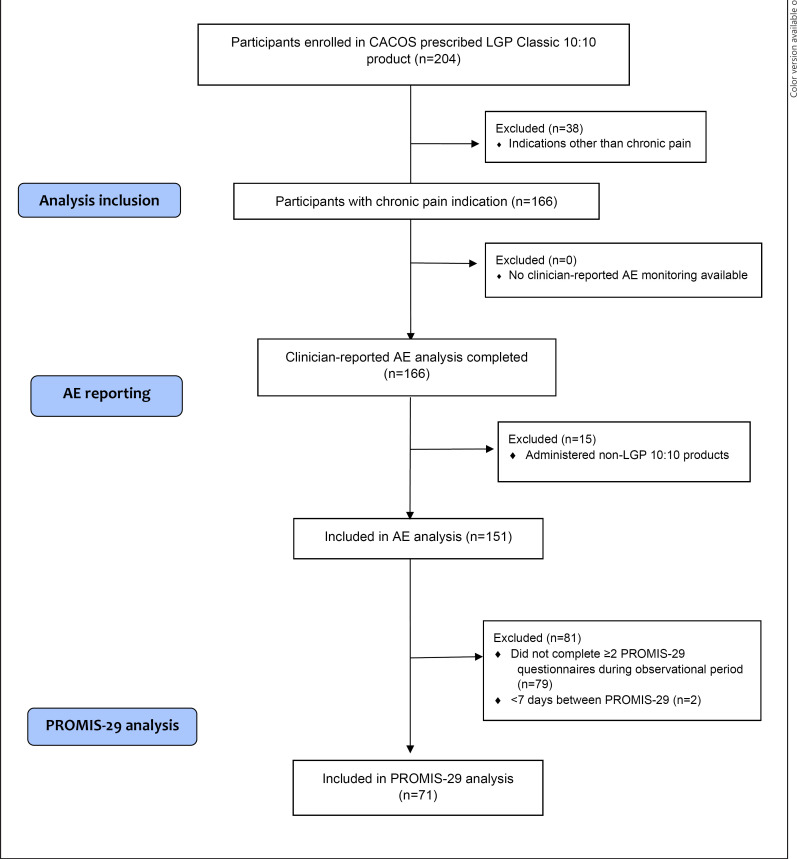
Results: More than half (n = 91/151, 60.3%) of the participants experienced at least one AE during the observation period (mean 133 ± 116 days). No serious AEs were reported. Patient-reported pain impact scores were significantly reduced across the cohort (p = 0.034), and pain intensity scores verged on significance (p = 0.053). The majority of patients saw meaningful improvements in sleep (49.3%) and fatigue (35.6%).
Conclusion: This analysis presents real-world data collected as part of standard of care. More than one-third of patients benefited from oral medicinal cannabis, which is impactful given the refractory nature of their pain. Amelioration of the impact of pain confirms continued prescribing of this formulation and validates our observational methodology as a tool to determine the therapeutic potency of medicinal cannabinoids.
Keywords: Adverse events; Cannabinoids; Improved pain impact; Improved pain intensity; Medicinal cannabis.
Copyright © 2022 by S. Karger AG, Basel.
Conflict of interest statement
L.N.W. reports personal fees from Little Green Pharma, outside the submitted work. All other authors have no conflicts of interest to declare.
Figures

References
-
- Hylands-White N, Duarte RV, Raphael JH. An overview of treatment approaches for chronic pain management. Rheumatol Int. 2017;37((1)):29–42. - PubMed
-
- Australian Institute of Health and Welfare . Chronic pain in Australia. Canberra, Australia: AIHW; 2020.
-
- Economics DA. The cost of pain in Australia: painaustralia. Canberra, Australia: ACT; 2019. p. p. 117.
LinkOut - more resources
Full Text Sources
