. 2022 Dec 25:72:11-21.
doi: 10.1016/j.nbt.2022.08.002. Epub 2022 Aug 8.

An engineered SARS-CoV-2 receptor-binding domain produced in Pichia pastoris as a candidate vaccine antigen

Affiliations

An engineered SARS-CoV-2 receptor-binding domain produced in Pichia pastoris as a candidate vaccine antigen

Miladys Limonta-Fernández et al. N Biotechnol. .

Abstract

Developing affordable and easily manufactured SARS-CoV-2 vaccines will be essential to achieve worldwide vaccine coverage and long-term control of the COVID-19 pandemic. Here the development is reported of a vaccine based on the SARS-CoV-2 receptor-binding domain (RBD), produced in the yeast Pichia pastoris. The RBD was modified by adding flexible N- and C-terminal amino acid extensions that modulate protein/protein interactions and facilitate protein purification. A fed-batch methanol fermentation with a yeast extract-based culture medium in a 50 L fermenter and an immobilized metal ion affinity chromatography-based downstream purification process yielded 30-40 mg/L of RBD. Correct folding of the purified protein was demonstrated by mass spectrometry, circular dichroism, and determinations of binding affinity to the angiotensin-converting enzyme 2 (ACE2) receptor. The RBD antigen also exhibited high reactivity with sera from convalescent individuals and Pfizer-BioNTech or Sputnik V vaccinees. Immunization of mice and non-human primates with 50 µg of the recombinant RBD adjuvanted with alum induced high levels of binding antibodies as assessed by ELISA with RBD produced in HEK293T cells, and which inhibited RBD binding to ACE2 and neutralized infection of VeroE6 cells by SARS-CoV-2. Additionally, the RBD protein stimulated IFNγ, IL-2, IL-6, IL-4 and TNFα secretion in splenocytes and lung CD3+-enriched cells of immunized mice. The data suggest that the RBD recombinant protein produced in yeast P. pastoris is suitable as a vaccine candidate against COVID-19.

Keywords: COVID-19; P. pastoris; RBD; SARS-CoV-2; Subunit vaccine.


Conflict of interest statement

Conflict of Interest MLF, MBR, AMMD, DGR, ACR, GCS, GMP, EPV, MAA and GGN are co-authors of a patent application submitted by the Center for Genetic Engineering and Biotechnology, comprising the C-RBD-H6 PP protein as a vaccine antigen against SASR-CoV-2. All authors approved the final article.

Figures
ga1
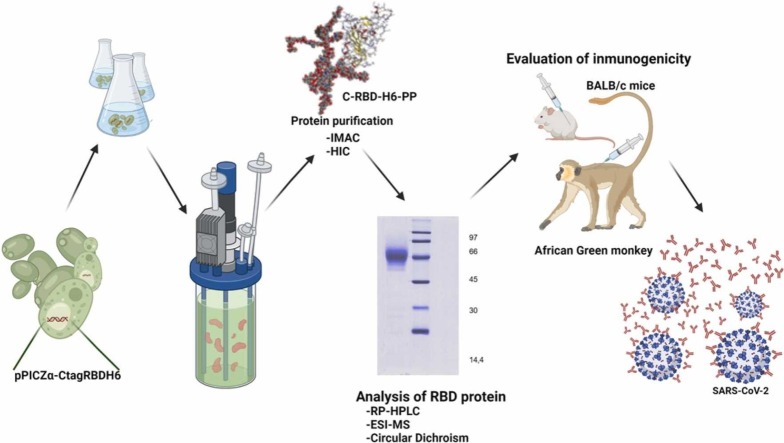
Graphical abstract
Fig. 1
Fig. 1
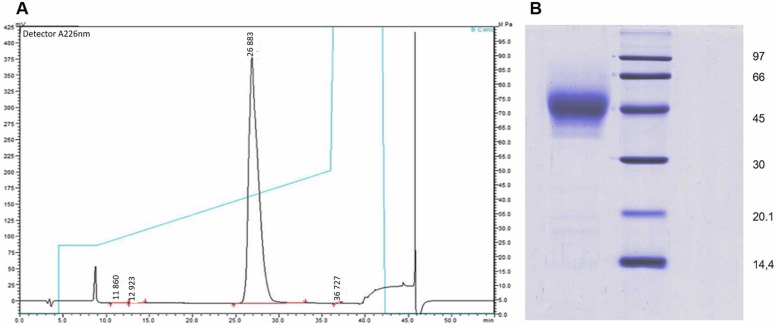
RP-HPLC and protein electrophoresis. (A) Analysis of protein C-RBD-H6 PP on a reversed phase C8 Vydac analytical column. The gradient is shown by a blue line. Purity is at least 98.6%. (B) Coomassie Blue-stained 12.5% SDS-PAGE of 10 μg of purified C-RBD-H6 PP under reducing conditions. Lane 1: protein C-RBD-H6 PP; lane 2 molecular weight markers.
Fig. 2
Fig. 2
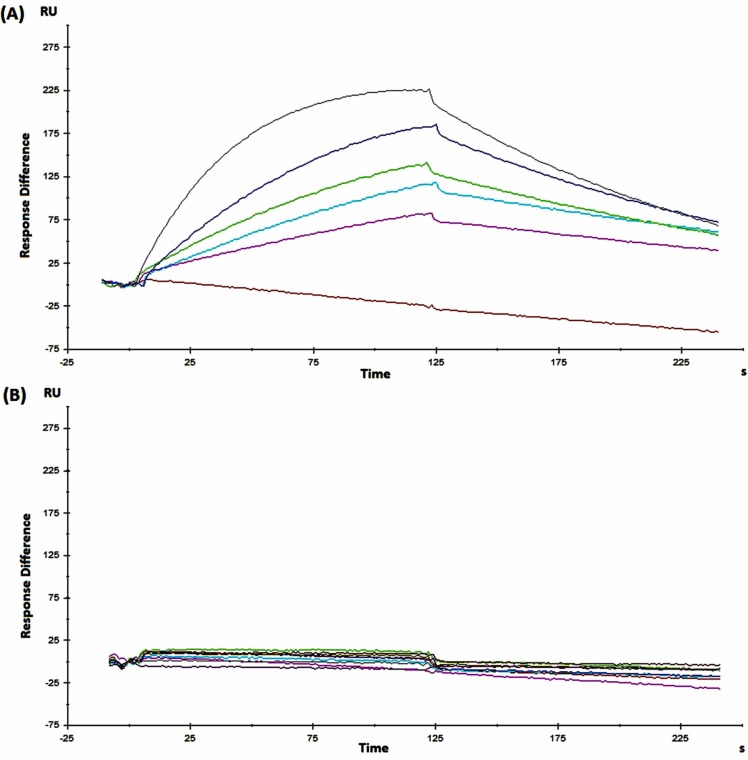
SPR analysis of the interaction of C-RBD-H6 PP with mFc-ACE2 in a single-cycle BIACORE experiment. (A) Sensorgrams corresponding to one of the replicates of protein C-RBD-H6 in PBS, pH = 7.2. (B) Non-related human recombinant Epidermal Growth Factor protein (also produced in yeast at CIGB, Havana, Cuba), used as negative control for the interaction with immobilized mFc-ACE2.
Fig. 3
Fig. 3
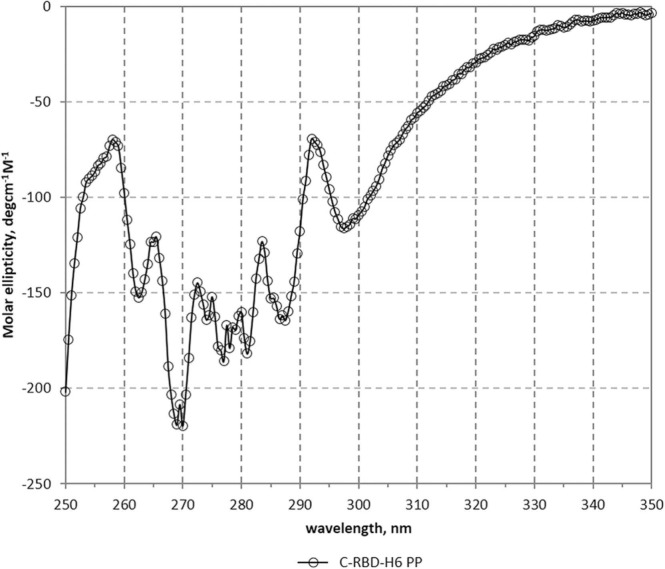
Near UV CD spectrum of the C-RBD-H6 PP protein. Bands at 263, 269, 277, 281 and 299 nm, indicate the presence of well-packed aromatic and cystine residues.
Fig. 4
Fig. 4
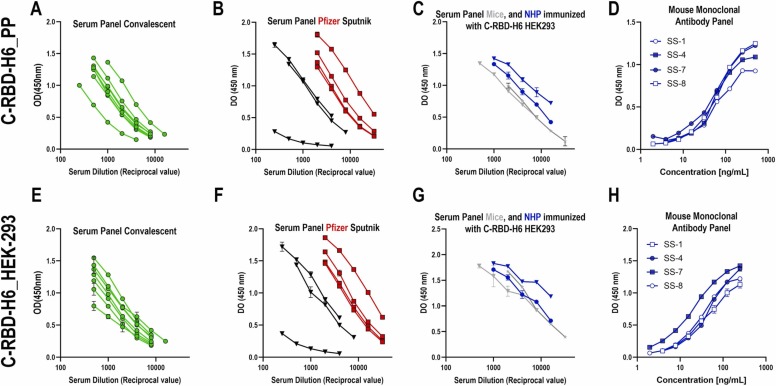
Antigenicity of the RBD protein produced in P. pastoris. C-RBD-H6 PP (upper panel) or RBD-H6 HEK (lower panel) were used to coat ELISA plates. All immune sera and monoclonal antibodies were used in serial two-fold dilutions. (A,E) Sera from COVID-19 convalescents; (B,F) Sera from Pfizer/BioNTech (red squares) or Sputnik (black triangles) vaccinees; (C,G) Sera from mice (grey) or NHP (blue) immunized with CRBD-H6 HEK adjuvanted in alum-phosphate; (D,H). SS-1, SS4, SS-7 and SS-8 monoclonal antibodies obtained by immunizing mice with RBD-H6 HEK. Mean OD450nm ± SD is depicted for two replicates per experimental point. (For interpretation of the references to colour in this figure legend, the reader is referred to the web version of this article.)
Fig. 5
Fig. 5
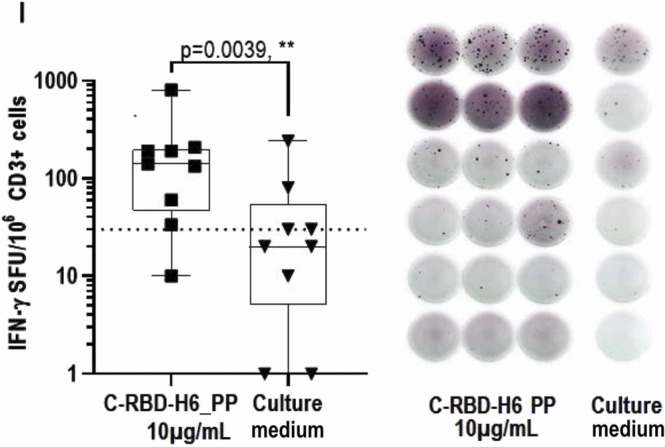
ELISpot with samples from COVID-19 convalescents. C-RBD-H6 PP stimulated INFγ secretion in CD3 + cells from naturally infected individuals. Comparison made by Wilcoxon’s matched paired test.
Fig. 6
Fig. 6
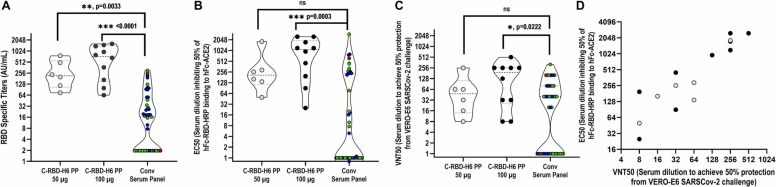
Immunogenicity of C-RBD-H6 PP in NHP. (A) Evaluation of RBD specific IgG in NHP immunized with doses of 50 µg (6 animals) or 100 µg (10 animals) of C-RBD-H6 PP, 14 days after the end of a 0–14–28 days intramuscular schedule. (B) Evaluation in NHP of EC50 for ACE2 binding inhibition. (C) Evaluation in NHP of EC50 for the PRNT in the microneutralization assay. (D) Association/correlation analysis of the ACE2 binding inhibition and microneutralization tests in NHP (Spearman, r = 0.8994, p < 0.0001).
Fig. 7
Fig. 7
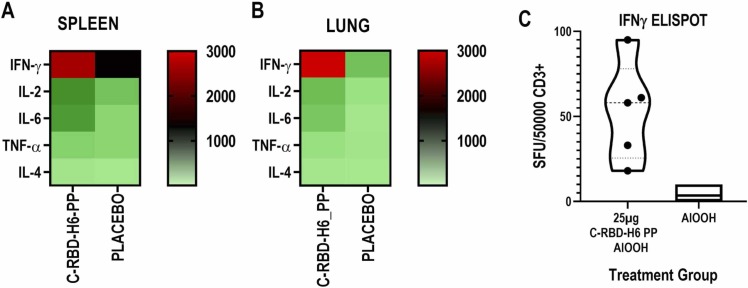
Heatmap of the cytokine response. (A) Splenocytes and (B) lung CD3 + -enriched cells, after restimulation with C-RBD-H6 PP. The cells were pooled from 4 to 5 mice per group, 3 months after the last immunization with 3 subcutaneous doses of 25 µg of C-RBD-H6 PP or placebo. Non-stimulated controls were subtracted from re-stimulated samples. (C) ELISpot assay of splenocytes stimulated with C-RBD-H6 PP.

References

    1. Kodati B., Darbha S. Mammalian expression system and improvisation for high production. Int J Sci Res. 2016;5(6):743–749. doi: 10.21275/v5i6.NOV164260. - DOI
    1. Barone P.W., Wiebe M.E., Leung J.C., Hussein I.T.M., Keumurian F.J., Bouressa J., et al. Viral contamination in biologic manufacture and implications for emerging therapies. Nat Biotechnol. 2020;38(5):563–572. doi: 10.1038/s41587-020-0507-2. - DOI - PubMed
    1. Arbeitman C.R., Auge G., Blaustein M., Bredeston L., Corapi E.S., Craig P.O., et al. Structural and functional comparison of SARS-CoV-2-spike receptor binding domain produced in Pichia pastoris and mammalian cells. Sci Rep. 2020;10(1) doi: 10.1038/s41598-020-78711-6. - DOI - PMC - PubMed
    1. Karbalaei M., Rezaee S.A., Farsiani H. Pichia pastoris: a highly successful expression system for optimal synthesis of heterologous proteins. J Cell Physiol. 2020;235(9):5867–5881. doi: 10.1002/jcp.29583. - DOI - PMC - PubMed
    1. Premkumar L., Segovia-Chumbez B., Jadi R., Martinez D.R., Raut R., Markmann A., et al. The receptor binding domain of the viral spike protein is an immunodominant and highly specific target of antibodies in SARS-CoV-2 patients. Sci Immunol. 2020;5(48) doi: 10.1126/sciimmunol.abc8413. - DOI - PMC - PubMed

Substances

Supplementary concepts