


Effect of Collagen Crosslinkers on Dentin Bond Strength of Adhesive Systems: A Systematic Review and Meta-Analysis
- PMID: 35954261
- PMCID: PMC9368291
- DOI: 10.3390/cells11152417
Effect of Collagen Crosslinkers on Dentin Bond Strength of Adhesive Systems: A Systematic Review and Meta-Analysis
Abstract
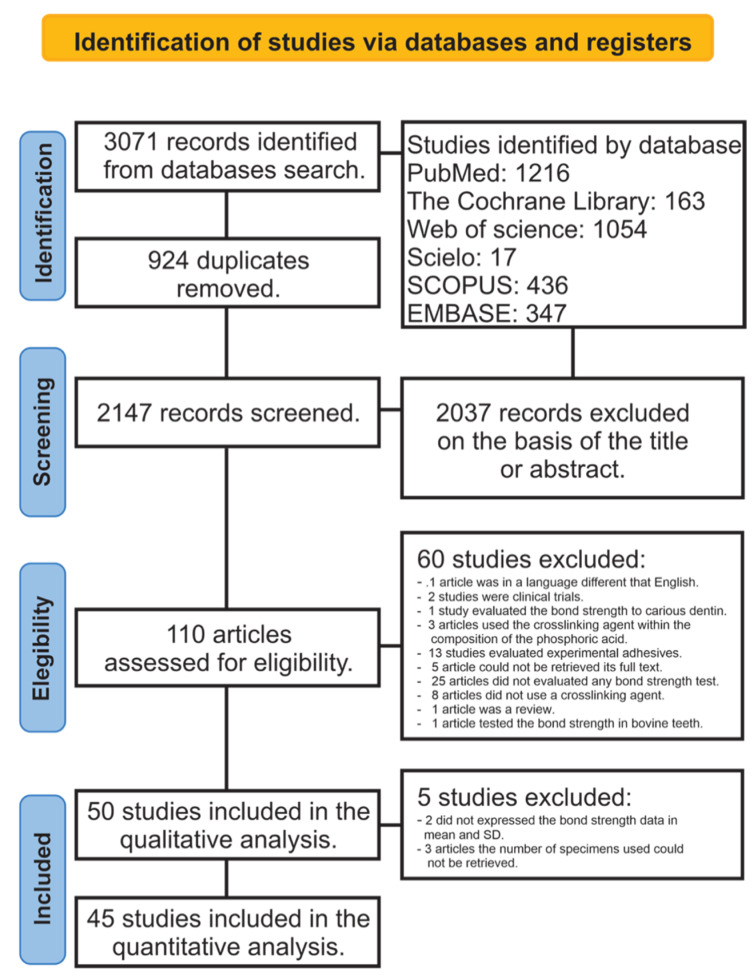
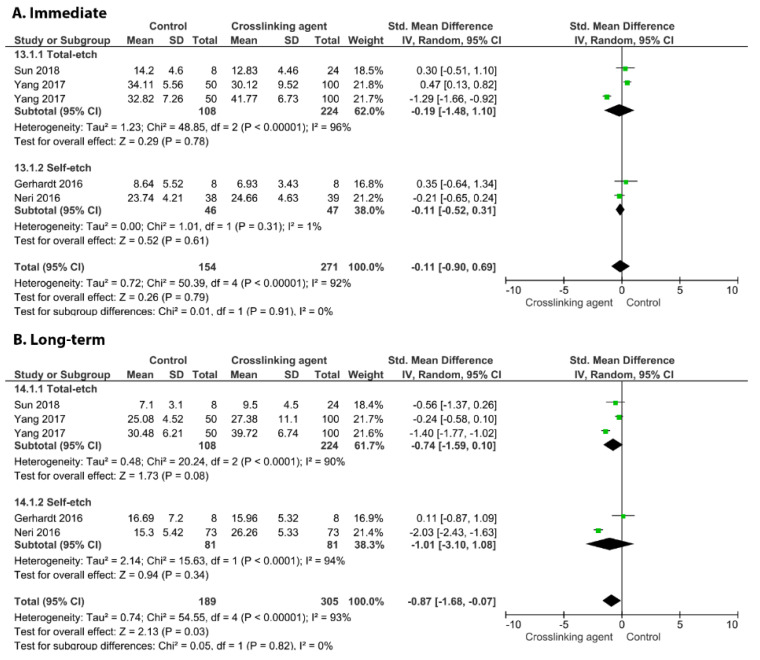
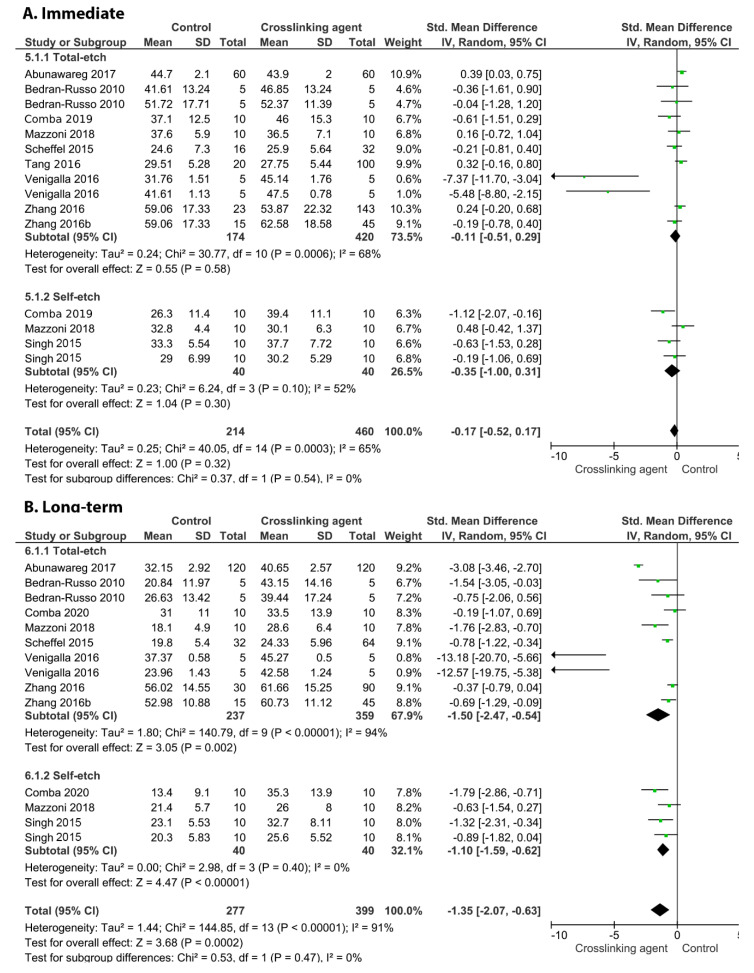
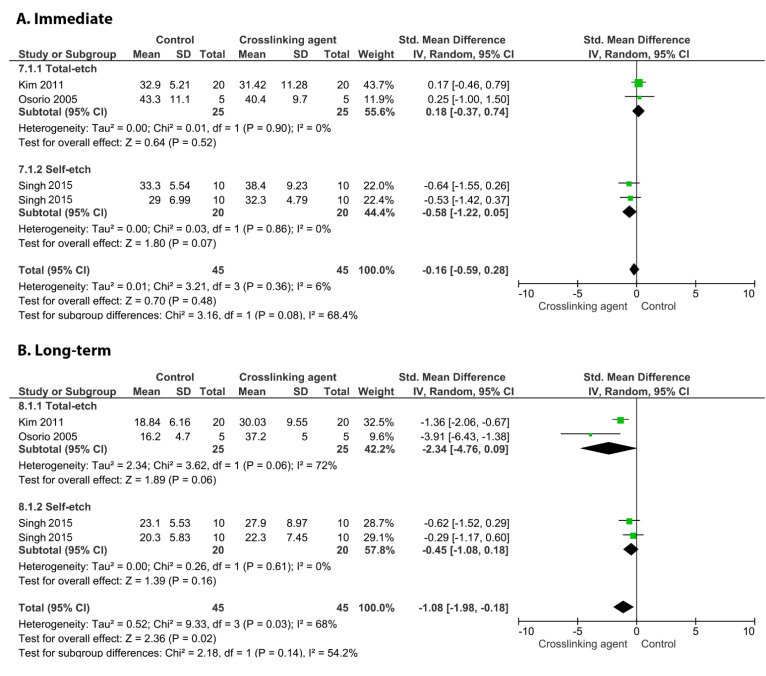
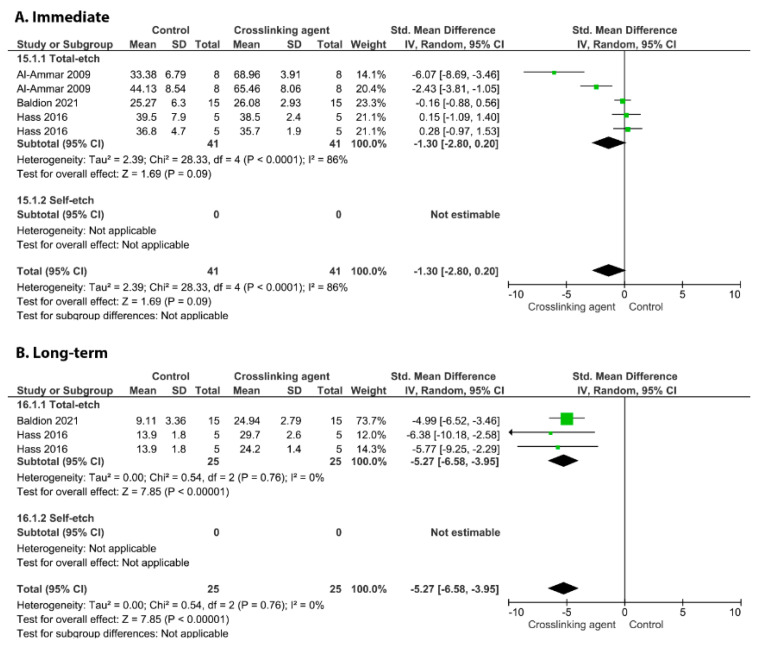
This study aimed to identify the role of crosslinking agents in the resin-dentin bond strength (BS) when used as modifiers in adhesives or pretreatments to the dentin surface through a systematic review and meta-analysis. This paper was conducted according to the directions of the PRISMA 2020 statement. The research question of this review was: "Would the use of crosslinkers agents improve the BS of resin-based materials to dentin?" The literature search was conducted in the following databases: Embase, PubMed, Scielo, Scopus, and Web of Science. Manuscripts that reported the effect on the BS after the use of crosslinking agents were included. The meta-analyses were performed using Review Manager v5.4.1. The comparisons were performed by comparing the standardized mean difference between the BS values obtained using the crosslinker agent or the control group. The subgroup comparisons were performed based on the adhesive strategy used (total-etch or self-etch). The immediate and long-term data were analyzed separately. A total of 50 articles were included in the qualitative analysis, while 45 articles were considered for the quantitative analysis. The meta-analysis suggested that pretreatment with epigallocatechin-3-gallate (EGCG), carbodiimide, ethylenediaminetetraacetic acid (EDTA), glutaraldehyde, and riboflavin crosslinking agents improved the long-term BS of resin composites to dentin (p ≤ 0.02). On the other hand, the use of proanthocyanidins as a pretreatment improved both the immediate and long-term BS values (p ≤ 0.02). When incorporated within the adhesive formulation, only glutaraldehyde, riboflavin, and EGCG improved the long-term BS to dentin. It could be concluded that the application of different crosslinking agents such as carbodiimide, EDTA, glutaraldehyde, riboflavin, and EGCG improved the long-term BS of adhesive systems to dentin. This effect was observed when these crosslinkers were used as a separate step and when incorporated within the formulation of the adhesive system.
Keywords: aging; collagen; dentin-bonding agents; proanthocyanidins.
Conflict of interest statement
The authors declare no conflict of interest.
Figures



References
-
- Bourgi R., Hardan L., Rivera-Gonzaga A., Cuevas-Suárez C.E. Effect of Warm-Air Stream for Solvent Evaporation on Bond Strength of Adhesive Systems: A Systematic Review and Meta-Analysis of in Vitro Studies. Int. J. Adhes. Adhes. 2021;105:102794. doi: 10.1016/j.ijadhadh.2020.102794. - DOI
-
- Frassetto A., Breschi L., Turco G., Marchesi G., Di Lenarda R., Tay F.R., Pashley D.H., Cadenaro M. Mechanisms of Degradation of the Hybrid Layer in Adhesive Dentistry and Therapeutic Agents to Improve Bond Durability—A Literature Review. Dent. Mater. 2016;32:e41–e53. doi: 10.1016/j.dental.2015.11.007. - DOI - PubMed
-
- Tjäderhane L., Nascimento F.D., Breschi L., Mazzoni A., Tersariol I.L., Geraldeli S., Tezvergil-Mutluay A., Carrilho M.R., Carvalho R.M., Tay F.R. Optimizing Dentin Bond Durability: Control of Collagen Degradation by Matrix Metalloproteinases and Cysteine Cathepsins. Dent. Mater. 2013;29:116–135. doi: 10.1016/j.dental.2012.08.004. - DOI - PMC - PubMed
-
- Tjäderhane L., Carrilho M.R., Breschi L., Tay F.R., Pashley D.H. Dentin Basic Structure and Composition—An overview. Endod. Top. 2009;20:3–29. doi: 10.1111/j.1601-1546.2012.00269.x. - DOI
Publication types
MeSH terms
Substances
LinkOut - more resources
Full Text Sources
