


Theranostics Using Indocyanine Green Lactosomes
- PMID: 35954503
- PMCID: PMC9367311
- DOI: 10.3390/cancers14153840
Theranostics Using Indocyanine Green Lactosomes
Abstract
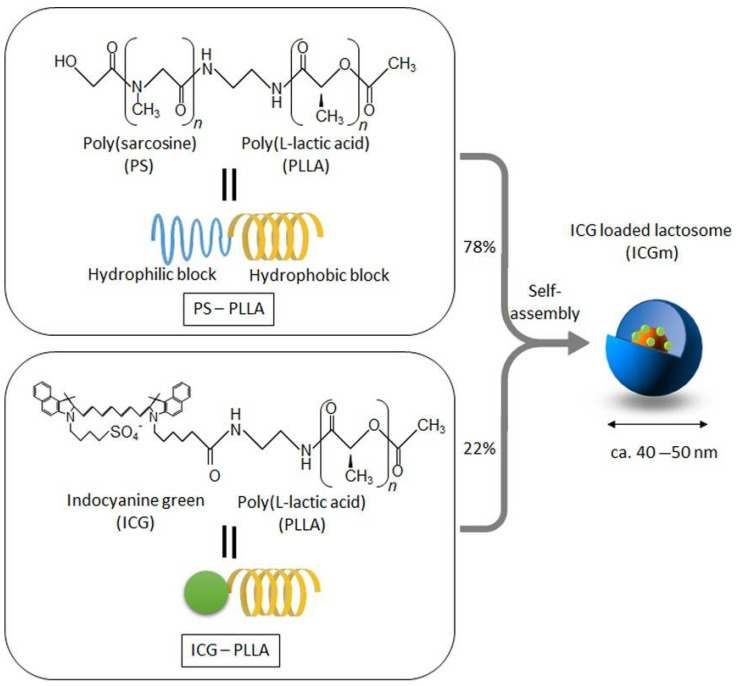
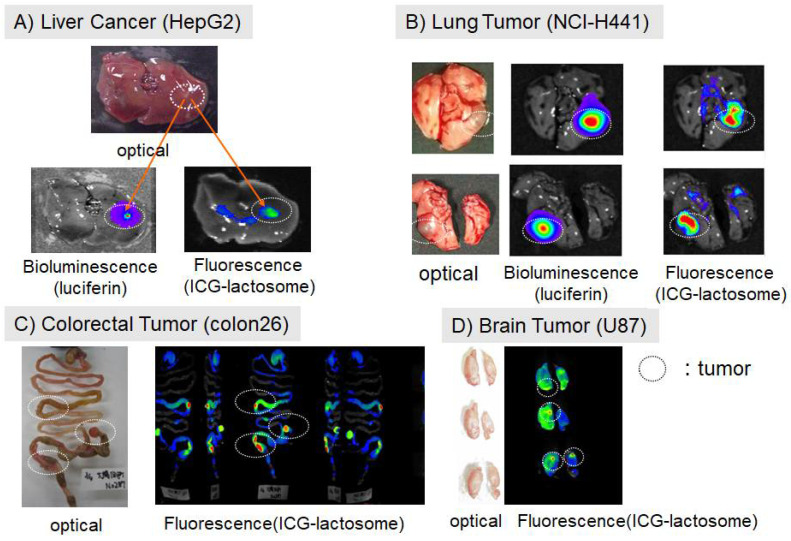
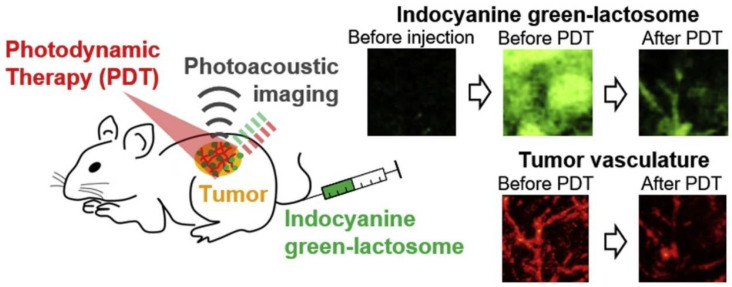
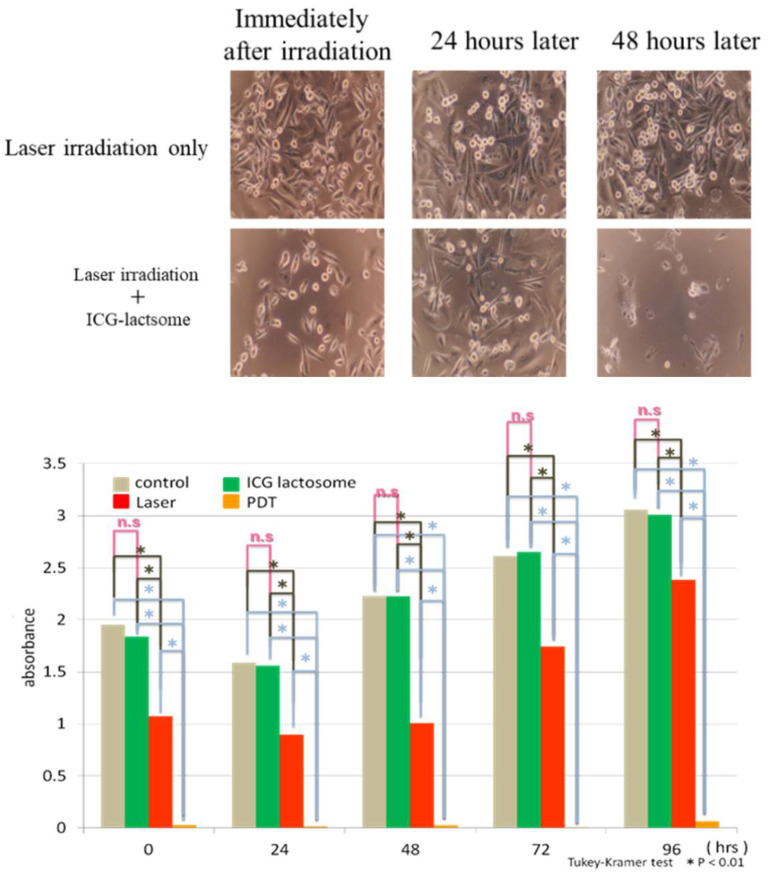
Lactosomes™ are biocompatible nanoparticles that can be used for cancer tissue imaging and drug delivery. Lactosomes are polymeric micelles formed by the self-assembly of biodegradable amphiphilic block copolymers composed of hydrophilic polysarcosine and hydrophobic poly-L-lactic acid chains. The particle size can be controlled in the range of 20 to 100 nm. Lactosomes can also be loaded with hydrophobic imaging probes and photosensitizers, such as indocyanine green. Indocyanine green-loaded lactosomes are stable for long-term circulation in the blood, allowing for accumulation in cancer tissues. Such lactosomes function as a photosensitizer, which simultaneously enables fluorescence diagnosis and photodynamic therapy. This review provides an overview of lactosomes with respect to molecular design, accumulation in cancer tissue, and theranostics applications. The use of lactosomes can facilitate the treatment of cancers in unresectable tissues, such as glioblastoma and head and neck cancers, which can lead to improved quality of life for patients with recurrent and unresectable cancers. We conclude by describing some outstanding questions and future directions for cancer theranostics with respect to clinical applications.
Keywords: indocyanine green lactosome; photodynamic diagnosis; photodynamic therapy; tumor accumulation.
Conflict of interest statement
The authors declare no conflict of interest.
Figures
References
-
- Matsumura Y., Maeda H. A new concept for macromolecular therapeutics in cancer chemotherapy: Mechanism of tumoritropic accumulation of proteins and the antitumor agent smancs. Cancer Res. 1986;46:6387–6392. - PubMed
-
- Makino A., Kizaka-Kondoh S., Yamahara R., Hara I., Kanzaki T., Ozeki E., Hiraoka M., Kimura S. Near-infrared fluorescence tumor imaging using nanocarrier composed of poly(L-lactic acid)-block-poly(sarcosine) amphiphilic polydepsipeptide. Biomaterials. 2009;30:5156–5160. doi: 10.1016/j.biomaterials.2009.05.046. - DOI - PubMed
Publication types
LinkOut - more resources
Full Text Sources
