


Obesity and Bone Health: A Complex Relationship
- PMID: 35955431
- PMCID: PMC9368241
- DOI: 10.3390/ijms23158303
Obesity and Bone Health: A Complex Relationship
Abstract
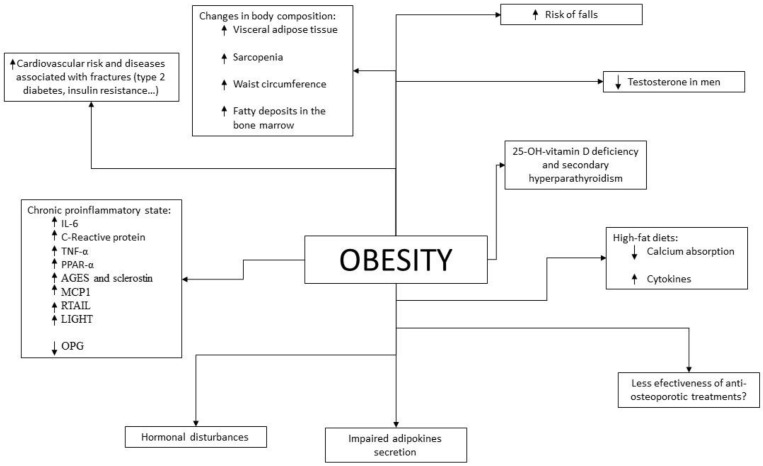
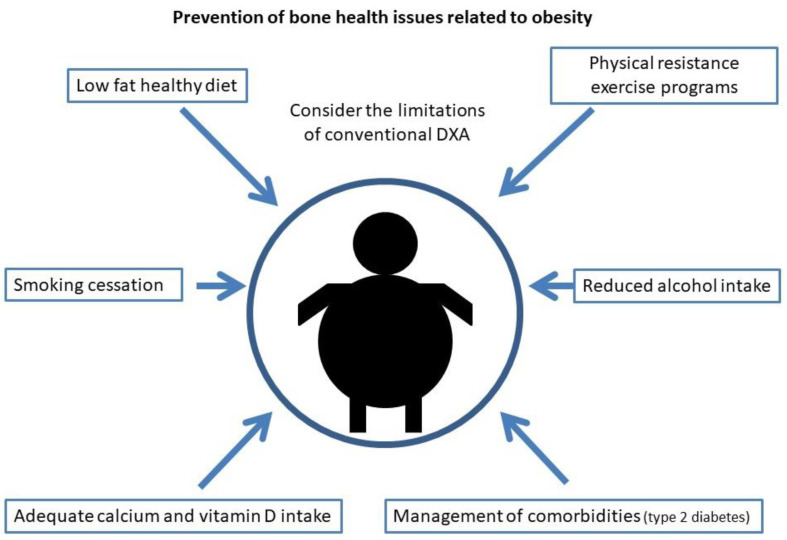
Recent scientific evidence has shown an increased risk of fractures in patients with obesity, especially in those with a higher visceral adipose tissue content. This contradicts the old paradigm that obese patients were more protected than those with normal weight. Specifically, in older subjects in whom there is a redistribution of fat from subcutaneous adipose tissue to visceral adipose tissue and an infiltration of other tissues such as muscle with the consequent sarcopenia, obesity can accentuate the changes characteristic of this age group that predisposes to a greater risk of falls and fractures. Other factors that determine a greater risk in older subjects with obesity are chronic proinflammatory status, altered adipokine secretion, vitamin D deficiency, insulin resistance and reduced mobility. On the other hand, diagnostic tests may be influenced by obesity and its comorbidities as well as by body composition, and risk scales may underestimate the risk of fractures in these patients. Weight loss with physical activity programs and cessation of high-fat diets may reduce the risk. Finally, more research is needed on the efficacy of anti-osteoporotic treatments in obese patients.
Keywords: body composition; fracture; healthy aging; inflammation; obesity; osteoporosis.
Conflict of interest statement
The authors declare no conflict of interest. The funders played no role in the writing of the manuscript or in the decision to publish the results.
Figures
References
-
- US Department of Health and Human Services . Bone Health and Osteoporosis: A Report of the Surgeon General. US Department of Health and Human Services; Rockville, MD, USA: 2004.
-
- Obesity and Overweight. [(accessed on 18 March 2022)]. Available online: https://www.who.int/news-room/fact-sheets/detail/obesity-and-overweight.
