


Hypercholesterolemia-Induced HDL Dysfunction Can Be Reversed: The Impact of Diet and Statin Treatment in a Preclinical Animal Model
- PMID: 35955730
- PMCID: PMC9368958
- DOI: 10.3390/ijms23158596
Hypercholesterolemia-Induced HDL Dysfunction Can Be Reversed: The Impact of Diet and Statin Treatment in a Preclinical Animal Model
Abstract
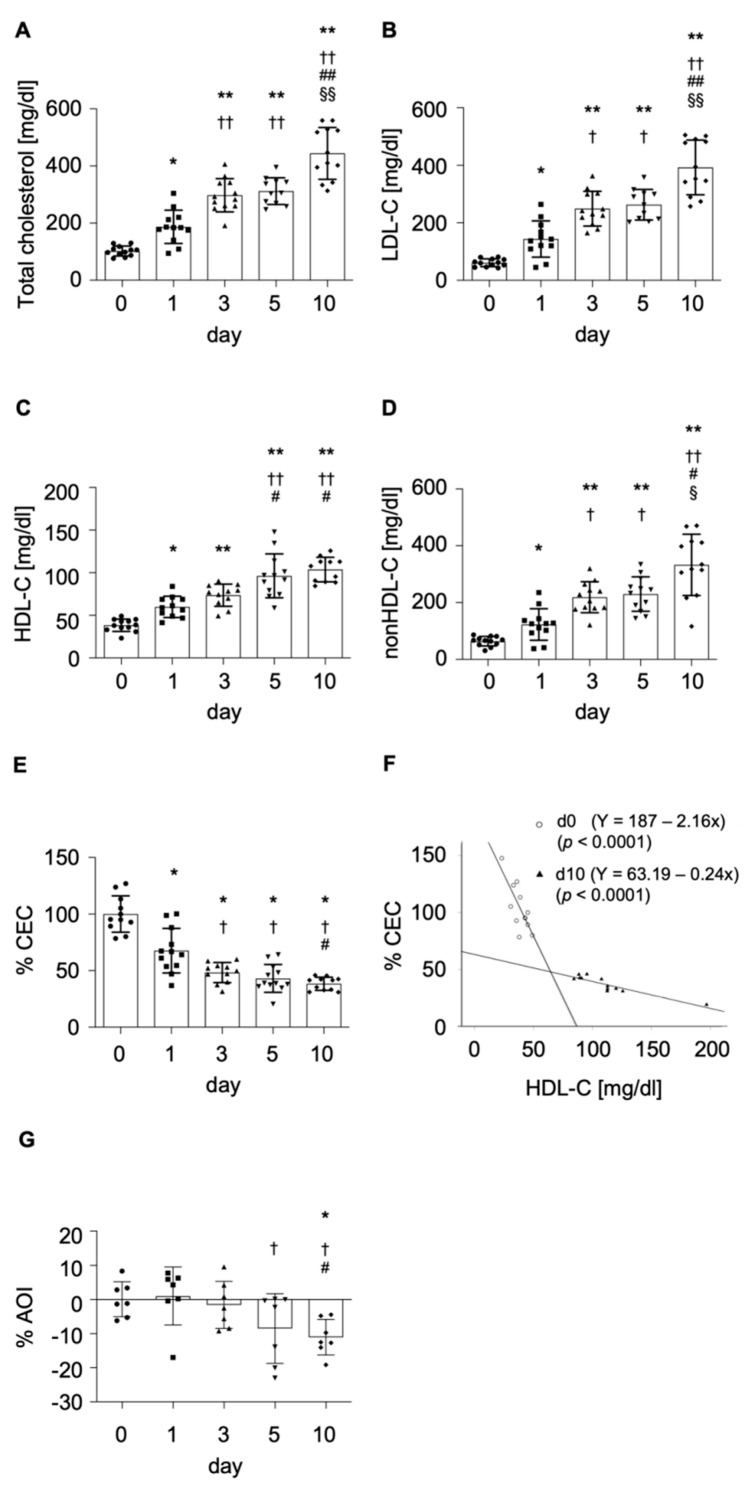
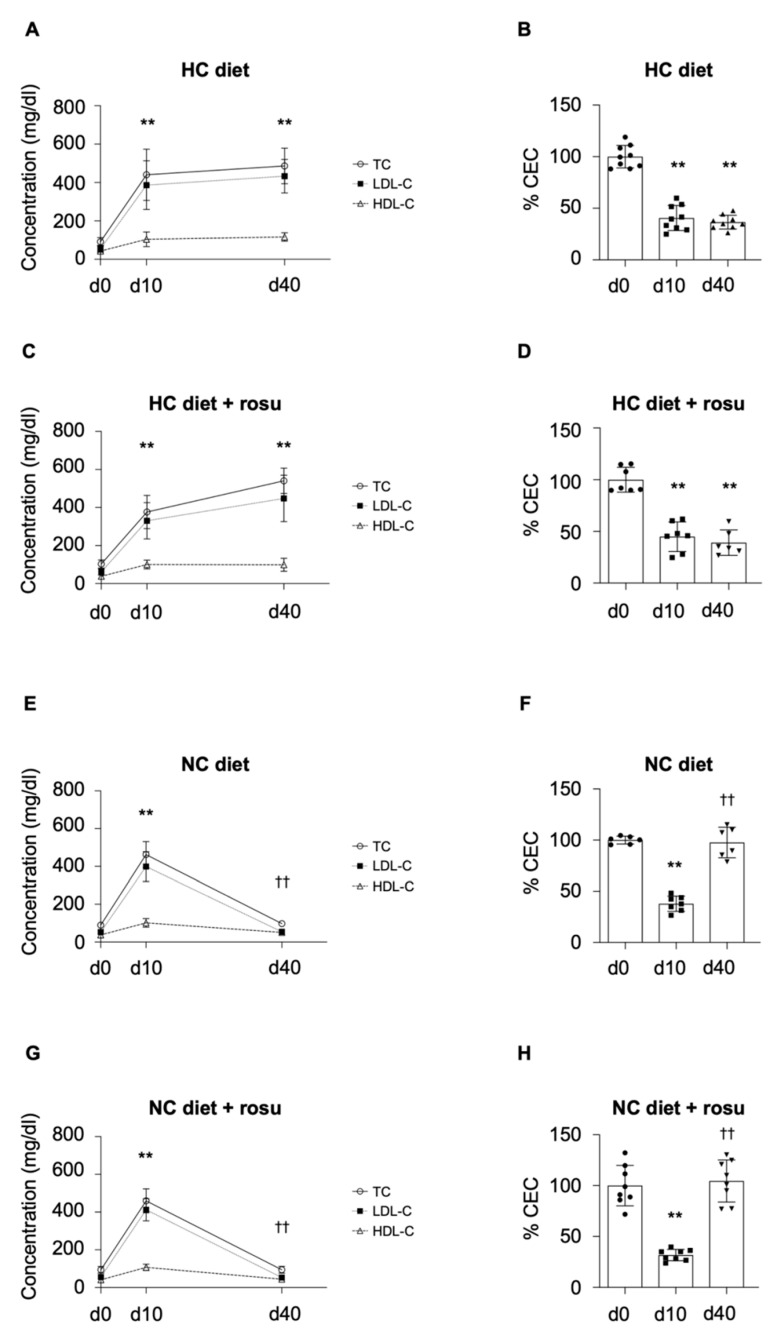
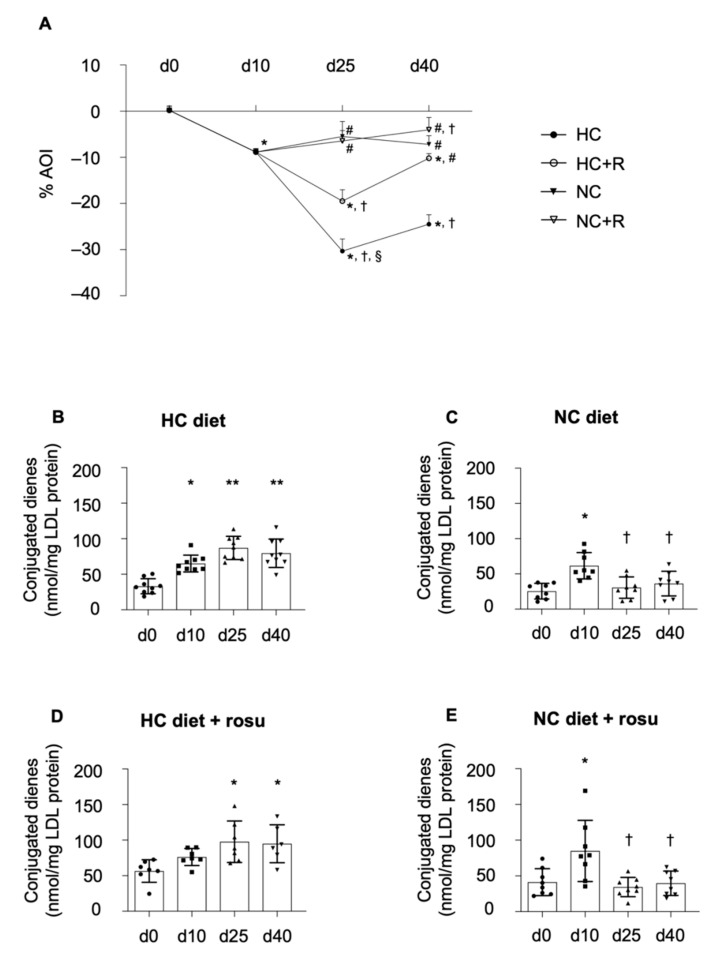
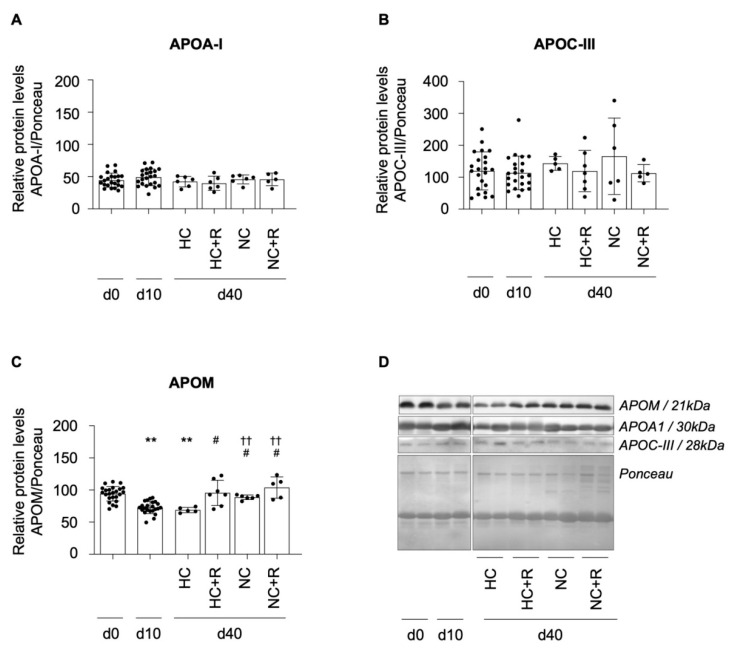
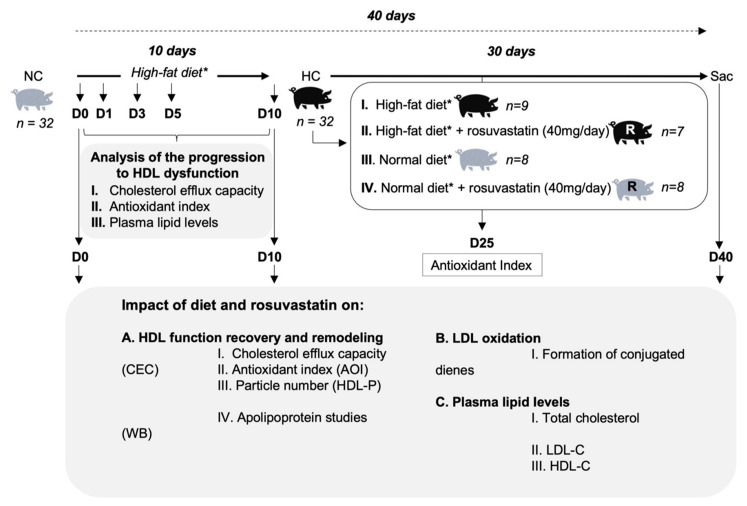
High-density lipoproteins (HDL) undergo adverse remodeling and loss of function in the presence of comorbidities. We assessed the potential of lipid-lowering approaches (diet and rosuvastatin) to rescue hypercholesterolemia-induced HDL dysfunction. Hypercholesterolemia was induced in 32 pigs for 10 days. Then, they randomly received one of the 30-day interventions: (I) hypercholesterolemic (HC) diet; (II) HC diet + rosuvastatin; (III) normocholesterolemic (NC) diet; (IV) NC diet + rosuvastatin. We determined cholesterol efflux capacity (CEC), antioxidant potential, HDL particle number, HDL apolipoprotein content, LDL oxidation, and lipid levels. Hypercholesterolemia time-dependently impaired HDL function (−62% CEC, −11% antioxidant index (AOI); p < 0.01), increased HDL particles numbers 2.8-fold (p < 0.0001), reduced HDL-bound APOM (−23%; p < 0.0001), and increased LDL oxidation 1.7-fold (p < 0.0001). These parameters remained unchanged in animals on HC diet alone up to day 40, while AOI deteriorated up to day 25 (−30%). The switch to NC diet reversed HDL dysfunction, restored apolipoprotein M content and particle numbers, and normalized cholesterol levels at day 40. Rosuvastatin improved HDL, AOI, and apolipoprotein M content. Apolipoprotein A-I and apolipoprotein C-III remained unchanged. Lowering LDL-C levels with a low-fat diet rescues HDL CEC and antioxidant potential, while the addition of rosuvastatin enhances HDL antioxidant capacity in a pig model of hypercholesterolemia. Both strategies restore HDL-bound apolipoprotein M content.
Keywords: HDL dysfunction; diet; hypercholesterolemia; pig; statin.
Conflict of interest statement
The authors declare no conflict of interest.
Figures
References
-
- Keene D., Price C., Shun-Shin M.J., Francis D.P. Effect on Cardiovascular Risk of High Density Lipoprotein Targeted Drug Treatments Niacin, Fibrates, and CETP Inhibitors: Meta-Analysis of Randomised Controlled Trials Including 117,411 Patients. BMJ. 2014;349:g4379. doi: 10.1136/bmj.g4379. - DOI - PMC - PubMed
-
- Voight B.F., Peloso G.M., Orho-Melander M., Frikke-Schmidt R., Barbalic M., Jensen M.K., Hindy G., Hólm H., Ding E.L., Johnson T., et al. Plasma HDL Cholesterol and Risk of Myocardial Infarction: A Mendelian Randomisation Study. Lancet. 2012;380:572–580. doi: 10.1016/S0140-6736(12)60312-2. - DOI - PMC - PubMed
-
- Zhong G.-C., Huang S.-Q., Peng Y., Wan L., Wu Y.-Q.-L., Hu T.-Y., Hu J.-J., Hao F.-B. HDL-C Is Associated with Mortality from All Causes, Cardiovascular Disease and Cancer in a J-Shaped Dose-Response Fashion: A Pooled Analysis of 37 Prospective Cohort Studies. Eur. J. Prev. Cardiol. 2020;27:1187–1203. doi: 10.1177/2047487320914756. - DOI - PubMed
MeSH terms
Substances
Grants and funding
LinkOut - more resources
Full Text Sources
Medical
Miscellaneous
