


Burn-Induced Acute Kidney Injury-Two-Lane Road: From Molecular to Clinical Aspects
- PMID: 35955846
- PMCID: PMC9368898
- DOI: 10.3390/ijms23158712
Burn-Induced Acute Kidney Injury-Two-Lane Road: From Molecular to Clinical Aspects
Abstract
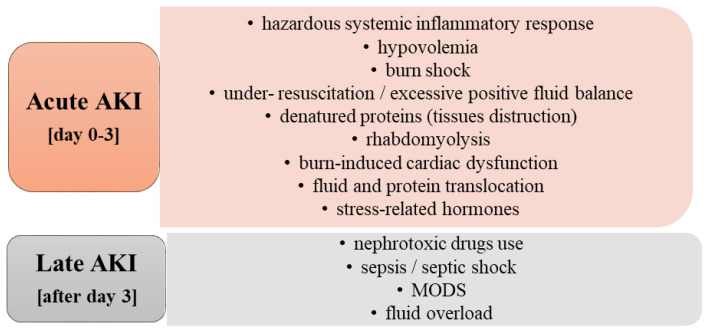
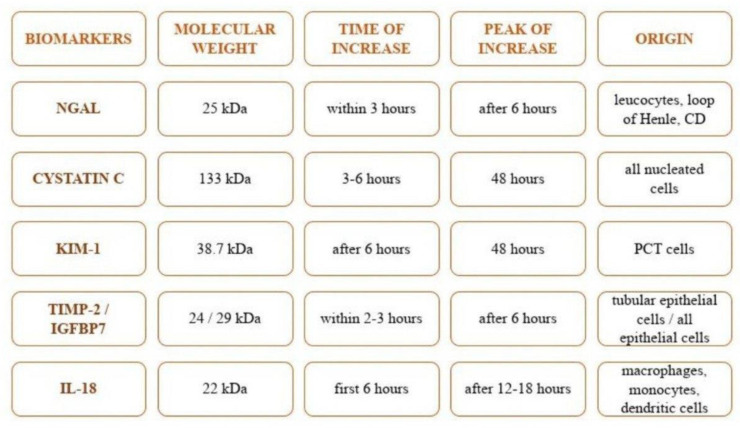
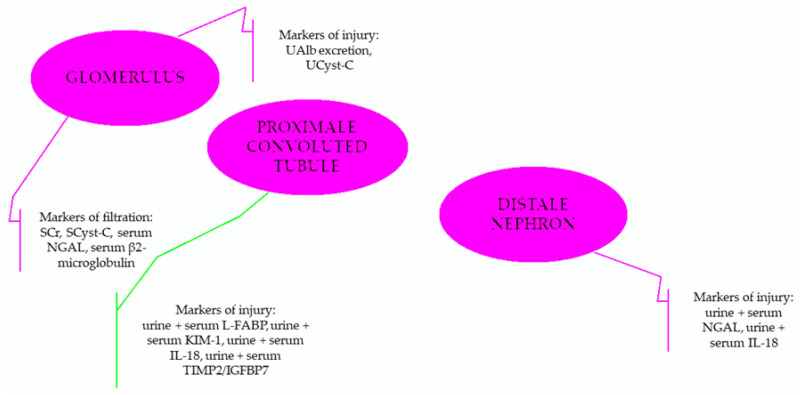
Severe burn injuries lead to acute kidney injury (AKI) development, increasing the mortality risk up to 28-100%. In addition, there is an increase in hospitalization days and complications appearance. Various factors are responsible for acute or late AKI debut, like hypovolemia, important inflammatory response, excessive load of denatured proteins, sepsis, and severe organic dysfunction. The main measure to improve the prognosis of these patients is rapidly recognizing this condition and reversing the underlying events. For this reason, different renal biomarkers have been studied over the years for early identification of burn-induced AKI, like neutrophil gelatinase-associated lipocalin (NGAL), cystatin C, kidney injury molecule-1 (KIM-1), tissue inhibitor of metalloproteinase-2 (TIMP-2), interleukin-18 (IL-18), and insulin-like growth factor-binding protein 7 (IGFBP7). The fundamental purpose of these studies is to find a way to recognize and prevent acute renal injury progression early in order to decrease the risk of mortality and chronic kidney disease (CKD) onset.
Keywords: IGFBP7; KIM-1; NGAL; TIMP-2; acute kidney injury; burn; cystatin C.
Conflict of interest statement
The authors declare no conflict of interest.
Figures
References
Publication types
MeSH terms
Substances
LinkOut - more resources
Full Text Sources
Medical
Research Materials
Miscellaneous
