. 2022 Aug 8;23(15):8805.
doi: 10.3390/ijms23158805.

The Effects of Probiotics, Prebiotics and Synbiotics in Non-Alcoholic Fat Liver Disease (NAFLD) and Non-Alcoholic Steatohepatitis (NASH): A Systematic Review

Affiliations

The Effects of Probiotics, Prebiotics and Synbiotics in Non-Alcoholic Fat Liver Disease (NAFLD) and Non-Alcoholic Steatohepatitis (NASH): A Systematic Review

Rodrigo Zamignan Carpi et al. Int J Mol Sci. .

Abstract

Modifications in the microbiota caused by environmental and genetic reasons can unbalance the intestinal homeostasis, deregulating the host's metabolism and immune system, intensifying the risk factors for the development and aggravation of non-alcoholic fat liver disease (NAFLD). The use of probiotics, prebiotics and synbiotics have been considered a potential and promising strategy to regulate the gut microbiota and produce beneficial effects in patients with liver conditions. For this reason, this review aimed to evaluate the effectiveness of probiotics, prebiotics, and symbiotics in patients with NAFLD and NASH. Pubmed, Embase, and Cochrane databases were consulted, and PRISMA (Preferred Reporting Items for Systematic Reviews and Meta-Analysis) guidelines were followed. The clinical trials used in this study demonstrated that gut microbiota interventions could improve a wide range of markers of inflammation, glycemia, insulin resistance, dyslipidemia, obesity, liver injury (decrease of hepatic enzymes and steatosis and fibrosis). Although microbiota modulators do not play a healing role, they can work as an important adjunct therapy in pathological processes involving NAFLD and its spectrums, either by improving the intestinal barrier or by preventing the formation of toxic metabolites for the liver or by acting on the immune system.

Keywords: microbiota; non-alcoholic fatty liver disease (NAFLD); non-alcoholic steatohepatitis (NASH); prebiotic; probiotic; symbiotic.


Conflict of interest statement

The authors declare no conflict of interest.

Figures
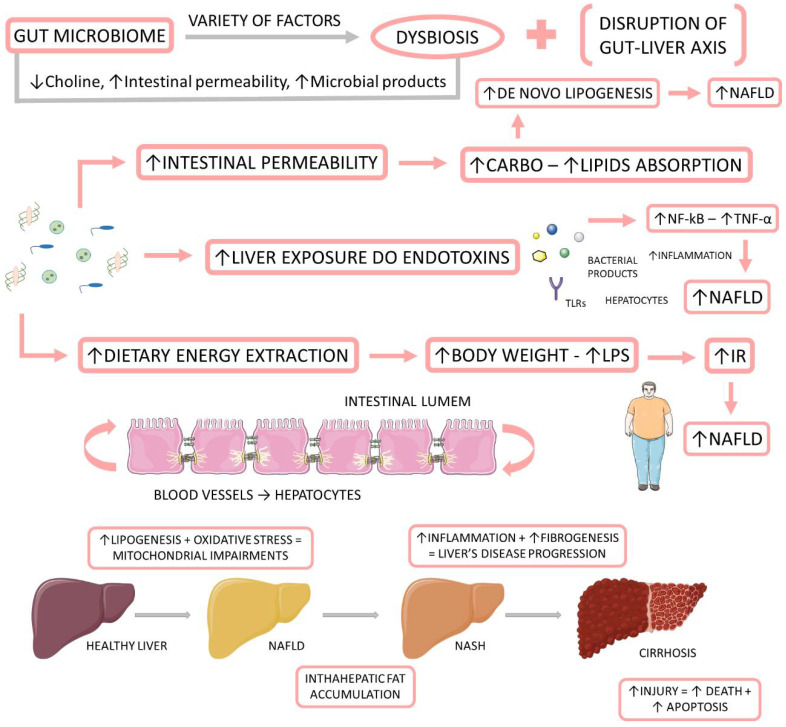
Figure 1
Figure 1
The relationship between the gut microbiome, NAFLD, and NASH. The gut microbiome is affected by a variety of factors to be in dysbiosis. When dysbiotic, the gut microbiome becomes disrupted and starts to cause alterations in the intestinal permeability, leading to augmented liver exposure to endotoxins and dietary energy extraction. These alterations induce an increase in the intrahepatic lipid accumulation, and they induce liver inflammation and fibrosis. IR: insulin resistance; LPS: Lipopolysaccharide; NF-kB: nuclear factor kappa B; NAFLD: non-alcoholic fatty liver disease; NASH: non-alcoholic steatohepatitis; TNF-α: tumor necrosis factor-alpha.
Figure 2
Figure 2
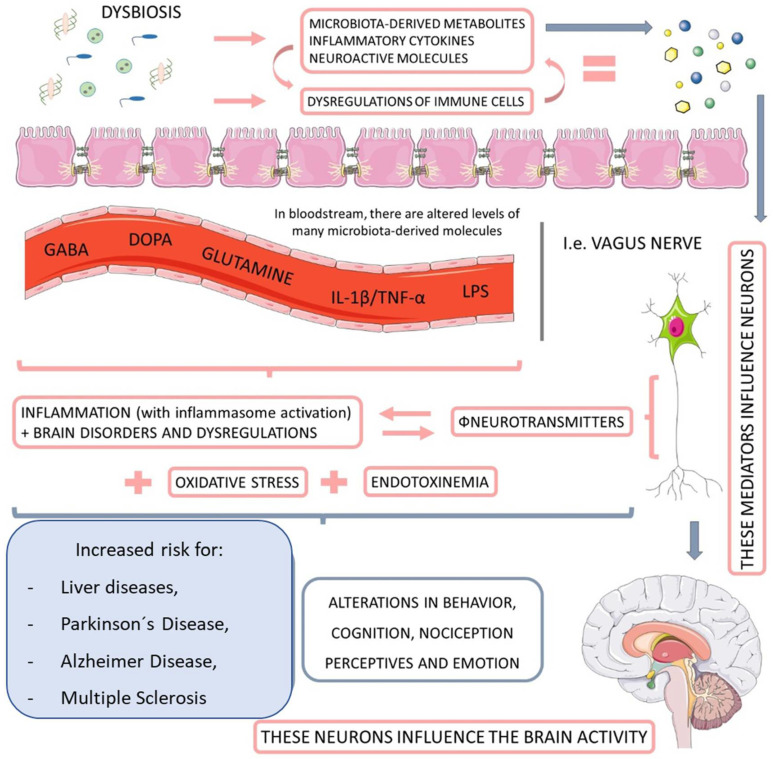
The relationship between microbiota, nervous system, and liver diseases. When dysbiotic, the gut-microbiome-derived metabolites start to cause neuroendocrine dysregulation, principally by impairments in the activity of neurotransmitters. This endotoxemia increases the personal risk for Parkinson’s disease and Alzheimer’s disease, as well as multiple sclerosis and other behavioral and cognitional alterations. GABA: gamma-Aminobutyric Acid; DOPA: dopamine; IL-1ß: interleukin-1β; TNF-α: tumor necrosis factor.
Figure 3
Figure 3
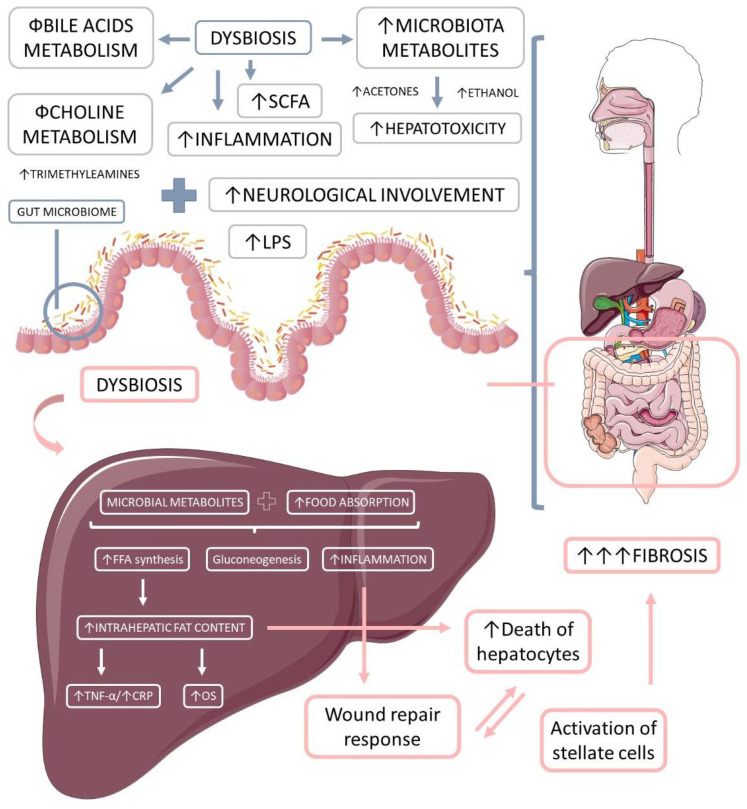
The microbiota-derived metabolites and their impact on liver inflammation, oxidative stress, and the development of liver diseases. Gut microbiome dysbiosis impairs the bile acids and choline metabolism, increases hepatotoxicity, and promotes inflammation. The microbiota-derived metabolites and the augmented food absorptions increase the intrahepatic production and accumulation of lipids, which causes increased inflammation and oxidative stress. Due to these events, the liver loses its capacity for wound repair response, and in addition to the augmented hepatocytes death and the augmented activation of stellate cells, liver massive fibrosis occurs. LPS: lipopolysaccharide; OS: oxidative stress, TNF-α: tumor necrosis factor-alpha; FFA: free fat acids; CRP: C reactive protein.
Figure 4
Figure 4
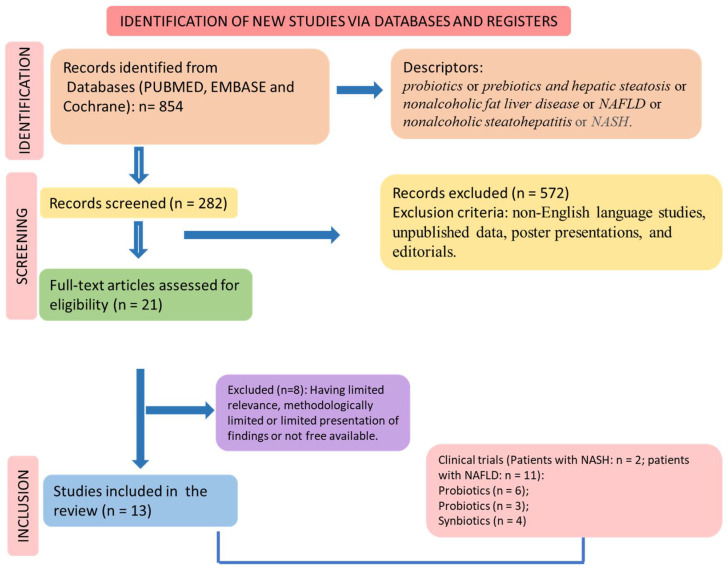
Flow diagram showing the study selection.

References

    1. Younossi Z.M., Koenig A.B., Abdelatif D., Fazel Y., Henry L., Wymer M. Global epidemiology of nonalcoholic fatty liver disease-Meta-analytic assessment of prevalence, incidence, and outcomes. Hepatology. 2016;64:73–84. doi: 10.1002/hep.28431. - DOI - PubMed
    1. Kumar R., Priyadarshi R.N., Anand U. Non-alcoholic Fatty Liver Disease: Growing Burden, Adverse Outcomes and Associations. J. Clin. Transl. Hepatol. 2020;8:76–86. doi: 10.14218/JCTH.2019.00051. - DOI - PMC - PubMed
    1. Hydes T.J., Summers N., Brown E., Alam U., Thomaides-Brears H., Wilding J.P.H., Cuthbertson D.J. Mechanisms, screening modalities and treatment options for individuals with non-alcoholic fatty liver disease and type 2 diabetes. Diabet Med. 2020;37:1793–1806. doi: 10.1111/dme.14356. - DOI - PubMed
    1. Lin H., Yip T.C., Zhang X., Li G., Tse Y.K., Hui V.W., Liang L.Y., Lai J.C., Chan S.L., Chan H.L., et al. Age and the relative importance of liver-related deaths in nonalcoholic fatty liver disease. Hepatology. 2022 doi: 10.1002/hep.32633. - DOI - PubMed
    1. Chalasani N., Younossi Z., Lavine J.E., Charlton M., Cusi K., Rinella M., Harrison S.A., Brunt E.M., Sanyal A.J. The diagnosis and management of nonalcoholic fatty liver disease: Practice guidance from the American Association for the Study of Liver Diseases. Hepatology. 2018;67:328–357. doi: 10.1002/hep.29367. - DOI - PubMed

Publication types