


Bing-Neel Syndrome, a Rare Presentation of Waldenström Macroglobulinemia-A Multicenter Report by the Polish Lymphoma Research Group
- PMID: 35956064
- PMCID: PMC9369437
- DOI: 10.3390/jcm11154447
Bing-Neel Syndrome, a Rare Presentation of Waldenström Macroglobulinemia-A Multicenter Report by the Polish Lymphoma Research Group
Abstract
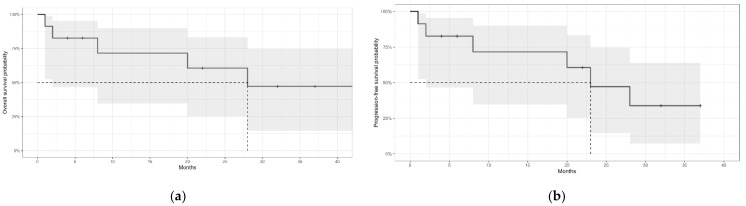
Bing-Neel syndrome (BNS) is a rare presentation of Waldenström macroglobulinemia (WM). BNS is a consequence of the central nervous system (CNS) involvement by lymphoplasmacytic lymphoma (LPL) and, rarely, the peripheral nervous system. The data on BNS are extremely scarce. Therefore, we performed a multicenter retrospective analysis of BNS patients diagnosed and treated in centers aligned with the Polish Lymphoma Research Group. The analysis covers the years 2014-2021. Eleven patients were included, 55% females and the median age at BNS diagnosis was 61 years. The median time from WM to BNS was 3.5 years; 27% of patients did have a diagnosis of WM and BNS made simultaneously or within 30 days from each other. Isolated parenchymal involvement was the least frequent (20%). Patients were treated with different regimens, mostly able to cross the blood-brain barrier, including 18% treated with ibrutinib first line. The cumulative objective response to treatment was 73%. With the median follow-up of 20 months (95% CI, 2-32), the 36-month estimates were: overall survival (OS) 47%, progression-free survival (PFS) 33%, and cumulative incidence of BNS-associated death 41%. The performance status according to ECOG was significant for PFS (HR = 7.79) and the hemoglobin concentration below 11 g/dL was correlated with PFS. To conclude, BNS is a very rare manifestation of WM. It is associated with a poor outcome with most patients succumbing to BNS.
Keywords: BTK inhibitors; Bing-Neel syndrome; Waldenström macroglobulinemia; central nervous system involvement; ibrutinib; lymphoplasmacytic lymphoma.
Conflict of interest statement
The authors declare no competing interest directly related to the study.
Figures
References
-
- Kastritis E., Leblond V., Dimopoulos M.A., Kimby E., Staber P., Kersten M.J., Tedeschi A., Buske C., ESMO Guidelines Committee Waldenström’s macroglobulinaemia: ESMO Clinical Practice Guidelines for diagnosis, treatment and follow-up. Ann. Oncol. 2018;29((Suppl. 4)):iv41–iv50. - PubMed
-
- Kulkarni M.T., Treon S.P., Manning R., Xu L., Rinne M., Lee E.Q., Ghobrial I.M., Norden A., Kluk M.J., Nayak L. Clinical Characteristics and Treatment Outcome of CNS Involvement (Bing-Neel Syndrome) in Waldenstrom’s Macroglobulinemia. Blood. 2013;122:5090. doi: 10.1182/blood.V122.21.5090.5090. - DOI
LinkOut - more resources
Full Text Sources
