


Fascial Manipulation Method Is Effective in the Treatment of Myofascial Pain, but the Treatment Protocol Matters: A Randomised Control Trial-Preliminary Report
- PMID: 35956161
- PMCID: PMC9369771
- DOI: 10.3390/jcm11154546
Fascial Manipulation Method Is Effective in the Treatment of Myofascial Pain, but the Treatment Protocol Matters: A Randomised Control Trial-Preliminary Report
Abstract
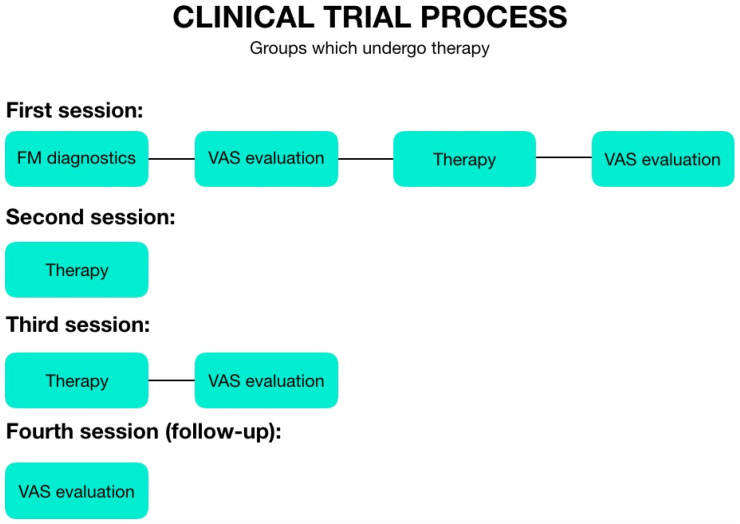
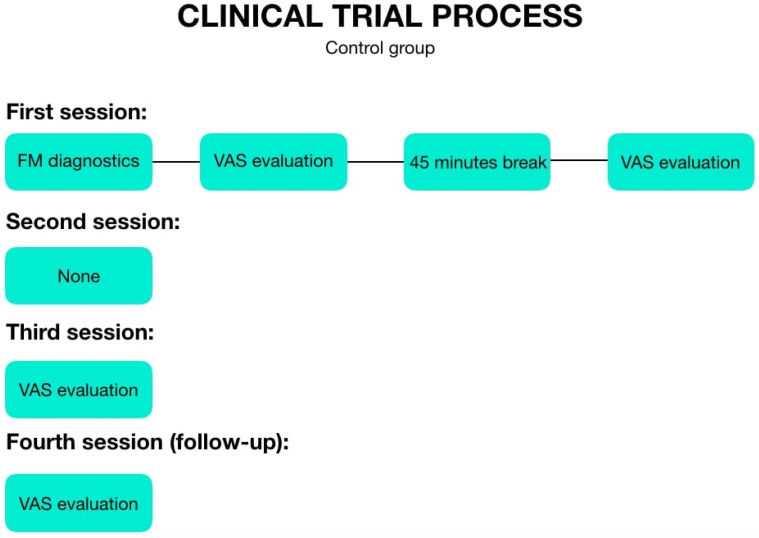
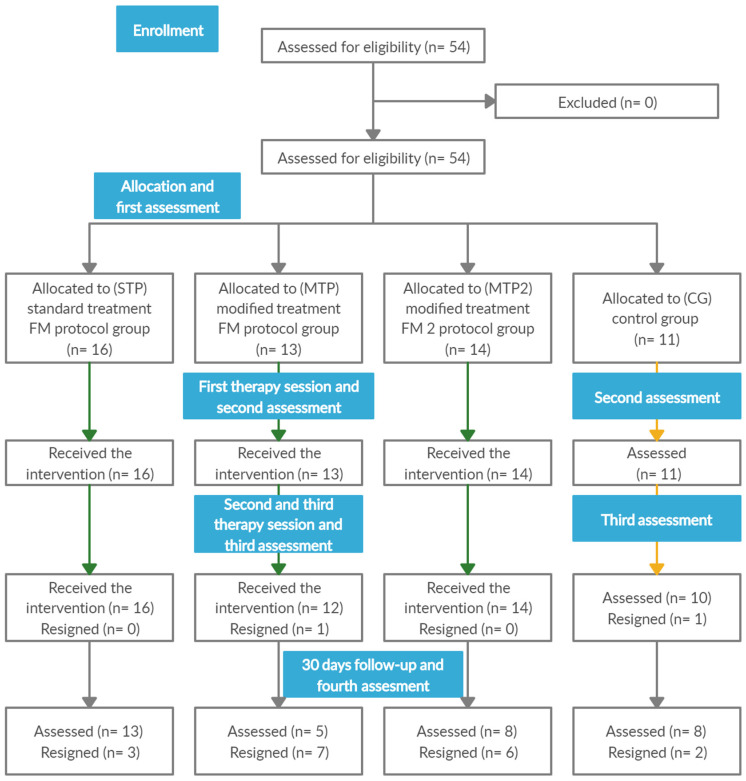
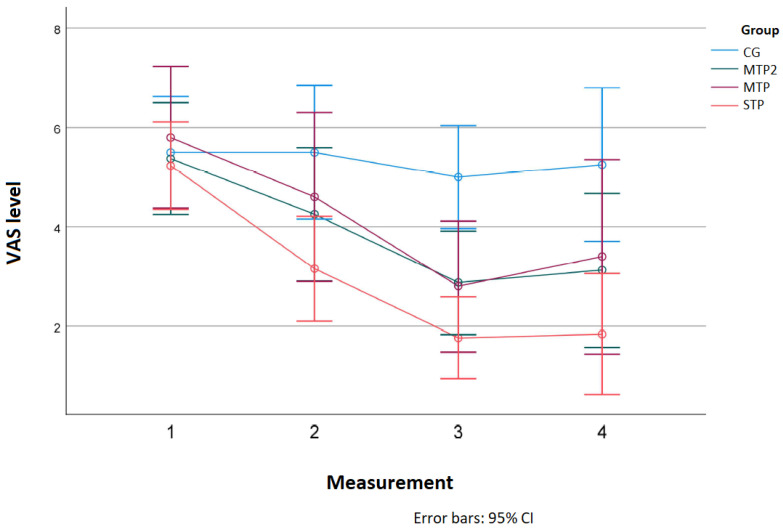
Background: There are many therapeutic methods targeting fascia. However, the only method whose basic assumption is to eliminate the densification of fascia is Fascial Manipulation. Objective: To evaluate the effectiveness of various Fascial Manipulation (FM) protocols in reducing myofascial pain. Design: Randomized control trial. Subjects: A total of 54 individuals, aged 18-29 years, with musculoskeletal pain for at least 1 week. Methods: The patients were divided into four groups subjected to different treatment protocols: group 1-underwent the standard FM treatment protocol (STP), group 2-modified protocol (MTP), group 3-modified protocol 2 (MTP2), and the control group (CG)-did not undergo any therapy. Each protocol involved three treatments at intervals of 7-10 days and a follow-up examination after 30 days. The outcome was pain level measured using the VAS. Results: In the STP, all the measurements showed a significant decrease in pain level-the mean difference was 2.077 after the first treatment, 3.462 after the third treatment and 3.385 in the follow-up. In the MTP, a significant mean difference was noted after the third treatment, 3, and in the follow up, 2.4. In the MTP2, it was noted after the third session, 2, and in the follow up, 2.25. Only the CG group did not display significant changes. Conclusions: FM-based therapy results in pain relief. However, there are differences in the dynamics and durability of the results depending on the chosen protocol.
Keywords: centers of coordination; fascia; fascial manipulation; musculoskeletal disorders; myofascial pain.
Conflict of interest statement
The authors declare that there are no conflict of interest.
Figures
References
-
- Aguilera F.J.M., Pecos-Martin D., Masanet R.A., Botella A.C., Soler L.B., Morell F.B. Immediate Effect of Ultrasound and Ischemic Compression Techniques for the Treatment of Trapezius Latent Myofascial Trigger Points in Healthy Subjects: A Randomized Controlled Study. J. Manip. Physiol. Ther. 2009;32:515–520. doi: 10.1016/j.jmpt.2009.08.001. - DOI - PubMed
LinkOut - more resources
Full Text Sources
