


Proximate, Elemental, and Functional Properties of Novel Solid Dispersions of Moringa oleifera Leaf Powder
- PMID: 35956885
- PMCID: PMC9370398
- DOI: 10.3390/molecules27154935
Proximate, Elemental, and Functional Properties of Novel Solid Dispersions of Moringa oleifera Leaf Powder
Abstract
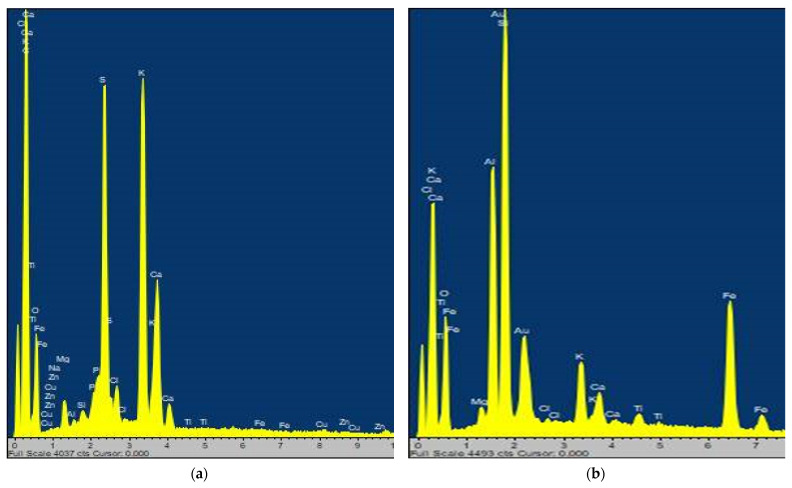
Moringa oleifera leaf powder (MOLP) is a rich source of antioxidants, protein, minerals, vitamins, and various phytochemicals and has been used to combat malnutrition in many countries. However, despite its many benefits, MOLP has low a solubility in water, necessitating the development of ways to address this issue. To improve the solubility of MOLP, solid-dispersed Moringa oleifera leaf powders (SDMOLPs) have been developed through freeze-drying, melting, microwave irradiation, and solvent evaporation methods using polyethylene glycols (PEG4000 and PEG6000) (1:1) as hydrophilic carriers. The solid dispersions were evaluated for their proximate composition using standard analytical procedures. Elemental composition was characterized using scanning electron microscopy (SEM) with energy-dispersive X-ray spectroscopy (EDS). Water absorption capacity (WAC) and water-solubility were further evaluated as functional properties. Proximate composition revealed that MOLP and SDMOLPs were rich in protein, energy, carbohydrate, ash, and fat contents. MOLP solid dispersions are a major source of minerals (Ca, Mg, Cu, and Zn), and can be used to alleviate many mineral deficiencies. All solid dispersions had significantly higher (p < 0.05) solubilities (ranging from 54 to 64%) and WAC (ranging from 468.86 to 686.37%), relative to that of pure MOLP. The increased solubility of SDMOLPs may be attributed to the hydrogen bonds and intermolecular interactions between MOLP and the hydrophilic carriers. The results indicate that the solid dispersion technique can be successfully employed to improve the solubility of MOLP. And the solid-dispersed MOLPs with enhanced functional properties may be useful as functional ingredients in foods and beverages, dietary supplements, or nutraceutical formulations.
Keywords: EDS; Moringa oleifera leaf powder; elemental composition; functional foods; functional properties; nutritional properties; solid dispersions; solubility.
Conflict of interest statement
The authors declare no conflict of interest.
Figures


References
-
- Singh V., Arulanantham A., Parisipogula V., Arulanantham S., Biswas A. Moringa olifera: Nutrient Dense Food Source and World’s Most Useful Plant to Ensure Nutritional Security, Good Health and Eradication of Malnutrition. Eur. J. Nutr. Food Saf. 2018;8:204–214. doi: 10.9734/EJNFS/2018/42468. - DOI
-
- Murdiana H.E., Revika E., Rahmawati D., Puspitasari T.R., Putri A.D., Murti B.T. Moringa oleifera lam.-based effervescent tablets: Design, formulation and physicochemical evaluation. Int. J. Drug Deliv. Technol. 2018;8:222–228. doi: 10.25258/ijddt.v8i4.9. - DOI
-
- Bamishaiye E.I., Olayemi F.F., Awagu E.F., Bamshaiye O.M. Proximate and Phytochemical Composition of Moringa oleifera Leaves at Three Stages of Maturation. Adv. J. Food Sci. Technol. 2011;3:233–237.
-
- Witt K. The Nutrient Content of Moringa oleifera Leaves. [(accessed on 1 June 2022)];Echo. 2014 Research Note No. 1. Available online: https://www.academia.edu/18024032/Nutrient_content_of_moringa_oleifera_l....
MeSH terms
Substances
LinkOut - more resources
Full Text Sources
Research Materials
Miscellaneous
