


Diversity, migration routes, and worldwide population genetic structure of Lecanosticta acicola, the causal agent of brown spot needle blight
- PMID: 35957598
- PMCID: PMC9562577
- DOI: 10.1111/mpp.13257
Diversity, migration routes, and worldwide population genetic structure of Lecanosticta acicola, the causal agent of brown spot needle blight
Abstract
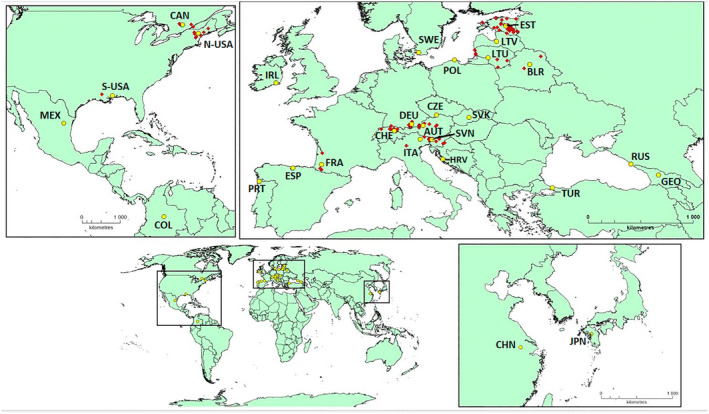
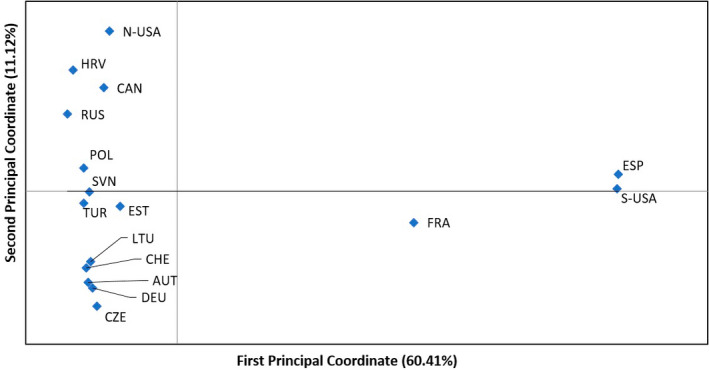
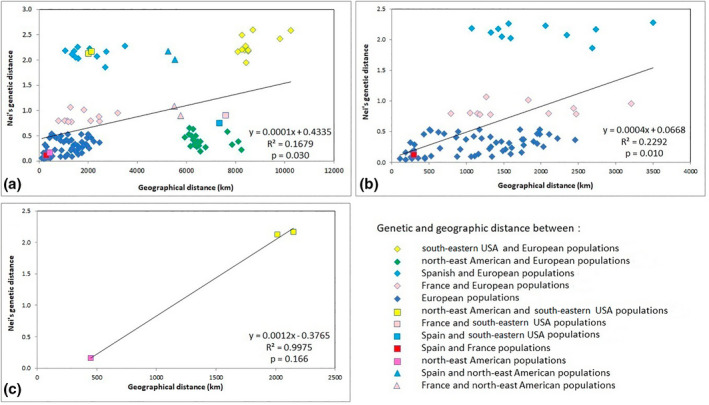
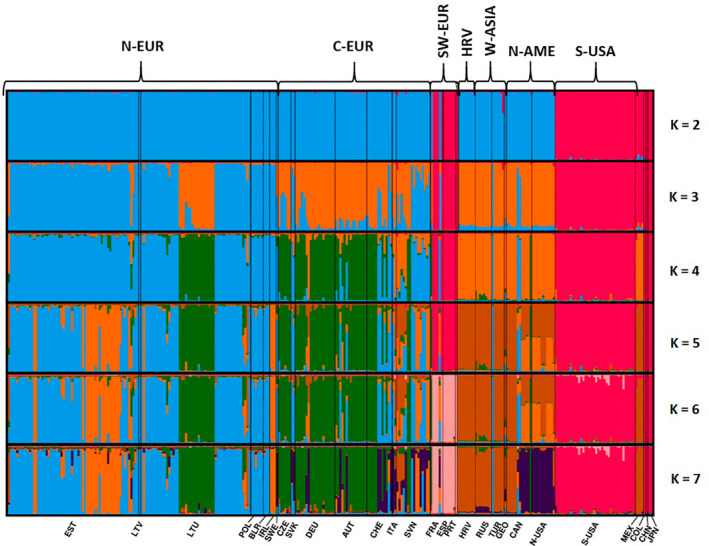
Lecanosticta acicola is a pine needle pathogen causing brown spot needle blight that results in premature needle shedding with considerable damage described in North America, Europe, and Asia. Microsatellite and mating type markers were used to study the population genetics, migration history, and reproduction mode of the pathogen, based on a collection of 650 isolates from 27 countries and 26 hosts across the range of L. acicola. The presence of L. acicola in Georgia was confirmed in this study. Migration analyses indicate there have been several introduction events from North America into Europe. However, some of the source populations still appear to remain unknown. The populations in Croatia and western Asia appear to originate from genetically similar populations in North America. Intercontinental movement of the pathogen was reflected in an identical haplotype occurring on two continents, in North America (Canada) and Europe (Germany). Several shared haplotypes between European populations further suggests more local pathogen movement between countries. Moreover, migration analyses indicate that the populations in northern Europe originate from more established populations in central Europe. Overall, the highest genetic diversity was observed in south-eastern USA. In Europe, the highest diversity was observed in France, where the presence of both known pathogen lineages was recorded. Less than half of the observed populations contained mating types in equal proportions. Although there is evidence of some sexual reproduction taking place, the pathogen spreads predominantly asexually and through anthropogenic activity.
Keywords: Mycosphaerella dearnessii; Pinus; forest pathology; introduction pathways; invasive pathogen; mating type; microsatellites.
© 2022 The Authors. Molecular Plant Pathology published by British Society for Plant Pathology and John Wiley & Sons Ltd.
Conflict of interest statement
The authors declare that they have no conflicts of interest.
Figures
References
-
- Adamčíková, K. , Jánošíková, Z. , Adamčík, S. , Ostrovský, R. , Pastirčáková, K. , Kobza, M. et al. (2021) Host range, genetic variability, and mating types of Lecanosticta acicola in Slovakia. Scandinavian Journal of Forest Research, 36, 325–332.
-
- Adamson, K. , Drenkhan, R. & Hanso, M. (2015) Invasive brown spot needle blight caused by Lecanosticta acicola in Estonia. Scandinavian Journal of Forest Research, 30, 587–593.
-
- Adamson, K. , Laas, M. , Drenkhan, R. & Hanso, M. (2018a) Quarantine pathogen Lecanosticta acicola, observed at its jump from an exotic host to the native scots pine in Estonia. Baltic Forestry, 24, 36–41.
-
- Adamson, K. , Mullett, M.S. , Solheim, H. , Barnes, I. , Müller, M.M. , Hantula, J. et al. (2018b) Looking for relationships between the populations of Dothistroma septosporum in northern Europe and Asia. Fungal Genetics and Biology, 110, 15–25. - PubMed
Publication types
MeSH terms
Supplementary concepts
LinkOut - more resources
Full Text Sources
