


Endometriosis and irritable bowel syndrome: A systematic review and meta-analyses
- PMID: 35957857
- PMCID: PMC9357916
- DOI: 10.3389/fmed.2022.914356
Endometriosis and irritable bowel syndrome: A systematic review and meta-analyses
Abstract
Objective: To estimate the pooled odds ratio of endometriosis and irritable bowel syndrome, and to estimate the pooled prevalence of irritable bowel syndrome in patients with endometriosis.
Data sources: Using Cochrane Library, MEDLINE, Science Direct, ClinicalTrials.gov, Web of Science, and CINAHL, we conducted a systematic literature search through October 2021, using the key terms "endometriosis" and "irritable bowel syndrome." Articles had to be published in English or Spanish. No restriction on geographical location was applied.
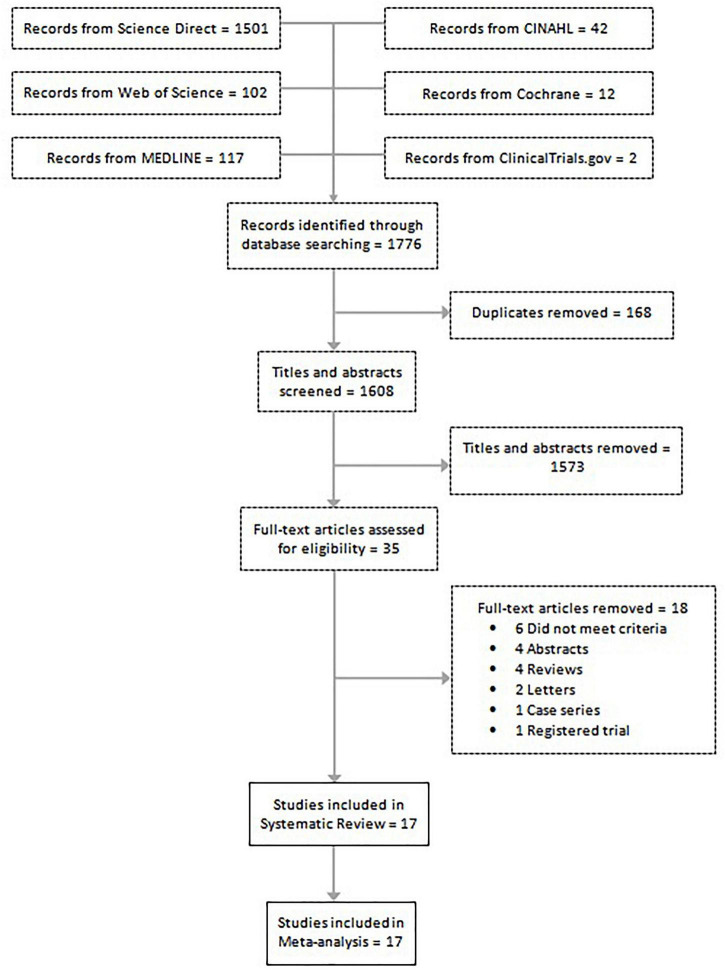
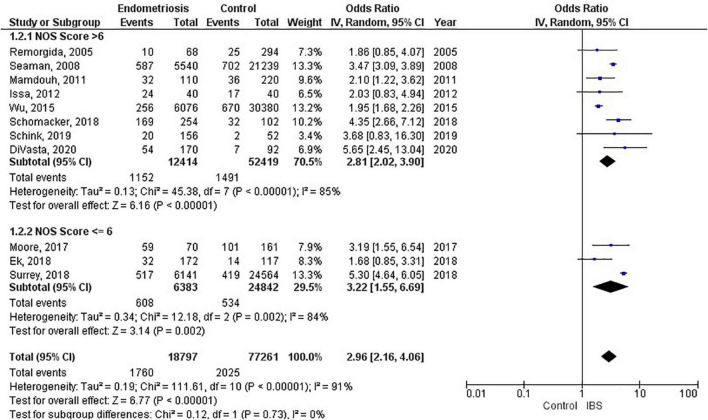
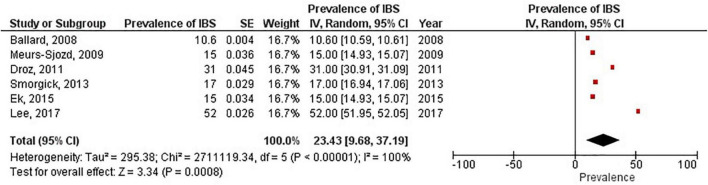
Methods of study selection: The following eligibility criteria were applied: full-text original articles; human studies; studies that investigated the association between endometriosis and irritable bowel syndrome. Two investigators screened and reviewed the studies. A total of 1,776 studies were identified in 6 separate databases. After screening and applying the eligibility criteria, a total of 17 studies were included for analyses. The meta-analysis of association between endometriosis and irritable bowel syndrome included 11 studies, and the meta-analysis on the prevalence of irritable bowel syndrome in endometriosis included 6 studies.
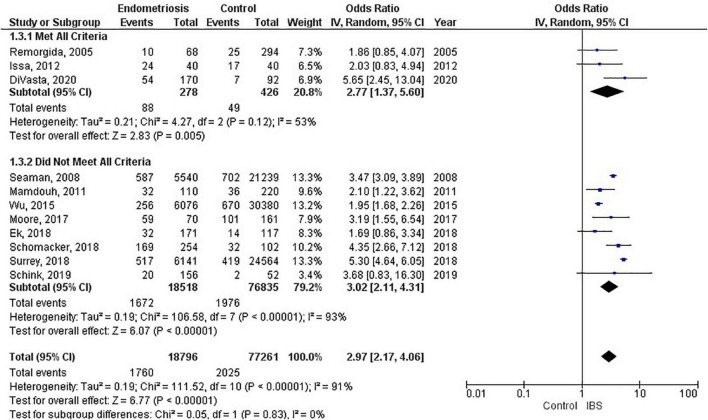
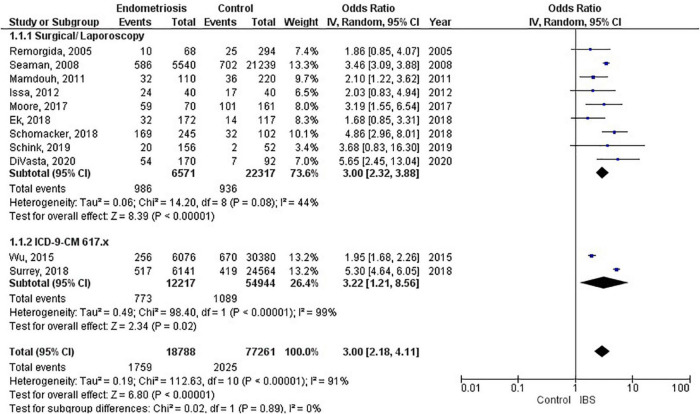
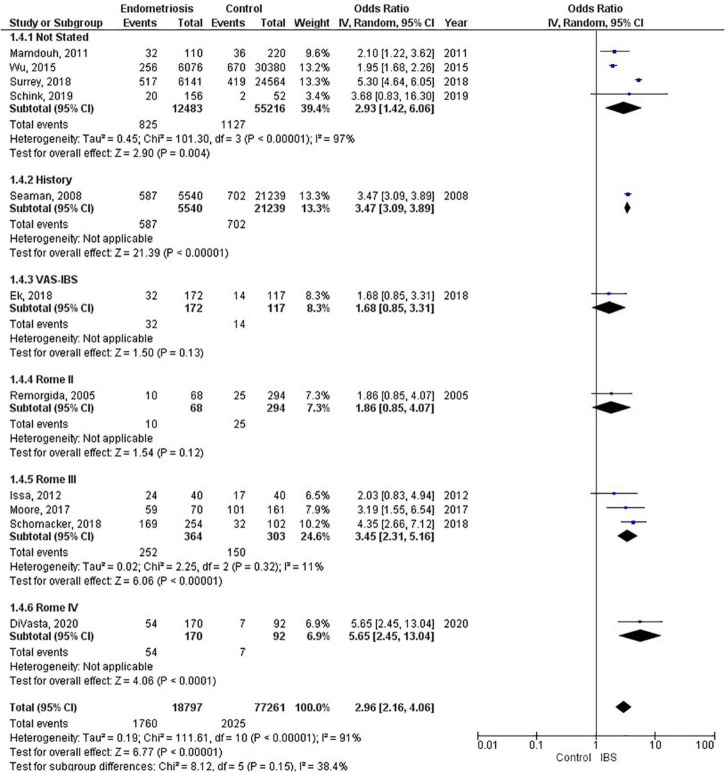
Tabulation integration and results: Overall 96,119 subjects were included in the main meta-analysis (11 studies) for endometriosis and irritable bowel syndrome, with 18,887 endometriosis patients and 77,171 controls. The odds of irritable bowel syndrome were approximately 3 times higher among patients with endometriosis compared with healthy controls (odds ratio 2.97; 95% confidence interval, 2.17 - 4.06). Similar results were obtained after subgroup analyses by endometriosis diagnosis, irritable bowel syndrome diagnostic criteria, and Newcastle-Ottawa Scale scores. Six studies reported prevalence rates of irritable bowel syndrome in women with endometriosis, ranging from 10.6 to 52%. The pooled prevalence of irritable bowel syndrome in women with endometriosis was 23.4% (95% confidence interval, 9.7 - 37.2).
Conclusion: Patients with endometriosis have an approximately threefold increased risk of developing irritable bowel syndrome. Development and recent update of Rome criteria has evolved the diagnosis of IBS, potential bias should still be considered as there are no specific tests available for diagnosis.
Systematic review registration: [https://www.crd.york.ac.uk/prospero/displa y_record.php?ID=CRD42018080611], identifier [CRD42018080611].
Keywords: endometriosis; functional gastrointestinal disorders; irritable bowel syndrome; meta-analyses; systematic review.
Copyright © 2022 Nabi, Nauhria, Reel, Londono, Vasireddi, Elmiry and Ramdass.
Conflict of interest statement
The authors declare that the research was conducted in the absence of any commercial or financial relationships that could be construed as a potential conflict of interest.
Figures
References
Publication types
LinkOut - more resources
Full Text Sources
Research Materials
