


B serum proteome profiles revealed dysregulated proteins and mechanisms associated with insomnia patients: A preliminary study
- PMID: 35958162
- PMCID: PMC9360785
- DOI: 10.3389/fnint.2022.936955
B serum proteome profiles revealed dysregulated proteins and mechanisms associated with insomnia patients: A preliminary study
Abstract
Background: Insomnia is a clinical problem of significant public health importance; however, the underlying pathogenesis of this disorder is not comprehensively understood.
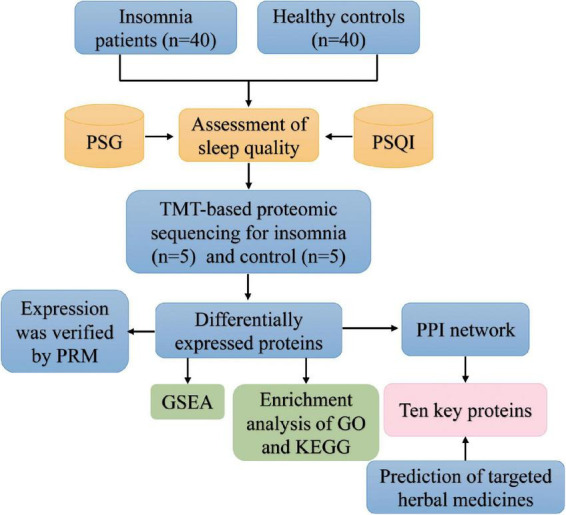
Methods: To identify potential treatment targets and unfold one of the gaps that were involved in insomnia pathological mechanisms, we employed a tandem mass tag-based (TMT) quantitative proteomics technology to detect differentially expressed proteins (DEPs) in serum from patients with insomnia and controls. DEPs were further analyzed by bioinformatics platforms. In addition, parallel reaction monitoring (PRM) was used to verify the TMT results.
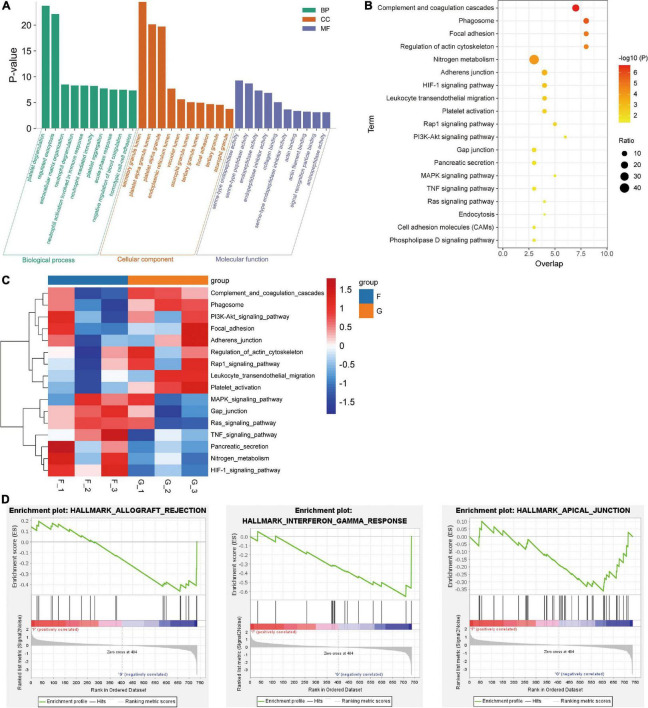
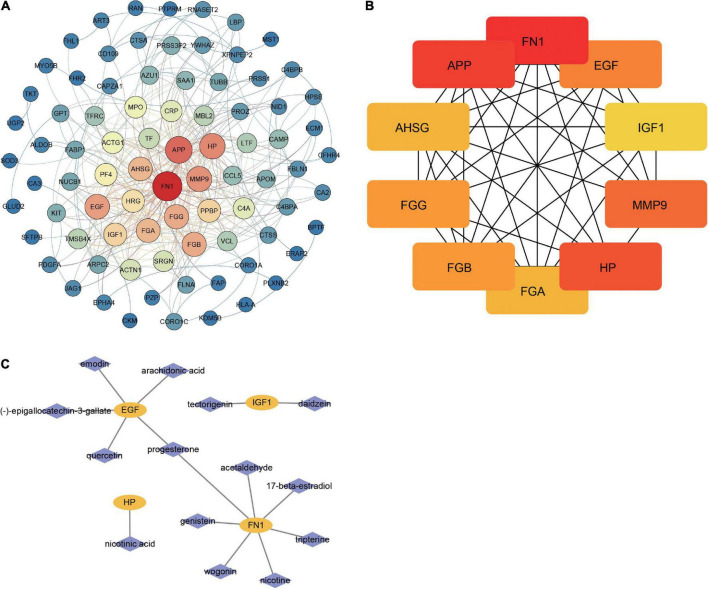
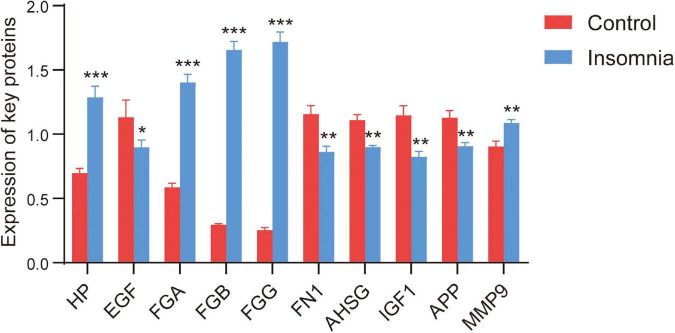
Results: Patients with insomnia had poorer sleep quality compared with healthy controls. A total of 106 DEPs were identified among patients with insomnia and controls. They were mainly enriched in immune and inflammation-related biological functions and signaling pathways. Using the protein-protein interaction network, we screened the 10 most connected proteins as key DEPs. We predicted that four key DEPs were subject to targeted regulation by natural compounds of herbs. Eight key DEPs were validated using PRM in an additional 15 patients with insomnia and 15 controls, and the results also supported the experimental findings.
Conclusion: We identified aberrantly expressed proteins in insomnia that may be involved in the immune-inflammatory response. The 10 key DEPs screened may be potential targets for insomnia, especially FN1, EGF, HP, and IGF1. The results of this study will broaden our understanding of the pathological mechanisms of insomnia and provide more possibilities for pharmacotherapy.
Keywords: PRM; immuno-inflammation; insomnia; protein expression; sleep.
Copyright © 2022 Liu, Wang, Zhang, Liu, Liang, Ren, Yan and Zhang.
Conflict of interest statement
The authors declare that the research was conducted in the absence of any commercial or financial relationships that could be construed as a potential conflict of interest.
Figures

References
-
- American Psychiatric Association [APA] (2013). Diagnostic and Statistical Manual of Mental Disorders (DSM-5§). Virginia: American Psychiatric Pub. 10.1176/appi.books.9780890425596 - DOI
LinkOut - more resources
Full Text Sources
Research Materials
Miscellaneous
