


Serum Zinc Level in Patients with Severe Genital Warts: A Case-Control Study in a Dermatology Hospital
- PMID: 35959482
- PMCID: PMC9363164
- DOI: 10.1155/2022/7616453
Serum Zinc Level in Patients with Severe Genital Warts: A Case-Control Study in a Dermatology Hospital
Abstract
Background: Genital warts are a common sexually transmitted disease (STD), and there is no method that completely prevents its recurrence. Recently, zinc has been used in the treatment of cutaneous warts. Nondestructive action, ease of use, and promising results with low chances of relapse were reflected in the treatment. These effects may arise from the immunomodulatory activity of zinc in the event of a viral infection.
Objectives: This study was aimed at identifying the relationship between the serum zinc level and the clinical characteristics of patients with genital warts.
Materials and methods: A case-control study was conducted. Genital warts were diagnosed by clinical examination, and disease severity was demonstrated based on the number of affected sites or the spread of lesions. The serum zinc level was measured using atomic absorption spectrophotometry.
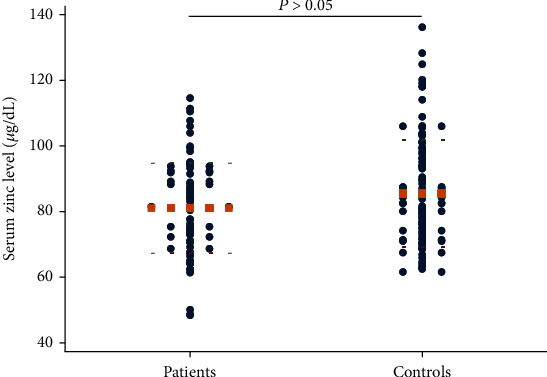
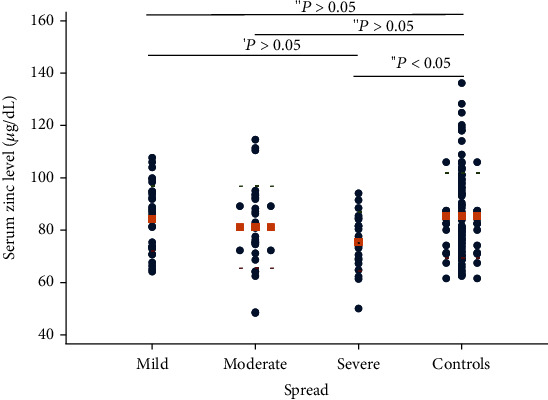
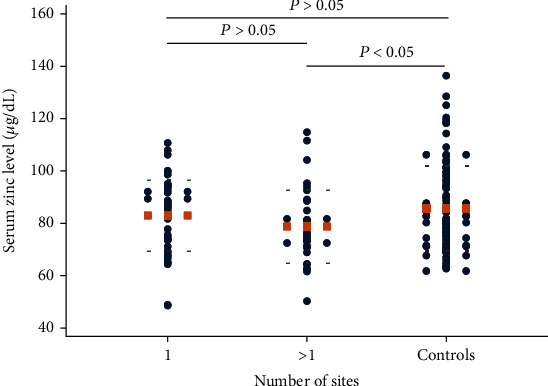
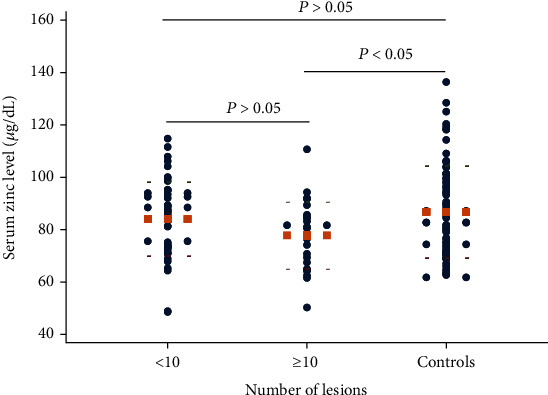
Results: A total of 78 patients with genital warts and 78 healthy volunteers were enrolled in the study. The mean serum zinc level in the genital wart group was lower than that in the control group (81.83 ± 13.99 μg/dL vs. 86.66 ± 17.58 μg/dL); however, this difference was not statistically significant (P > 0.05). The mean concentrations of serum zinc in patients having more than one affected site, spread > 2 cm2, or ten or more lesions were significantly lower than those of the control group (P < 0.05).
Conclusions: The results suggested that severe genital warts may be associated with a low serum zinc level in patients.
Copyright © 2022 Thuy Nguyen Dac Luong et al.
Conflict of interest statement
There is no conflict of interest with this submission.
Figures
References
MeSH terms
Substances
LinkOut - more resources
Full Text Sources
Medical
Research Materials
