


Prevalence of occult hepatitis B virus infection in adults: a systematic review and meta-analysis
- PMID: 35961359
- PMCID: PMC9630161
- DOI: 10.1016/S2468-1253(22)00201-1
Prevalence of occult hepatitis B virus infection in adults: a systematic review and meta-analysis
Abstract
Background: Despite growing concerns about transmissibility and clinical impact, occult hepatitis B virus (HBV) infection has received little attention in the hepatitis elimination agenda. We aimed to estimate the prevalence of occult HBV infection at a global and regional scale and in specific populations.
Methods: For this systematic review and meta-analysis, we searched the MEDLINE, Embase, Global Health, and Web of Science databases for articles published in any language between Jan 1, 2010, and Aug 14, 2019. We included original articles and conference abstracts of any study design that reported the proportion of HBsAg-negative adults (aged ≥18 years) who are positive for HBV DNA (ie, people with occult HBV infection). The prevalence of occult HBV infection was pooled, using the DerSimonian-Laird random-effects model, in the general population and specific groups defined by the type of study participants (blood donors; other low-risk populations; high-risk populations; and people with advanced chronic liver disease), and stratified by HBV endemicity in each country. We also assessed the performance of anti-HBc as an alternative biomarker to detect occult HBV infection. The study was registered with PROSPERO, CRD42019115490.
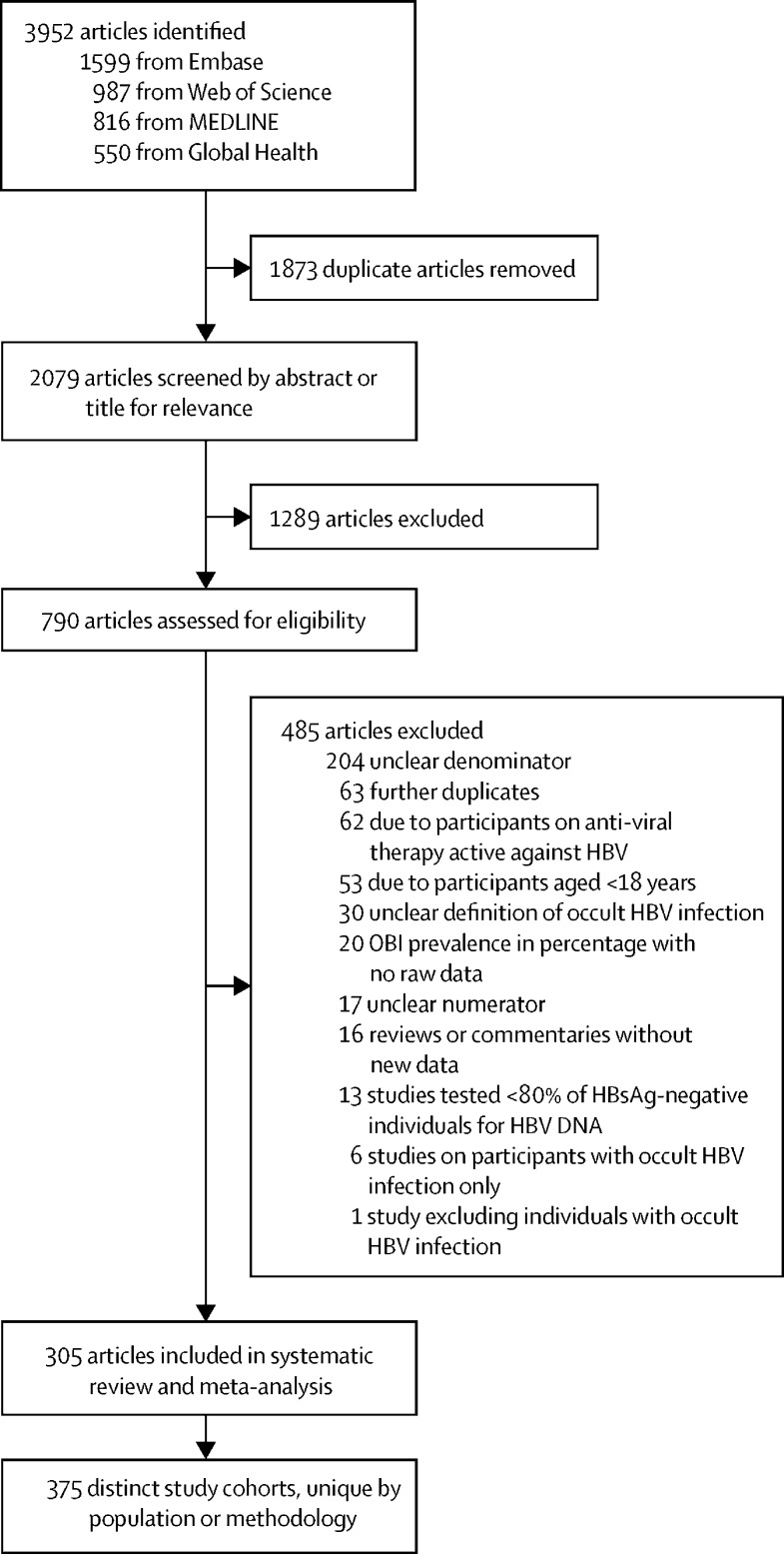
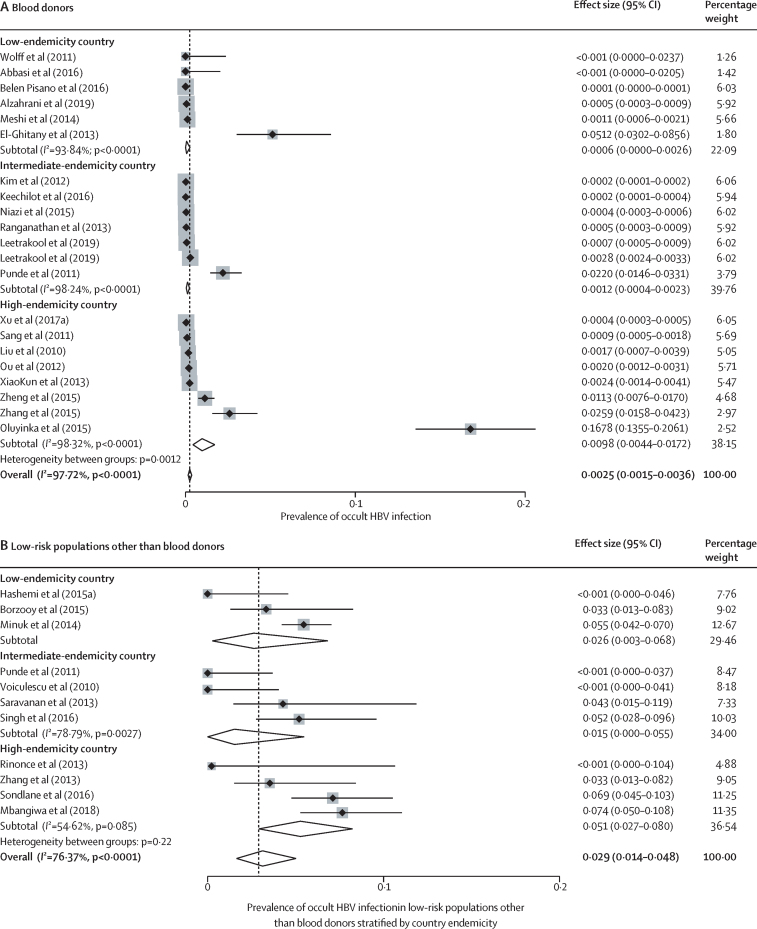
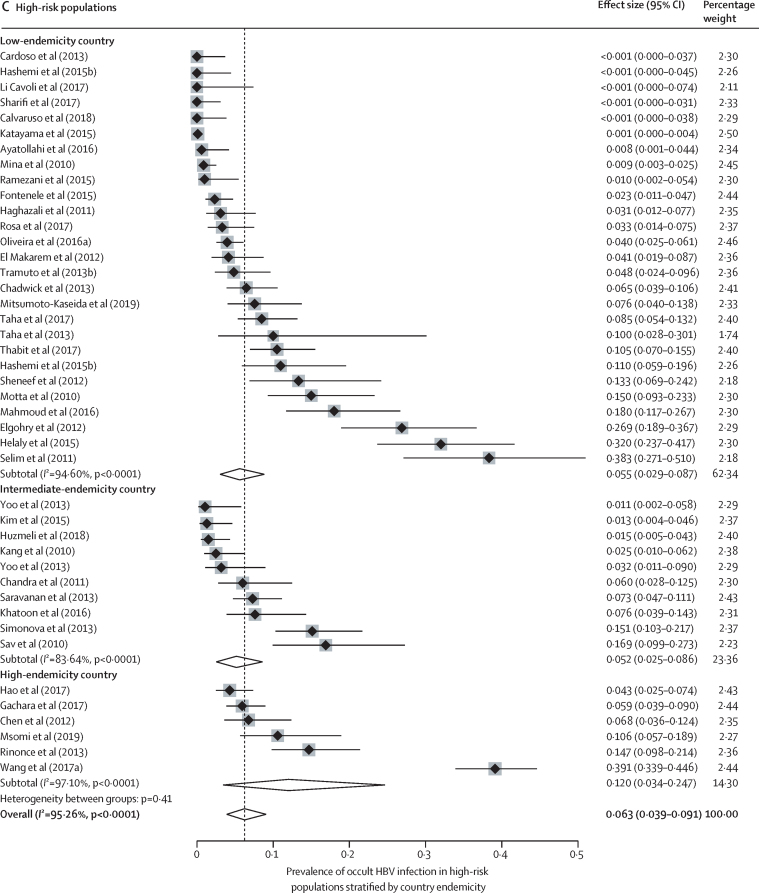
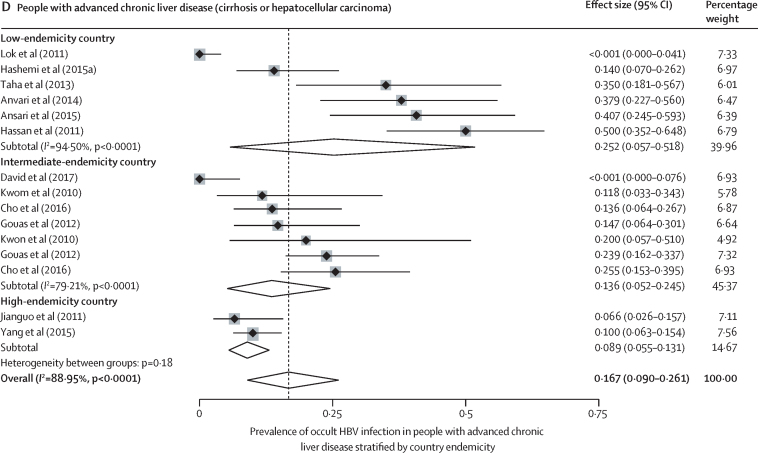
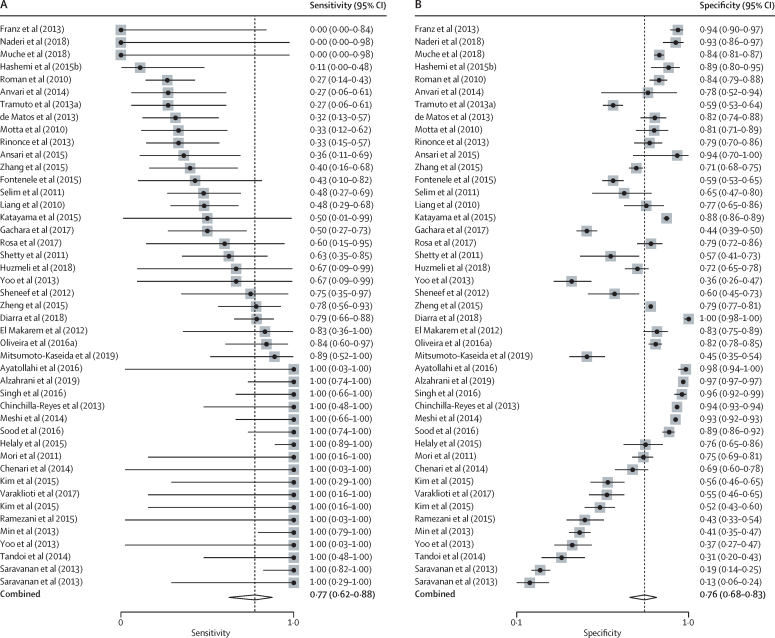
Findings: 305 of 3962 articles were eligible, allowing a meta-analysis of 140 521 993 individuals tested for HBV DNA. Overall, only two studies evaluated occult HBV infection in the general population, precluding unbiased global and regional estimates of occult HBV infection prevalence. In blood donors, occult HBV infection prevalence mirrored HBV endemicity: 0·06% (95% CI 0·00-0·26) in low-endemicity countries, 0·12% (0·04-0·23) in intermediate-endemicity countries, and 0·98% (0·44-1·72), in high-endemicity countries (p=0·0012). In high-risk groups, occult HBV infection prevalence was substantial, irrespective of endemicity: 5·5% (95% CI 2·9-8·7) in low-endemicity countries, 5·2% (2·5-8·6) in intermediate-endemicity countries, and 12·0% (3·4-24·7) in high-endemicity countries. The pooled sensitivity of anti-HBc to identify occult HBV infection was 77% (95% CI 62-88) and its specificity was 76% (68-83).
Interpretation: A substantial proportion of people carry occult HBV infection, especially among high-risk groups across the globe and people living in highly endemic countries. Occult HBV infection should be part of the global viral hepatitis elimination strategy.
Funding: None.
Copyright © 2022 The Author(s). Published by Elsevier Ltd. This is an Open Access article under the CC BY 4.0 license. Published by Elsevier Ltd.. All rights reserved.
Conflict of interest statement
Declaration of interests ML is a recipient of a new investigator research grant from the Medical Research Council and research grants from Gilead Sciences and Viiv Healthcare. GN has been awarded a research fellowship from Gilead Sciences and the Wellcome Trust. YS is a recipient of a research grant by Gilead Sciences and receives lecture fees from Gilead Sciences. All other authors declare no competing interests.
Figures
Comment in
-
Global burden of occult hepatitis B virus infection: where we are and what to do.Lancet Gastroenterol Hepatol. 2022 Oct;7(10):899-900. doi: 10.1016/S2468-1253(22)00238-2. Epub 2022 Aug 10. Lancet Gastroenterol Hepatol. 2022. PMID: 35961360 No abstract available.
References
-
- WHO Global progress report on HIV, viral hepatitis and sexually transmitted infections, 2021. July 15, 2021. https://www.who.int/publications/i/item/9789240027077
-
- WHO Hepatitis B. June 2, 2022. https://www.who.int/news-room/fact-sheets/detail/hepatitis-b
-
- WHO Guidelines on hepatitis B and C testing. Feb 16, 2017. https://www.who.int/publications/i/item/9789241549981 - PubMed
-
- Raimondo G, Locarnini S, Pollicino T, et al. Update of the statements on biology and clinical impact of occult hepatitis B virus infection. J Hepatol. 2019;71:397–408. - PubMed
-
- Raimondo G, Allain J-P, Brunetto MR, et al. Statements from the Taormina expert meeting on occult hepatitis B virus infection. J Hepatol. 2008;49:652–657. - PubMed
Publication types
MeSH terms
Substances
LinkOut - more resources
Full Text Sources
Medical
