Review
. 2022 Nov:218:102338.
doi: 10.1016/j.pneurobio.2022.102338. Epub 2022 Aug 11.

Adolescent sleep and the foundations of prefrontal cortical development and dysfunction

Affiliations
Review

Adolescent sleep and the foundations of prefrontal cortical development and dysfunction

Paul G Anastasiades et al. Prog Neurobiol. 2022 Nov.

Abstract

Modern life poses many threats to good-quality sleep, challenging brain health across the lifespan. Curtailed or fragmented sleep may be particularly damaging during adolescence, when sleep disruption by delayed chronotypes and societal pressures coincides with our brains preparing for adult life via intense refinement of neural connectivity. These vulnerabilities converge on the prefrontal cortex, one of the last brain regions to mature and a central hub of the limbic-cortical circuits underpinning decision-making, reward processing, social interactions and emotion. Even subtle disruption of prefrontal cortical development during adolescence may therefore have enduring impact. In this review, we integrate synaptic and circuit mechanisms, glial biology, sleep neurophysiology and epidemiology, to frame a hypothesis highlighting the implications of adolescent sleep disruption for the neural circuitry of the prefrontal cortex. Convergent evidence underscores the importance of acknowledging, quantifying and optimizing adolescent sleep's contributions to normative brain development and to lifelong mental health.

Keywords: Adolescence; Glia; Mental health; Neurodevelopment; Sleep disruption; Synapses.


Figures

Figure 1
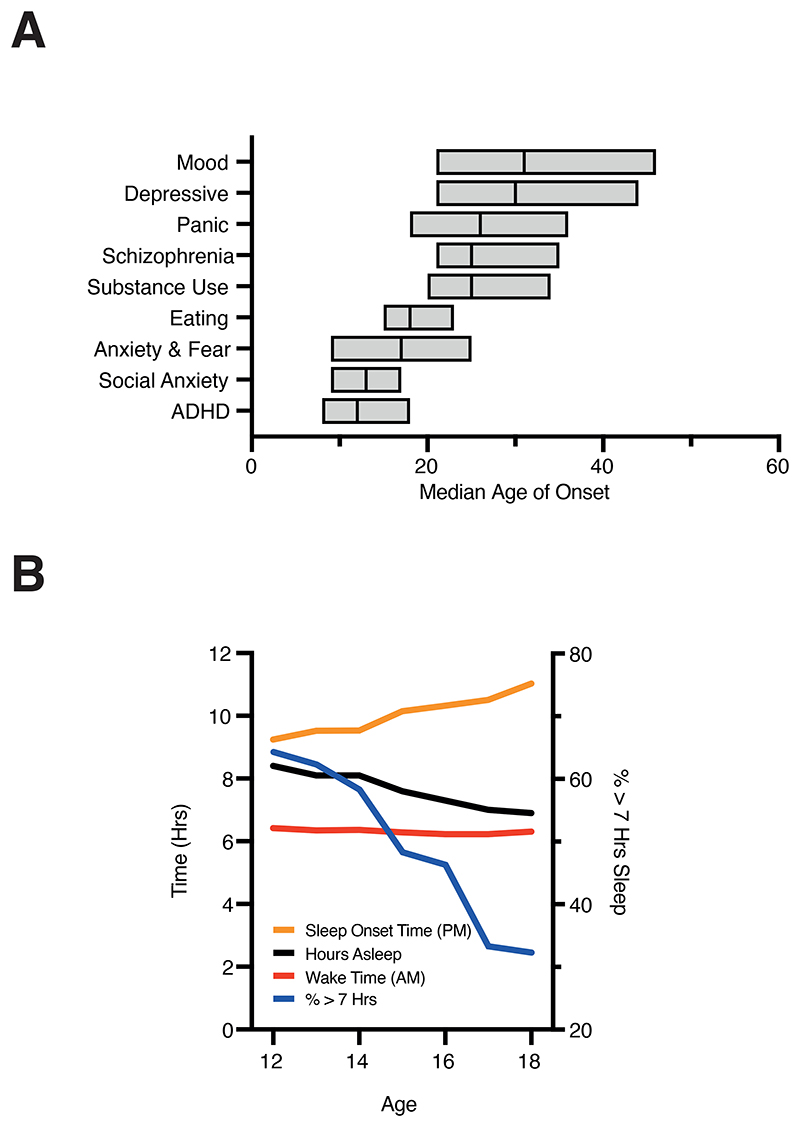
Figure 1. Changes in sleep patterns and neuropsychiatric disease onset during adolescence
A) Age of onset for different mental diagnoses highlighting the emergence of clinical symptoms during, or shortly after the adolescent period. A spectrum of psychiatric, mood, and affective disorders begin in the teens and early twenties, just as the body and brain is in the process of transitioning from childhood to adulthood. Data shows median onset of various mental disorders with boxed region indicating 25th and 75th percentiles. B) A delay in evening sleep onset time across adolescence without a concomitant delay in morning wake time leads to an overall reduction in the average amount of sleep received by adolescents between the ages of 12-18. Consequently, there is a sharp reduction in the percentage of teenagers sleeping for at least 7 hours a night, despite typical teenagers requiring around 9 hours of sleep. Data in A replotted from Solmi et al., 2021 and in B from Keyes et al., 2015 and Carskadon, 2011.
Figure 2
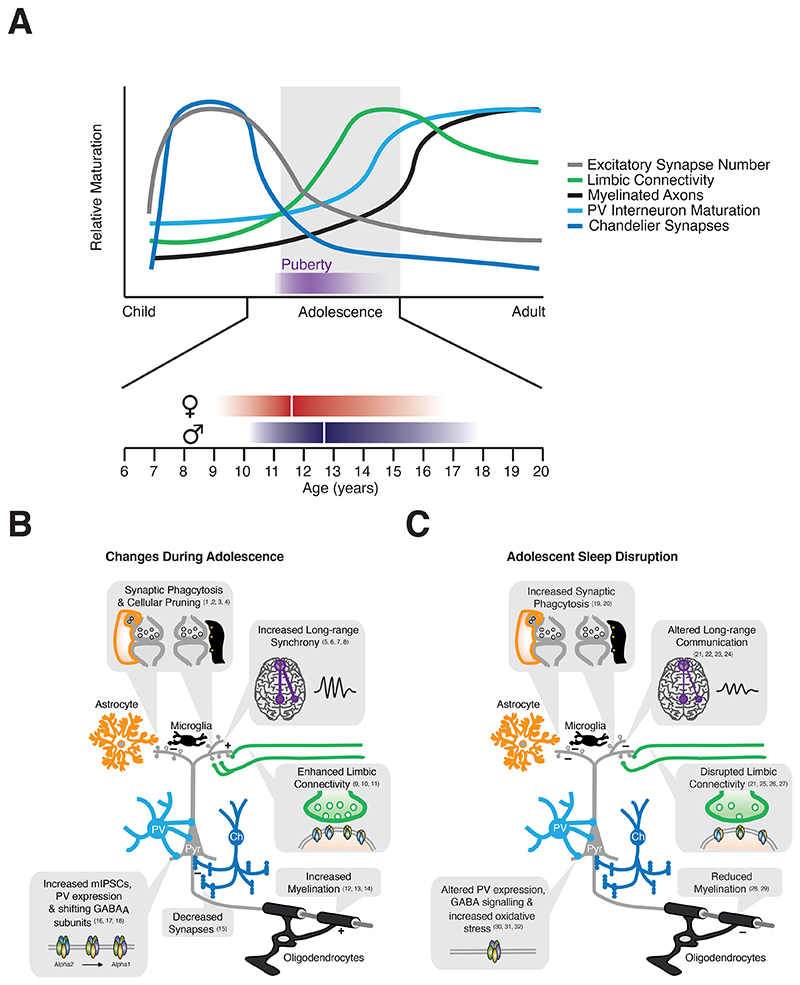
Figure 2. Adolescent network refinement and the impact of sleep
A) Adolescence coincides with pronounced changes in multiple aspects of PFC development. Glutamatergic synapse density is strongly reduced, while limbic connectivity peaks during adolescence to produce a developmental phase where the limbic system has considerable influence over the PFC. Developmental changes in inhibition, followed by subsequent myelination lead to reduction in PFC plasticity and help stabilize PFC circuitry, including long-range coupling with components of the DMN and FPN, as we transition to adulthood. Sex differences manifest in PFC volume peak, thinning, and maturational coupling as well as in rates of neuronal apoptosis, and synaptic pruning. These sex differences are consistent with delayed PFC maturation in males relative to females which could in part reflect a parallel temporal shift in puberty onset (between the ages of 8 and 12 years in girls and between 9 and 14 years in boys; ~35 postnatal days in female rats, ~45 in males). B) Adolescent PFC maturation is characterized by refinement of intra-PFC and long-range connectivity. These changes bring about increased limbic connectivity, increased co-ordinated activity with other distal brain regions, such as components of the DMN and FPN. Changes in long-range interactions are thought to be driven, at least in part, by increases in axon myelination. At the synapse level changes in synaptic density, receptor subunit composition and function are observed at both excitatory and inhibitory synapses. Fast synaptic inhibition of PFC pyramidal neurons is promoted by the shift from alpha2- to alpha1-containing GABAA receptors, while chandelier synapses to the axon initial segment are reduced. Glutamatergic synaptic reorganisation is regulated by synaptic phagocytosis and associated pruning via astrocytes and microglia. C) Sleep impacts many of the developmental processes that occur during adolescence. Sleep disruption impacts glial cells, causing reduction in myelin thickness and increasing synaptic phagocytosis. Reduced sleep also causes oxidative stress in PV interneurons, altering PV expression levels and cellular function. Limbic and long-range connectivity are also impaired, uncoupling the PFC and other frontal cortices from connected brain regions, or forcing networks to work harder to maintain normal function. References: 1) Petanjek et al., 2011; 2) Mallya et al., 2019; 3) Drzewiecki et al., 2016; 4) Willing and Juraska, 2015; 5) Fair et al., 2009; 6) Sherman et al., 2014; 7) Tarokh et al., 2010; 8) Kurth et al., 2010; 9) Pattwell et al., 2016; 10) Benes, 1989; 11) Swartz et al., 2014; 12) Nagy et al., 2004; 13) Liston et al., 2006; 14) Sousa et al., 2018; 15) Anderson et al., 1995; 16) Gonzalez-Burgos et al., 2015; 17) Caballero and Tseng, 2016; 18) Hashimoto et al., 2009; 19) Bellesi et al., 2017; 20) Bellesi et al., 2015; 21) Robinson et al., 2018; 22) Beebe et al., 2009; 23) De Havas et al., 2012; 24) Tashjian et al., 2018; 25) Billeh et al., 2016; 26) Killgore, 2013; 27) Liu et al., 2016; 28) Telzer et al., 2015; 29) Bellesi et al., 2018; 30) Bridi et al., 2019; 31) Harkness et al., 2019; 32) Jones et al., 2019.

References

    1. Alvaro PK, Roberts RM, Harris JK. The independent relationships between insomnia, depression, subtypes of anxiety, and chronotype during adolescence. Sleep Med. 2014;15:934–941. - PubMed
    1. Anastasiades PG, Marques-Smith A, Lyngholm D, Lickiss T, Raffiq S, Kätzel D, Miesenböck G, Butt SJB. GABAergic interneurons form transient layer-specific circuits in early postnatal neocortex. Nat Commun. 2016;7:10584. doi: 10.1038/ncomms10584. - DOI - PMC - PubMed
    1. Anderson SA, Classey JD, Condé F, Lund JS, Lewis DA. Synchronous development of pyramidal neuron dendritic spines and parvalbumin-immunoreactive chandelier neuron axon terminals in layer III of monkey prefrontal cortex. Neuroscience. 1995;67:7–22. - PubMed
    1. Andorko ND, Mittal V, Thompson E, Denenny D, Epstein G, Demro C, Wilson C, Sun S, Klingaman EA, DeVylder J, Oh H, et al. The association between sleep dysfunction and psychosis-like experiences among college students. Psychiatry Res. 2017;248:6–12. doi: 10.1016/j.psychres.2016.12.009. - DOI - PMC - PubMed
    1. Andreae LC, Burrone J. The role of neuronal activity and transmitter release on synapse formation. Curr Opin Neurobiol. 2014;27:47–52. doi: 10.1016/j.conb.2014.02.008. - DOI - PMC - PubMed

LinkOut - more resources