Accuracy of anthropometric indicators of obesity to identify high blood pressure in adolescents-systematic review
- PMID: 35966930
- PMCID: PMC9373973
- DOI: 10.7717/peerj.13590
Accuracy of anthropometric indicators of obesity to identify high blood pressure in adolescents-systematic review
Abstract
Background: Anthropometric indicators of obesity have been associated with blood pressure in adolescents. However, the accuracy of anthropometric indicators of obesity for screening for high blood pressure (HBP) in adolescents is not known. Thus, the aim of the present study was to summarize the set of evidence regarding the predictive ability of anthropometric indicators of obesity to identify HBP in adolescents.
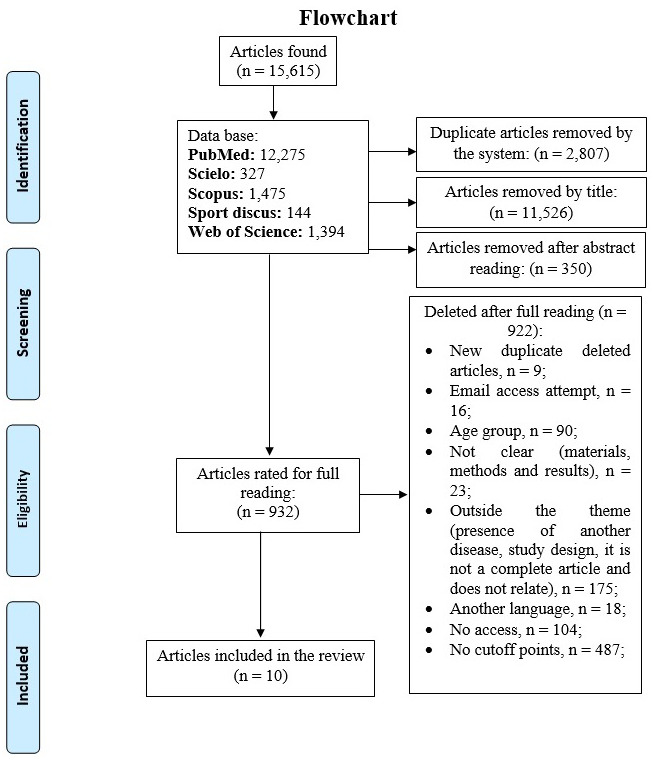
Methods: Searches were performed in five databases: MEDLINE, Web of Knowledge, Scopus, Scientific Electronic online (SciELO) and SportDiscus. The inclusion criteria for studies were: adolescents aged 10-19 years or mean age included in this range, observational and intervention studies, studies that proposed cutoff points for anthropometric indicators of obesity, and studies in English, Portuguese and Spanish. The methodological quality of studies was assessed using the QUADAS-2 instrument.
Results: Ten studies met the inclusion criteria and had their information summarized. Based on the information described in these studies, the anthropometric indicators body mass index (BMI), waist circumference (WC), waist-to-height-ratio (WHtR), triceps skinfold thickness, body adiposity index, C index, body mass, waist-to-arm span ratio, arm fat area, average arm perimeter, fat percentage and arm span were likely to be used in high blood pressure (HBP) screening among adolescents. However, only one study showed acceptable values (moderate to high precision) in relation to the accuracy measurements of described cutoffs.
Conclusion: Caution is suggested in the use of anthropometric indicators of obesity for HBP screening in adolescents, in which a greater number of studies with accurate diagnostic tools are necessary.
Keywords: Anthropometric indicators; Body weight; High blood pressure; Hypertension; Precision; Young adult.
©2022 Lima Borges et al.
Conflict of interest statement
The authors declare there are no competing interests.
Figures
References
-
- Abbaszadeh F, Sarafraz N, Atrian MK, Sadat Z, Bagheri A, Moravveji A. Anthropometric indices in the prediction of hypertension in female adolescents. The Iranian Red Crescent Medical Journal. 2017;19(11):e14591. doi: 10.5812/ircmj.14591. - DOI
-
- Barroso WKS, Rodrigues CIS, Bortolotto LA, Mota-Gomes MA, Brandão AA, Feitosa ADM, Machado CA, Poli-de Figueiredo CE, Amodeo C, Junior DM, Barbosa ECD, Nobre F, Guimaraes ICB, Vilela-Martin JF, Yugar-Toledo JC, Magalhaes MEC, Neves MFT, Jardim PCBV, Miranda RD, Povoa RMS, Fuchs SC, Alessi A, De Lucena AJG, Avezum A, Sousa ALL, Pio-Abreu A, Sposito AC, Pierin AMG, De Paiva AMG, Spinelli ACDS, Nogueira ADR, Dinamarco N, Eibel B, Forjaz CLDM, Zanini CRDO, Souza CBD, De Souza DDSM, Nilson EAF, Costa EFDA, De Freitas EV, Duarte EDR, Muxfeldt ES, Junior EL, Campana EMG, Cesarino EJ, Marques F, Argenta F, Consolim-Colombo FM, Baptista FS, De Almeida FA, Borelli FADO, Fuchs FD, Plavnik FL, Salles GF, Feitosa GS, Silva GVD, Guerra GM, Junior HM, Finimundi HC, Back IDC, Filho JBDO, Gemelli JR, Mill JG, Ribeiro JM, Lotaif LAD, Costa LSD, Magalhaes LBNC, Drager LF, Martin LC, Scala LCN, Almeida MQ, Gowdak MMG, Klein MRST, Malachias MVB, Kuschnir MCC, Pinheiro ME, Borba MHED, Filho OM, Junior OP, Coelho OR, Vitorino PVDO, Junior RMR, Esporcatte R, Franco R, Pedrosa R, Mulinari RA, Paula RBD, Okawa RTP, Rosa RF, Amaral SLD, Ferreira-Filho SR, Kaiser SE, Jardim TDSV, Guimaraes V, Koch VH, Oigman W, Nadruz W. Diretrizes Brasileiras de Hipertensão Arterial—2020. Arquivos Brasileiros de Cardiologia. 2021;116(3):516–658. doi: 10.36660/abc.20201238. - DOI - PMC - PubMed
Publication types
MeSH terms
LinkOut - more resources
Full Text Sources
Medical
Miscellaneous