


Potential association factors for developing effective peptide-based cancer vaccines
- PMID: 35967400
- PMCID: PMC9364268
- DOI: 10.3389/fimmu.2022.931612
Potential association factors for developing effective peptide-based cancer vaccines
Abstract
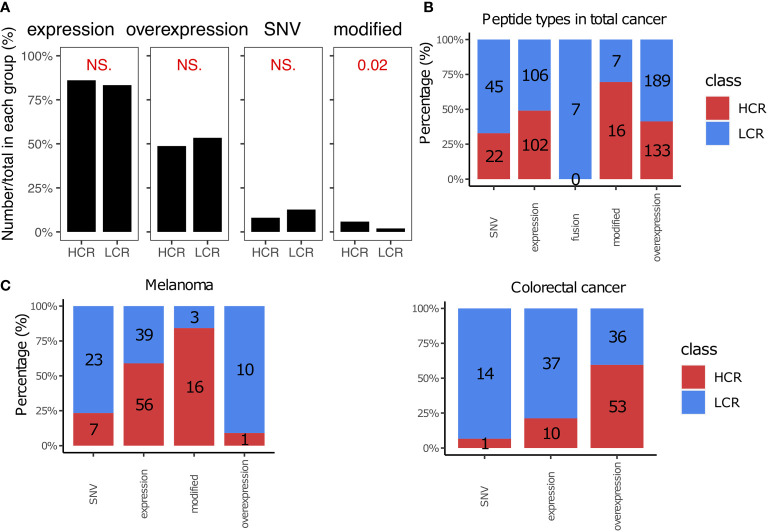
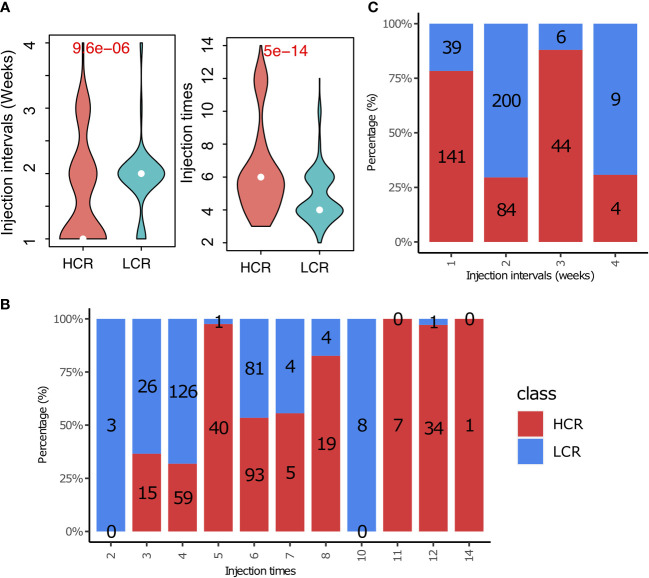
Peptide-based cancer vaccines have been shown to boost immune systems to kill tumor cells in cancer patients. However, designing an effective T cell epitope peptide-based cancer vaccine still remains a challenge and is a major hurdle for the application of cancer vaccines. In this study, we constructed for the first time a library of peptide-based cancer vaccines and their clinical attributes, named CancerVaccine (https://peptidecancervaccine.weebly.com/). To investigate the association factors that influence the effectiveness of cancer vaccines, these peptide-based cancer vaccines were classified into high (HCR) and low (LCR) clinical responses based on their clinical efficacy. Our study highlights that modified peptides derived from artificially modified proteins are suitable as cancer vaccines, especially for melanoma. It may be possible to advance cancer vaccines by screening for HLA class II affinity peptides may be an effective therapeutic strategy. In addition, the treatment regimen has the potential to influence the clinical response of a cancer vaccine, and Montanide ISA-51 might be an effective adjuvant. Finally, we constructed a high sensitivity and specificity machine learning model to assist in designing peptide-based cancer vaccines capable of providing high clinical responses. Together, our findings illustrate that a high clinical response following peptide-based cancer vaccination is correlated with the right type of peptide, the appropriate adjuvant, and a matched HLA allele, as well as an appropriate treatment regimen. This study would allow for enhanced development of cancer vaccines.
Keywords: cancer vaccine; clinical response; machine learning; peptide; potential factors.
Copyright © 2022 Jiang, Li, Zhang, Zhuang, Liu, Hong, Li, Zhang and Chao.
Conflict of interest statement
Author C-CC was employed by the company Biomap, Inc. Authors WZ, ZZ, GL, XZ and BL are employed by the company BGI-Shenzhen. The remaining authors declare that the research was conducted in the absence of any commercial or financial relationships that could be construed as a potential conflict of interest.
Figures





References
Publication types
MeSH terms
Substances
LinkOut - more resources
Full Text Sources
Medical
Research Materials
