


The application of 3D bioprinting in urological diseases
- PMID: 35967737
- PMCID: PMC9364106
- DOI: 10.1016/j.mtbio.2022.100388
The application of 3D bioprinting in urological diseases
Abstract
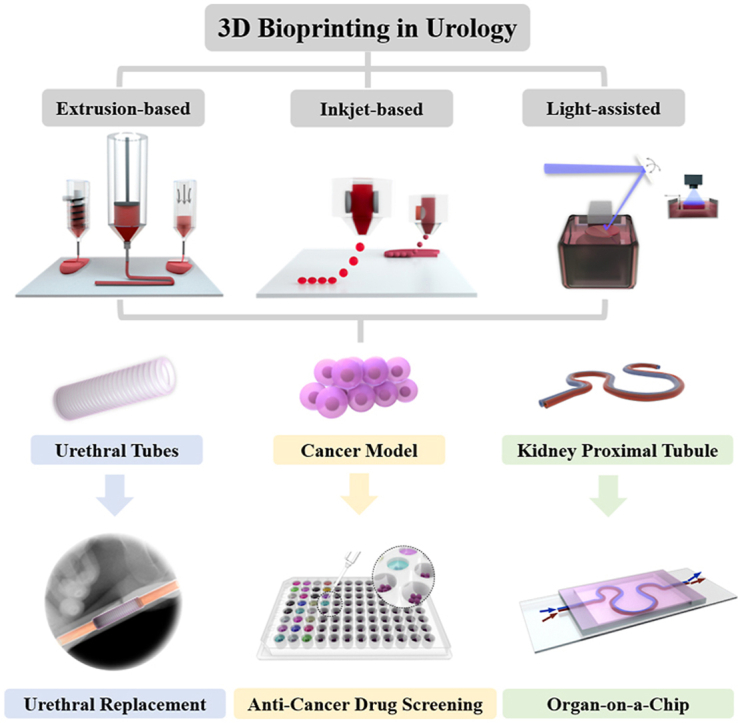
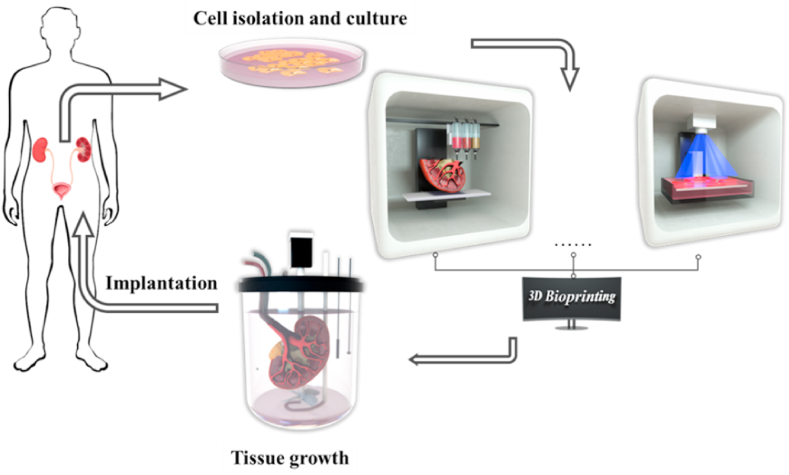
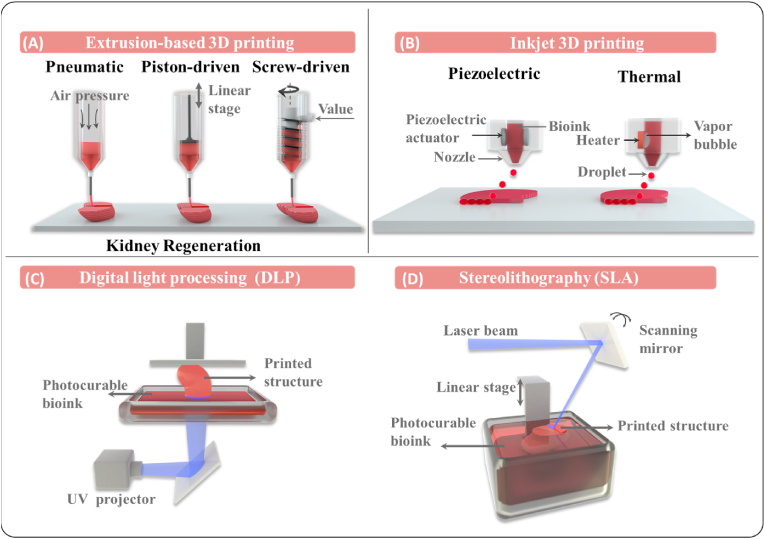
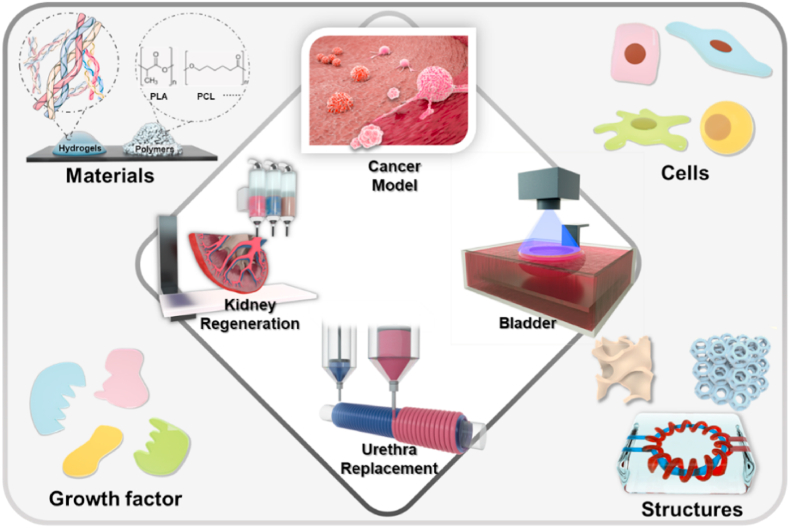
Urologic diseases are commonly diagnosed health problems affecting people around the world. More than 26 million people suffer from urologic diseases and the annual expenditure was more than 11 billion US dollars. The urologic cancers, like bladder cancer, prostate cancer and kidney cancer are always the leading causes of death worldwide, which account for approximately 22% and 10% of the new cancer cases and death, respectively. Organ transplantation is one of the major clinical treatments for urological diseases like end-stage renal disease and urethral stricture, albeit strongly limited by the availability of matching donor organs. Tissue engineering has been recognized as a highly promising strategy to solve the problems of organ donor shortage by the fabrication of artificial organs/tissue. This includes the prospective technology of three-dimensional (3D) bioprinting, which has been adapted to various cell types and biomaterials to replicate the heterogeneity of urological organs for the investigation of organ transplantation and disease progression. This review discusses various types of 3D bioprinting methodologies and commonly used biomaterials for urological diseases. The literature shows that advances in this field toward the development of functional urological organs or disease models have progressively increased. Although numerous challenges still need to be tackled, like the technical difficulties of replicating the heterogeneity of urologic organs and the limited biomaterial choices to recapitulate the complicated extracellular matrix components, it has been proved by numerous studies that 3D bioprinting has the potential to fabricate functional urological organs for clinical transplantation and in vitro disease models.
Keywords: Kidney regeneration; Tissue engineering; Tumor microenvironment; Urethral replacement; Urological cancer.
© 2022 The Authors.
Conflict of interest statement
The authors declare the following financial interests/personal relationships which may be considered as potential competing interests: Jun Yin reports financial support was provided by National Key Research and Development Program of China (Grant No. 2018YFA0703000).
Figures
References
-
- Peired A.J., Mazzinghi B., De Chiara L., Guzzi F., Lasagni L., Romagnani P., Lazzeri E. Bioengineering strategies for nephrologists: kidney was not built in a day. Expet Opin. Biol. Ther. 2020;20(5):467–480. - PubMed
-
- Wragg N.M., Burke L., Wilson S.L. A critical review of current progress in 3D kidney biomanufacturing-advances, challenges, and recommendations. Renal Replace. Ther. 2019;5(1)
Publication types
LinkOut - more resources
Full Text Sources
