


Bacillus thuringiensis PM25 ameliorates oxidative damage of salinity stress in maize via regulating growth, leaf pigments, antioxidant defense system, and stress responsive gene expression
- PMID: 35968151
- PMCID: PMC9366557
- DOI: 10.3389/fpls.2022.921668
Bacillus thuringiensis PM25 ameliorates oxidative damage of salinity stress in maize via regulating growth, leaf pigments, antioxidant defense system, and stress responsive gene expression
Abstract
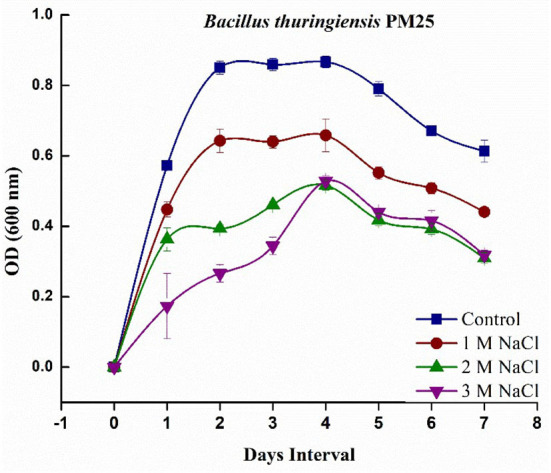
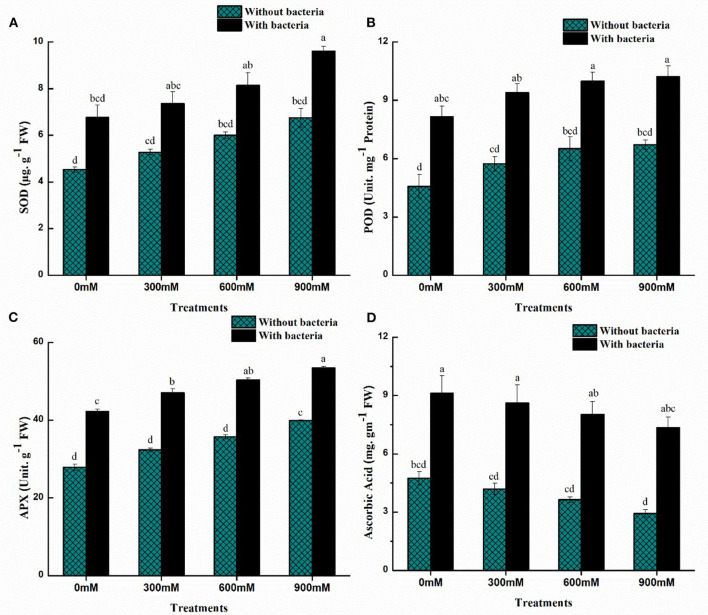
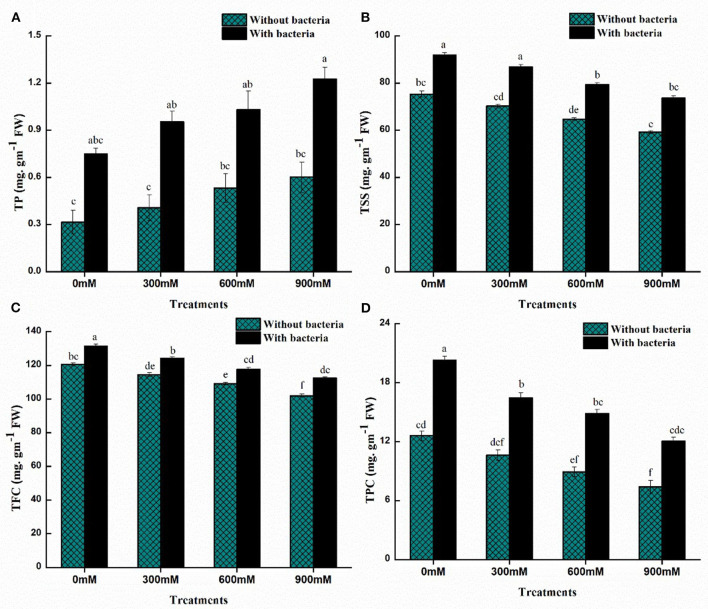
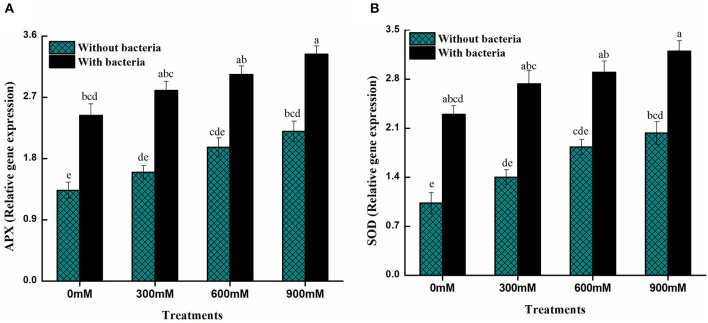
Soil salinity is the major abiotic stress that disrupts nutrient uptake, hinders plant growth, and threatens agricultural production. Plant growth-promoting rhizobacteria (PGPR) are the most promising eco-friendly beneficial microorganisms that can be used to improve plant responses against biotic and abiotic stresses. In this study, a previously identified B. thuringiensis PM25 showed tolerance to salinity stress up to 3 M NaCl. The Halo-tolerant Bacillus thuringiensis PM25 demonstrated distinct salinity tolerance and enhance plant growth-promoting activities under salinity stress. Antibiotic-resistant Iturin C (ItuC) and bio-surfactant-producing (sfp and srfAA) genes that confer biotic and abiotic stresses were also amplified in B. thuringiensis PM25. Under salinity stress, the physiological and molecular processes were followed by the over-expression of stress-related genes (APX and SOD) in B. thuringiensis PM25. The results detected that B. thuringiensis PM25 inoculation substantially improved phenotypic traits, chlorophyll content, radical scavenging capability, and relative water content under salinity stress. Under salinity stress, the inoculation of B. thuringiensis PM25 significantly increased antioxidant enzyme levels in inoculated maize as compared to uninoculated plants. In addition, B. thuringiensis PM25-inoculation dramatically increased soluble sugars, proteins, total phenols, and flavonoids in maize as compared to uninoculated plants. The inoculation of B. thuringiensis PM25 significantly reduced oxidative burst in inoculated maize under salinity stress, compared to uninoculated plants. Furthermore, B. thuringiensis PM25-inoculated plants had higher levels of compatible solutes than uninoculated controls. The current results demonstrated that B. thuringiensis PM25 plays an important role in reducing salinity stress by influencing antioxidant defense systems and abiotic stress-related genes. These findings also suggest that multi-stress tolerant B. thuringiensis PM25 could enhance plant growth by mitigating salt stress, which might be used as an innovative tool for enhancing plant yield and productivity.
Keywords: PGPR—plant growth-promoting rhizobacteria; abiotic stress; antioxiants; plant-microbe interactions; qRT-PCR.
Copyright © 2022 Ali, Hafeez, Ahmad, Javed, Sumaira, Afridi, Dawoud, Almaary, Muresan, Marc, Alkhalifah and Selim.
Conflict of interest statement
The authors declare that the research was conducted in the absence of any commercial or financial relationships that could be construed as a potential conflict of interest.
Figures
References
-
- Abadi V. A. J. M., Sepehri M. (2016). Effect of Piriformospora indica and Azotobacter chroococcum on mitigation of zinc deficiency stress in wheat (Triticum aestivum L.). Symbiosis 69, 9–19. 10.1007/s13199-015-0361-z - DOI
-
- Abbas H., Patel R. M., Parekh V. B. (2018). Culturable endophytic bacteria from halotolerant Salicornia brachata L.: isolation and plant growth promoting traits. Indian J. Appl. Microbiol. 21, 10–21. 10.46798/ijam.2018.v21i01.002 - DOI
-
- Abd Allah E. F., Alqarawi A. A., Hashem A., Radhakrishnan R., Al-Huqail A. A., Al-Otibi F. O. N., et al. (2018). Endophytic bacterium Bacillus subtilis (BERA 71) improves salt tolerance in chickpea plants by regulating the plant defense mechanisms. J. Plant Interact. 13, 37–44. 10.1080/17429145.2017.1414321 - DOI
-
- Ahmad M., Ishaq M., Shah W. A., Adnan M., Fahad S., Saleem M. H., et al. (2022). Managing phosphorus availability from organic and inorganic sources for optimum wheat production in calcareous soils. Sustainability 14, 7669. 10.3390/su14137669 - DOI
LinkOut - more resources
Full Text Sources
Miscellaneous
