


Multi-elements characteristic and potential risk of heavy metals in MOUTAN CORTEX from Anhui Province, China
- PMID: 35968156
- PMCID: PMC9361998
- DOI: 10.1007/s13762-022-04402-6
Multi-elements characteristic and potential risk of heavy metals in MOUTAN CORTEX from Anhui Province, China
Abstract
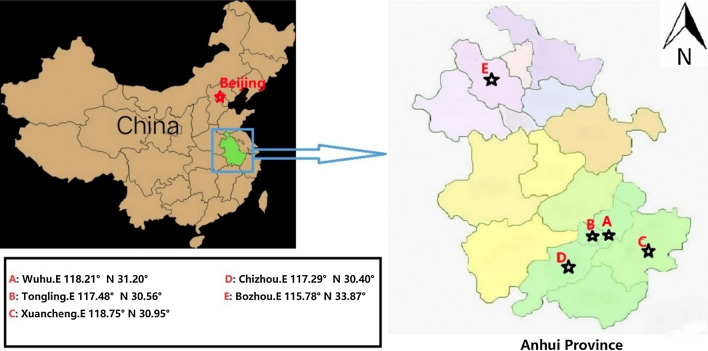
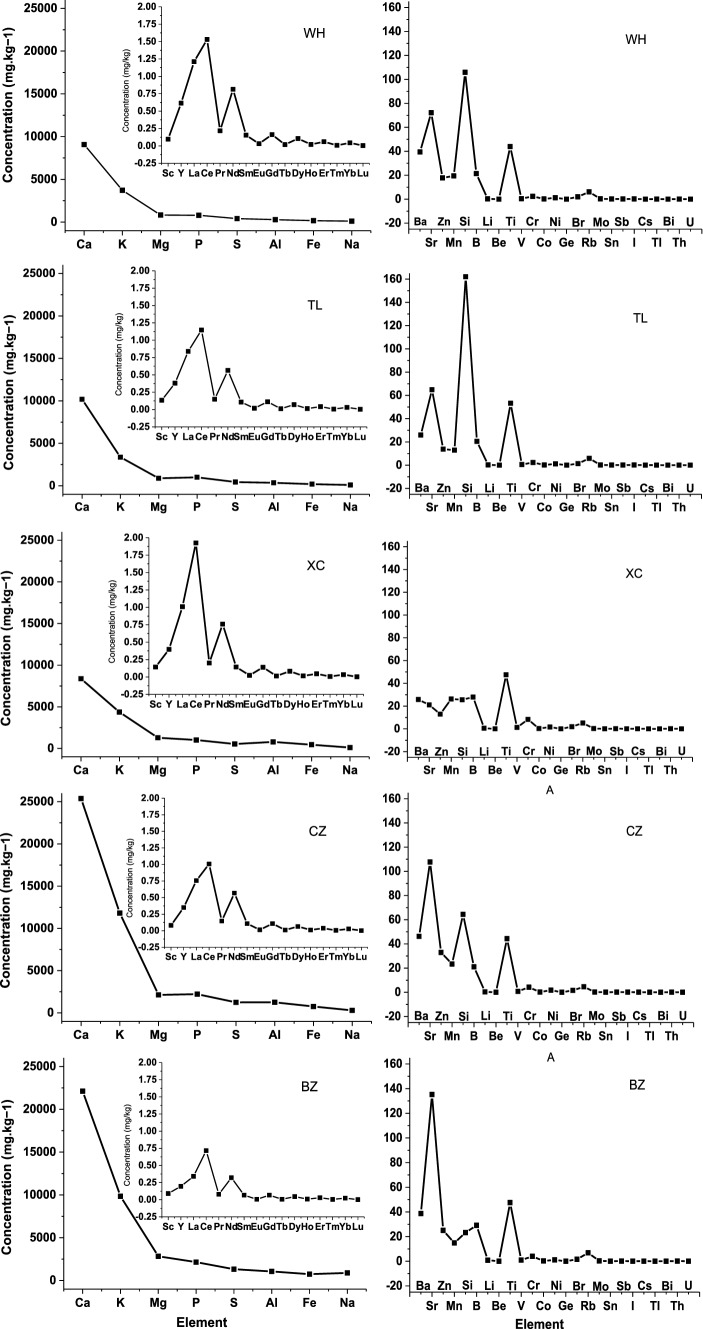
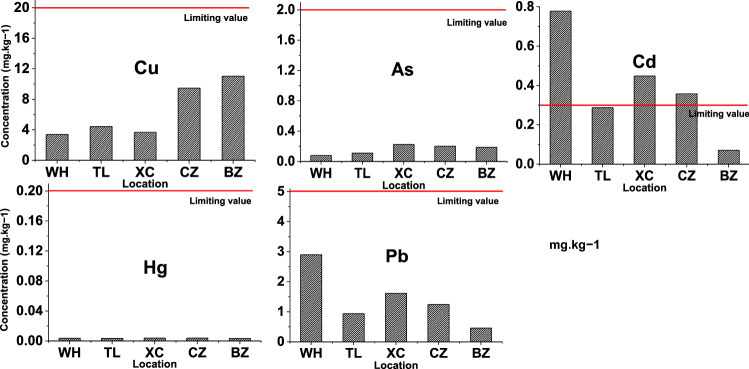
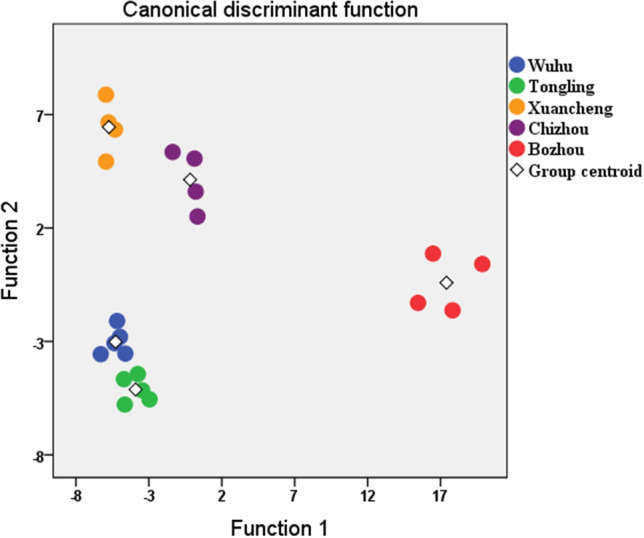
To ensure the quality and safety of herbs, the content of 54 elements in MOUTAN CORTEX (MC) was determined by the ICP-AES and ICP-MS, and the health risks of Cu, As, Cd, Pb, Hg and rare earth elements (REEs) were assessed. These herbs were collected from 5 producing areas in Anhui Province, China, namely Wuhu, Tongling, Bozhou, Xuancheng and Chizhou. The multi-elements fingerprint identification of MC in Anhui Province was established. The total amount of macro-elements from Wuhu and Tongling is significantly lower than Bozhou. Among all MC from 5 producing areas, the highest content is Ca. Except for Bozhou, the content of macro-elements and REES in the other 4 origins of MC is from highest to lowest: Ca > K > Mg > Al > Fe > Na and Ce > La > Nd > Y > Pr > Er > Yb > Eu > Ho > Tb > Tm > Lu. The chemical forms of Cd in MC from Bozhou with the highest percentage were PH2O of high toxicity and migration, while the other 4 regions were PNaCl of low activity and mobility. There was a great difference in the content of inorganic elements and chemical forms of Cd between the MC produced from the plain (Bozhou) and the hilly areas (Wuhu, Tongling, Chizhou and Xuancheng). Except for Cd, the content of Cu, As, Pb and Hg in MC did not exceed the limit. The results of PTWIFact and ADI for Cd and REEs showed that MC herbs did not pose a risk to human health.
Supplementary information: The online version contains supplementary material available at 10.1007/s13762-022-04402-6.
Keywords: Cadmium; Element distribution; Heavy metals; MOUTAN CORTEX (MC); Producing area; Risk assessment.
© The Author(s) under exclusive licence to Iranian Society of Environmentalists (IRSEN) and Science and Research Branch, Islamic Azad University 2022. Springer Nature or its licensor holds exclusive rights to this article under a publishing agreement with the author(s) or other rightsholder(s); author self-archiving of the accepted manuscript version of this article is solely governed by the terms of such publishing agreement and applicable law.
Conflict of interest statement
Conflict of interestThe authors declare that there are no conflicts of interest.
Figures

References
-
- Akram R, Turan V, Hammad HM, Ahmad S, Hussain S, Hasnain A, Maqbool MM, Rehmani MI, Rasool A, Masood N, Mahmood F. Fate of organic and inorganic pollutants in paddy soils. In: Environmental pollution of paddy soils 2018 (pp. 197-214). Springer, Cham. 10.1007/978-3-319-93671-0-13
-
- Chen ZY. Brain accumulation and toxicity of rare earth elements and their potential harm to human health. Rural Ecol Environ. 2005;21(4):72–73.
-
- Chen ZY, Zhu XD. Bone accumulation and toxicity of rare earth elements and their potential harm to human health. J Ecol Rural Environ. 2008;4(1):88–91.
-
- Chinese Pharmacopeia Commission . Pharmacopoeia of People's Republic of China. Beijing: China Medical Science and Technology Press; 2020.
LinkOut - more resources
Full Text Sources
Research Materials
Miscellaneous