


Identification of genetic instability in peripheral blood lymphocyte of oral squamous cell carcinoma patients assess by comet assay
- PMID: 35968167
- PMCID: PMC9364639
- DOI: 10.4103/jomfp.jomfp_70_20
Identification of genetic instability in peripheral blood lymphocyte of oral squamous cell carcinoma patients assess by comet assay
Abstract
Context: Studies established that human cancer is principally a genetic disease; it arises as accumulation of a set of genetic changes. In the pathogenesis of cancer, genetic instability is the sequential event to a carcinogenic stimulus resulting in various genomic changes including DNA damage.
Aims: To assess genetic instability, as susceptibility to DNA damage, we used single-cell gel electrophoresis (comet assay) to study double strand breaks in associated with the risk of oral squamous cell carcinoma (OSCC).
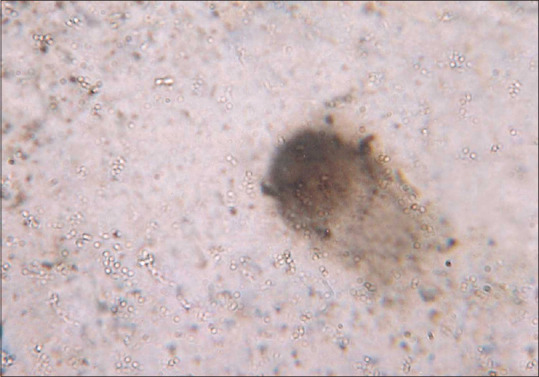
Materials and methods: We used comet assay to measure double strand break in individual peripheral blood lymphocytes from 50 individuals with OSCC and 30 healthy control subjects. All personal information was gathered from subjects including tobacco history. DNA damage was visualized as comet assay and quantified by movement of damaged strands as length of tail.
Results: Study results of OSCC patients were observed in relation to clinical staging and histological grading of carcinoma. On the basis of clinical observation, cases were grouped in to Stage I, Stage II, Stage III and Stage IV. No stage I cases were in study sample. The mean DNA damage migration length was observed 4.600 ± 0.4613 μm in stage II, whereas in Stage III and Stage IV, it was observed to be 4.961 ± 0.5620 μm and 4.883 ± 0.410 μm, respectively. The DNA damage length in histological grades of squamous cell carcinoma patients in Grade I was 4.6437 ± 0.3061 μm and Grade II was 5.3533 ± 0.3831 μm. In comparison with control group and squamous cell carcinoma group, it was observed in the range of 0.02-0.36 μm and varied from 4.04 to 5.84 μm range, respectively. Thus, the results were statistically significant with the histological grading of OSCC.
Statistical analysis: Unpaired' test and "ANOVA" test are used for statistics.
Statistical analysis: Unpaired' test and "ANOVA" test are used for statistics.
Conclusion: The amount of DNA strand breaks in peripheral lymphocytes are measured by comet assay which is associated with relative risk of OSCC.
Keywords: Comet assay; DNA damage; DNA strands; gel electrophoresis; lymphocyte; squamous cell carcinoma.
Copyright: © 2022 Journal of Oral and Maxillofacial Pathology.
Conflict of interest statement
There are no conflicts of interest.
Figures

References
-
- Parkin DM, Bray F, Ferlay J, Pisani P. Global cancer statistics, 2002. CA Cancer J Clin. 2005;55:74–108. - PubMed
-
- Zini A, Czerninski R, Sgan-Cohen HD. Oral cancer over four decades: Epidemiology, trends, histology, and survival by anatomical sites. J Oral Pathol Med. 2010;39:299–305. - PubMed
-
- Sunny L, Yeole BB, Hakama M, Shiri R, Sastry PS, Mathews S, et al. Oral cancers in Mumbai, India: A fifteen years perspective with respect to incidence trend and cumulative risk. Asian Pac J Cancer Prev. 2004;5:294–300. - PubMed
-
- Abreu LP, Kruger E, Tennant M. Oral cancer in Western Australia, 1982-2006: A retrospective epidemiological study. J Oral Pathol Med. 2010;39:376–81. - PubMed
LinkOut - more resources
Full Text Sources