


Clinical Value of Total Intravenous Anesthesia with Sufentanil and Propofol in Radical Mastectomy
- PMID: 35968501
- PMCID: PMC9374541
- DOI: 10.1155/2022/7294358
Clinical Value of Total Intravenous Anesthesia with Sufentanil and Propofol in Radical Mastectomy
Abstract
Objective: To investigate the clinical value of sufentanil combined with propofol for total intravenous anesthesia (TIVA) in radical mastectomy.
Methods: The data of 120 patients undergoing radical mastectomy of breast cancer in our hospital from February 2020 to February 2021 were retrospectively analyzed, and they were randomly assigned to the experimental group (EXG) (n = 60) and the control group (COG) (n = 60). The anesthesia maintenance scheme was 0.01-0.03 μg/(kg·min) of sufentanil + 80-100 μg/(kg·min) of propofol in EXG and 3 μg/(kg·h) of fentanyl + 80-100 μg/(kg·min) of propofol in COG. The hemodynamic indices, stress indexes, postoperative pain scores, and incidence of adverse reactions were compared between EXG and COG.
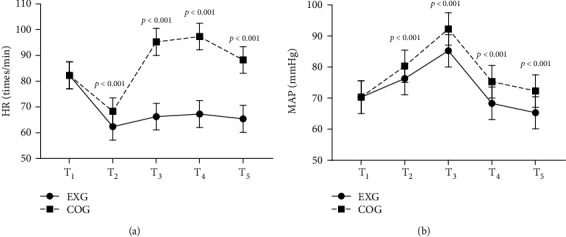
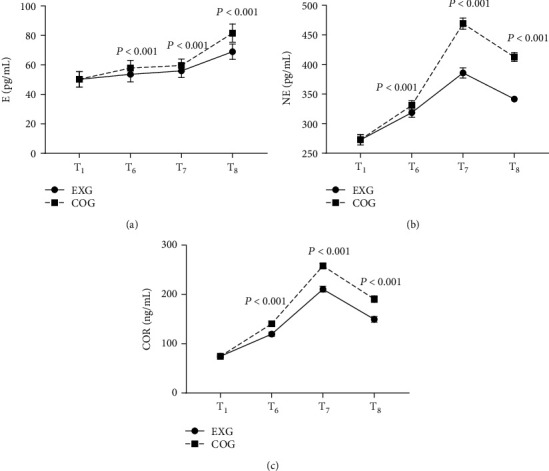
Results: The heart rates (HR) and mean arterial pressure (MAP) after tracheal intubation (T2) and at separation of deep tissues (T3), tracheal extubation (T4), and the end of surgery (T5) were markedly lower in EXG than in COG (P < 0.001). The stress indexes and postoperative pain scores at 1 h (T6), 6 h (T7), and 12 h (T8) after surgery were lower in EXG than in COG (P < 0.001). The incidence of dizziness, headache, pruritus, and emergence agitation in EXG was lower compared with that in COG (P < 0.05).
Conclusion: Sufentanil combined with propofol for TIVA can stabilize intraoperative hemodynamic indices of patients undergoing radical mastectomy, alleviate perioperative stress response, and reduce pain perception. Therefore, this anesthesia method is safe and merits clinical promotion.
Copyright © 2022 Lingyan Qu and Xiaoqing Wu.
Conflict of interest statement
The authors have no conflicts of interest to declare.
Figures
References
-
- Aghamelu O., Buggy P., Smith G., Inzitari R., Wall T., Buggy D. J. Serum NETosis expression and recurrence risk after regional or volatile anaesthesia during breast cancer surgery: a pilot, prospective, randomised single-blind clinical trial. Acta Anaesthesiologica Scandinavica . 2021;65(3):313–319. doi: 10.1111/aas.13745. - DOI - PubMed
-
- Lee Y. J., Oh C. S., Choi J. M., Park S., Kim S. H. mu-opioid receptor polymorphisms and breast cancer recurrence in adult Korean women undergoing breast cancer surgery: a retrospective study. International Journal of Medical Sciences . 2020;17(18):2941–2946. doi: 10.7150/ijms.49297. - DOI - PMC - PubMed
-
- Ní Eochagáin A., Burns D., Riedel B., Sessler D. I., Buggy D. J. The effect of anaesthetic technique during primary breast cancer surgery on neutrophil–lymphocyte ratio, platelet–lymphocyte ratio and return to intended oncological therapy. Anaesthesia . 2018;73(5):603–611. doi: 10.1111/anae.14207. - DOI - PubMed
Publication types
MeSH terms
Substances
LinkOut - more resources
Full Text Sources
Medical
