


Aged glomeruli: a link between PD-1 and podocytes
- PMID: 35968780
- PMCID: PMC9374372
- DOI: 10.1172/JCI162330
Aged glomeruli: a link between PD-1 and podocytes
Abstract
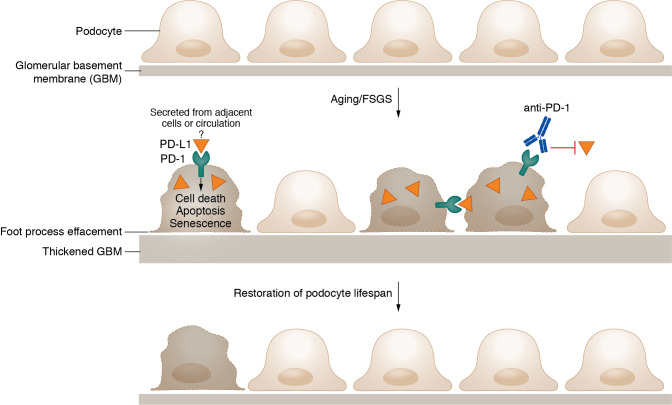
Understanding the loss of kidney function resulting from kidney aging has become an emerging research focus that will facilitate the future development of antisenolytic treatments. In this issue of the JCI, Pippin et al. first identified PD-1 upregulation in the aged mouse podocyte via unbiased RNA-seq analysis. Overexpression of PD-1 in immortalized mouse podocytes induced cell death and a senescence-associated secretory phenotype, suggesting the pathological role of PD-1 upregulation in aged podocytes. Blocking PD-1 signaling via a neutralizing anti-PD-1 antibody reversed the aged phenotype in the aged mice and ameliorated proteinuria in an experimental focal segmental glomerulosclerosis (FSGS) mouse model. These findings highlight the role of PD-1 signaling in kidney aging and its therapeutic potential for human clinical trials.
Conflict of interest statement
Figures
Comment on
-
Upregulated PD-1 signaling antagonizes glomerular health in aged kidneys and disease.J Clin Invest. 2022 Aug 15;132(16):e156250. doi: 10.1172/JCI156250. J Clin Invest. 2022. PMID: 35968783 Free PMC article.
References
-
- World Health Organization. WHO methods and data sources for life Tables 1990-2019. https://cdn.who.int/media/docs/default-source/gho-documents/global-healt... Accessed July 7, 2022.
-
- National Institute of Diabetes and Digestive and Kidney Diseases. U.S. Renal Data System Report. https://www.niddk.nih.gov/about-niddk/strategic-plans-reports/us-renal-d... Accessed July 7, 2022.
